Special Public Prosecutors Appointed For POCSO Cases Can’t Conduct Other Cases: Kerala High Court Directs Appointments Within Six Weeks
The State Government was also directed to consider establishing 13 remaining permanent and exclusive POCSO Special Courts and communicate its decision to the High Court Administration within four weeks.
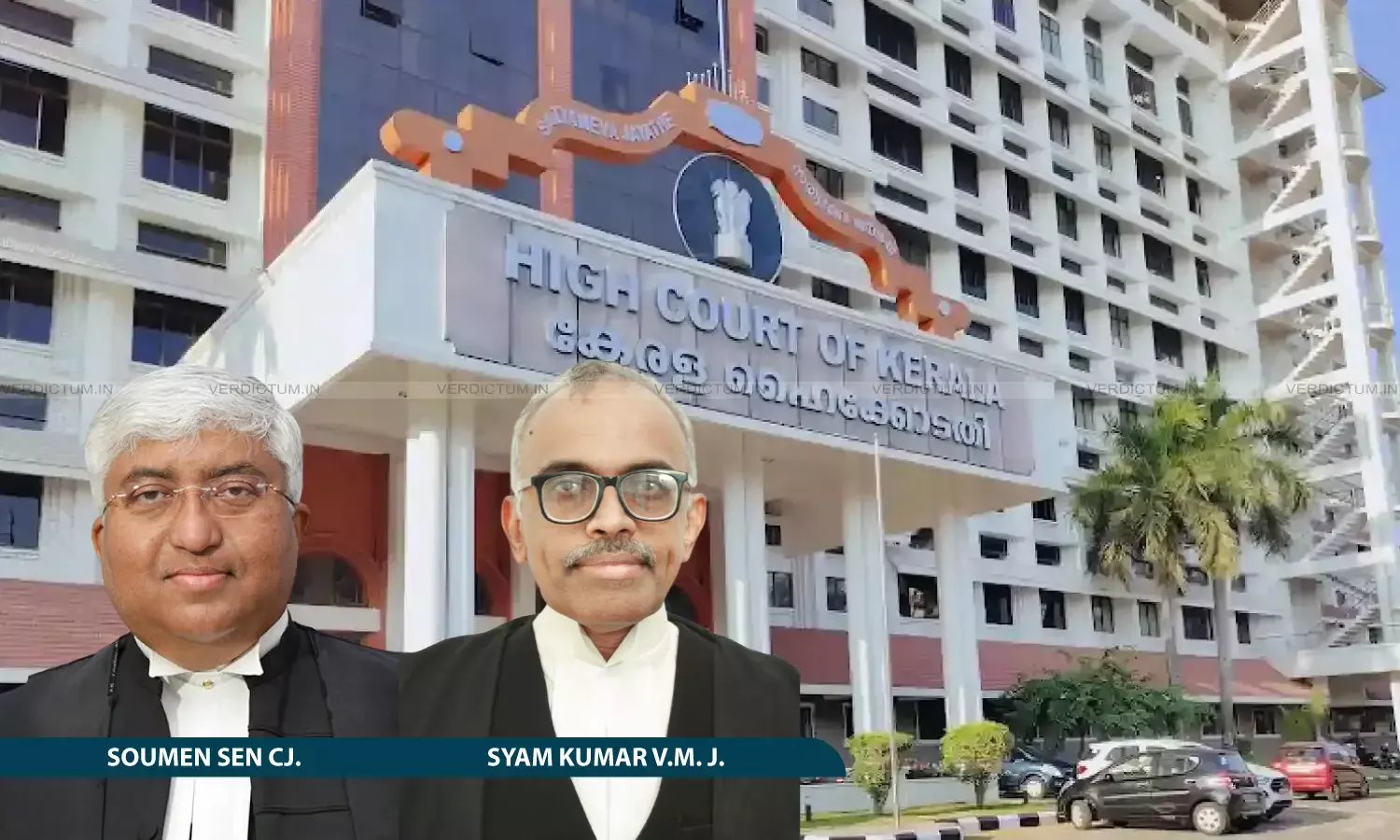
The Kerala High Court has set aside a Government Order permitting Special Public Prosecutors appointed for POCSO cases to conduct non-POCSO matters. The Court directed the State Government to appoint prosecutors exclusively for POCSO cases within six weeks.
The Court was hearing a public interest litigation filed by the District Court Bar Association, Thodupuzha-Muttom, challenging the Government Order dated December 6, 2025, which allowed POCSO Special Public Prosecutors to conduct cases under the Juvenile Justice (Care and Protection of Children) Act, 2015.
A Bench of Chief Justice Soumen Sen and Justice Syam Kumar V.M. observed: “In view of the aforesaid, the Government Order permitting Special Public Prosecutors appointed for POCSO cases to conduct non-POCSO cases cannot be sustained. The State Government is directed to appoint Special Public Prosecutors exclusively for POCSO cases within six weeks from date.”
Advocate Pooja Sunil appeared for the petitioners. Director General of Prosecution Asaf Ali appeared for the State, while Advocate Harikumar G. appeared for the High Court Administration.
Background
The Government Order under challenge permitted Special Public Prosecutors appointed for cases under the Protection of Children from Sexual Offences Act, 2012, to conduct non-POCSO matters instituted under the Juvenile Justice Act.
The Director General of Prosecution submitted that this arrangement was permissible in view of the definition of “Children’s Court” under Section 2(20) of the Juvenile Justice Act. The provision includes a court established under the Commissions for Protection of Child Rights Act, 2005, or a POCSO Special Court wherever such a court exists.
The Court observed that the PIL specifically concerned the appointment of prosecutors exclusively for POCSO cases. It examined whether the Government Order was consistent with Section 32 of the POCSO Act and the Supreme Court’s directions concerning exclusive prosecutors.
Court’s Observations
Section 32 Requires Prosecutors Exclusively For POCSO Cases
The Court noted that Section 32(1) of the POCSO Act requires every State to appoint a Special Public Prosecutor for each Special Court to conduct cases only under the Act.
The Bench found that the Government Order permitting such prosecutors to handle non-POCSO matters conflicted with the Supreme Court’s directions in In Re: Alarming Rise in the Number of Reported Child Rape Incidents (2020).
The Court reproduced the Supreme Court’s interpretation of Section 32: “In our earlier orders we had emphasised the need to have exclusive Special Public Prosecutors for POCSO cases. Section 32 of the POCSO Act clearly lays down that there shall be Special Public Prosecutors for the POCSO cases. Sub-section (1) of Section 32 reads as follows: ‘Every State must by Notification appoint a Special Public Prosecutor for every Special Court for conducting cases only under the provisions of the Act.’ The language of the Act leaves no manner of doubt that the Special Public Prosecutor under the Act should not deal with other cases.”
The Court consequently rejected the submission that the definition of “Children’s Court” under the Juvenile Justice Act permitted POCSO Special Public Prosecutors to conduct non-POCSO matters.
Child Victims Require Specially Trained Prosecutors
The Bench referred to the Supreme Court’s explanation that exclusive appointments were necessary because POCSO prosecutions required prosecutors trained to deal sensitively with child victims and witnesses.
The Court quoted the Supreme Court’s observations: “There is a salutary reason for appointing Public Prosecutors exclusively for POCSO cases. Public Prosecutors must be trained to deal with child victims and child witnesses. They need to understand the psychology of children. They need to empathise with children. They need to know how to bring out the truth from children who are victims of sexual abuse and have to undergo the trauma again while recounting the traumatic experience.”
The Court further noted the Supreme Court’s observation that a POCSO prosecutor’s work involved not only legal issues but also questions concerning child psychology, behaviour and health.
The Bench reproduced the Supreme Court’s reasoning: “The job assigned to the Public Prosecutor for POCSO cases is a very onerous one which must be carried out with great care and sensitivity. Therefore not only is there a need to have exclusive Public Prosecutors but there is also a need to develop a training programme where these Special Public Prosecutors should be trained to deal with issues which will arise in their Courts. These issues may not be confined to legal issues which otherwise Public Prosecutors may be trained to deal with. The issues may be psychological, health and other related issues.”
Permanent POCSO Courts And Infrastructure
The Court took on record an affidavit concerning the infrastructure available for POCSO cases. It directed the State Government to consider establishing the remaining 13 permanent and exclusive POCSO Special Courts, one in each district except Ernakulam, in compliance with the Supreme Court’s directions.
The Court directed the State to communicate its decision to the High Court Administration within four weeks.
The Bench also directed the Registrar (District Judiciary) to ensure that every POCSO Court complied with the POCSO Act. It ordered immediate additions and alterations wherever existing courts lacked prescribed facilities or failed to comply with the applicable Juvenile Justice Act guidelines.
The Court directed the State Government to provide the financial and other assistance required for modifying the existing infrastructure.
Conclusion
The Court disposed of the PIL by setting aside the Government Order permitting POCSO Special Public Prosecutors to conduct non-POCSO cases. It directed the State to make exclusive appointments within six weeks.
The State was further directed to consider establishing the remaining 13 permanent POCSO Special Courts and communicate its decision within four weeks. The Registrar (District Judiciary) was directed to rectify the identified infrastructural deficiencies at the earliest.
Cause Title: District Court Bar Association, Thodupuzha-Muttom and Another v. State of Kerala and Others (Neutral Citation: 2026:KER:79390)
Appearances
Petitioners: Advocates V.M. Krishnakumar, P.R. Reena and Pooja Sunil
Respondents: Director General of Prosecution Asaf Ali; Advocate Harikumar G. (Gopinathan Nair)