Preventive Detention Order, Relied-On Documents Must Be Supplied In Language Known To Detenue: Kerala High Court
The Court further held that orally explaining documents prepared in another language does not satisfy Article 22(5), which requires effective written communication enabling the detenue to make a proper representation.
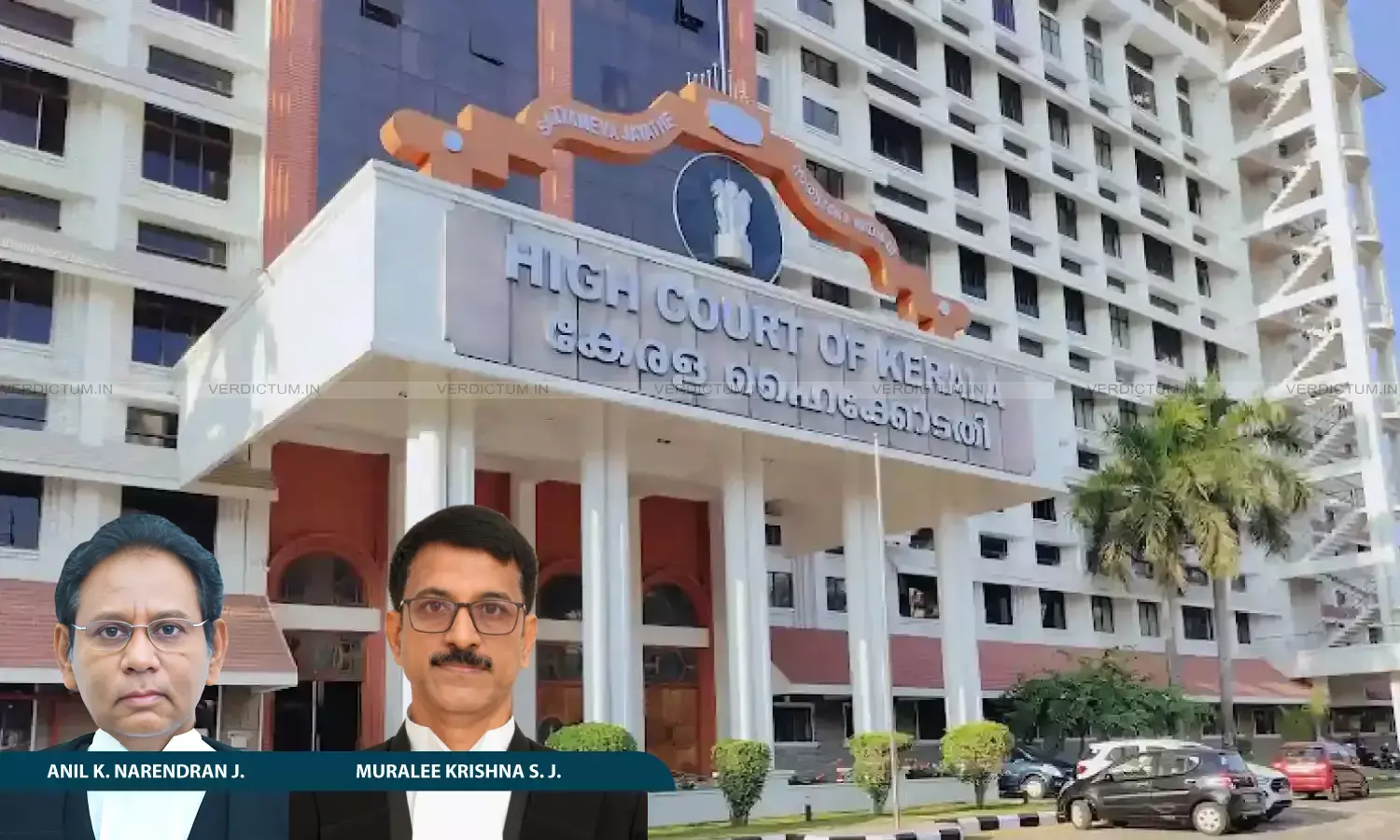
Justice Anil K. Narendran, Justice Muralee Krishna S., Kerala High Court
The Kerala High Court has held that a detaining authority must supply the detention order and all relied-on material documents in a language known to the detenue so that the grounds can be understood and an effective representation can be submitted.
Finding that a Kannada-speaking detenue had not received translated copies of the detention order and supporting documents supplied in Malayalam, the Court quashed his preventive detention under the Kerala Anti-Social Activities (Prevention) Act, 2007 and ordered his release.
The Court was hearing a writ petition filed by the detenue’s wife under Article 226 of the Constitution challenging the District Magistrate’s preventive-detention order, its confirmation by the State Government and the subsequent order continuing the detention for six months.
A Bench of Justice Anil K. Narendran and Justice Muralee Krishna S. observed: “it is the duty of the detaining authority to supply the detention order and the material documents relied therein to the detenue in the language known to him, so as to facilitate the detenue to understand the grounds of detention and to submit a proper representation before the authorities concerned as provided under Section 7(2) of the KAA(P) Act and Article 22(5) of the Constitution of India. Since the detenue was not supplied with the translated copy of Ext.P2 detention order and other material documents relied therein in the language known to him, the fundamental right guaranteed to him under Article 22(5) of the Constitution of India was denied to him. For the said reason, the impugned Exts.P2 and P4 orders are liable to be set aside”.
Advocate Anil K. Muhamed appeared for the petitioner. Additional State Public Prosecutor M. Muhammed Shafi and Government Pleader Chethan Krishna R. appeared for the State authorities.
Background
The District Magistrate ordered the preventive detention of the petitioner’s husband after classifying him as a known rowdy on the basis of six criminal cases. The order was confirmed by the State Government and his detention was subsequently directed to continue for six months.
The petitioner contended that the detenue hailed from Karnataka and knew only Kannada, a fact acknowledged in both the sponsoring report and the detention order. She argued that the failure to supply translated copies prevented him from making a proper representation against his detention.
The petitioner also contended that the detention order was a verbatim reproduction of the sponsoring report and that some of the supplied documents were illegible. The State maintained that the detention order reflected the District Magistrate’s subjective satisfaction, that the documents were legible and that their contents had been explained to the detenue in a language known to him.
Court’s Observations
No Written Translation Was Supplied In Kannada
The Court noted that the sponsoring report and the detention order acknowledged that the detenue hailed from Karnataka and resided in a linguistic-minority area of Kasaragod district. It held that translated copies ought to have been furnished in Kannada, the language known to him.
Upon examining the detention file, the Court found that neither the detention order nor the material documents relied upon had been supplied in Kannada. The Court further found no endorsement by the detenue stating that the Malayalam documents had been explained to him in a language known to him or that translated copies had been supplied.
The Court observed: “Nowhere in that file it was endorsed by the detenue that the contents of the detention order and the documents relied therein, which are in Malayalam, were explained to him in the language known to him or that the translated copies of those documents were supplied to him.”
The Court held that the omission denied the detenue his valuable right to submit a representation against the detention order.
Oral Explanation Does Not Satisfy Article 22(5)
The Court relied on Hadibandhu Das v. District Magistrate, Cuttack (1969), in which the Supreme Court held that merely explaining a complicated detention order orally, without supplying a translation in a script and language understood by the detenue, denied the right to receive the grounds and make a representation.
The Court also referred to Lallubhai Jogibhai Patel v. Union of India (1981), where the Supreme Court held that an affidavit stating that the detention grounds had been orally explained in a language known to the detenue did not satisfy Article 22(5).
Quoting the precedent, the Court stated: “It means that sufficient knowledge of the basic facts constituting the 'grounds' should be imparted effectively and fully to the detenu in writing in a language which he understands.”
The Court noted that the purpose of communicating the grounds was to enable a purposeful and effective representation. It stated that this purpose was not served where the grounds were only orally explained and nothing in a language understood by the detenue was left with him in writing.
The Court further relied on Mortuza Hussain Choudhary v. State of Nagaland (2025), which applied the Constitution Bench decision in Harikisan v. State of Maharashtra (1962). The Court noted that oral translation or explanation did not amount to adequate communication under Article 22(5) and that a literate detenue must receive the grounds in a language understood and a script readable by him.
Translation Is Required For An Effective Representation
The Court held that Section 7(2) of the KAA(P) Act and Article 22(5) required the detaining authority to supply the detention order and relied-on documents in the language known to the detenue.
The Court observed: “From the principles stated in the aforementioned judgments, it is clear that it is the duty of the detaining authority to supply the detention order and the material documents relied therein to the detenue in the language known to him, so as to facilitate the detenue to understand the grounds of detention and to submit a proper representation before the authorities concerned as provided under Section 7(2) of the KAA(P) Act and Article 22(5) of the Constitution of India.”
The Court consequently held that the non-supply of Kannada translations infringed the detenue’s fundamental right under Article 22(5) and invalidated the detention and continuation orders.
Other Challenges To Detention Order Rejected
The Court rejected the contention that the detention order was merely a verbatim reproduction of the sponsoring report. It held that although the detention order considered almost all the facts in the sponsoring report, it reflected independent consideration by the detaining authority.
The Court observed: “When the detention order was issued based on the sponsoring report, naturally there would have been reproduction of the material aspects stated in that report.”
The Court therefore held that Rosily Antony v. State of Kerala (2025) did not apply to the case.
After inspecting the detention file, the Court also rejected the allegation that the documents supplied to the detenue were illegible. It nevertheless clarified that their legibility did not affect the result because the failure to supply them in the language known to the detenue had already denied him the right to make a proper representation.
Conclusion
The Court allowed the writ petition and set aside the detention order and the subsequent order continuing the detention.
The Court directed the Superintendent of Central Prison, Kannur, to release the detenue forthwith unless his detention was required in connection with another case. It also directed the Registry to communicate the order to the Superintendent by email immediately.
Cause Title: Ayishath Ruksana v. State of Kerala and Others (Neutral Citation: 2026:KER:77781)
Appearances
Petitioner: Advocates Anil K. Muhamed, Krishnakumar G., Ajin Salam and Amith Leo James
Respondents: Additional State Public Prosecutor M. Muhammed Shafi; Government Pleader Chethan Krishna R.