

Dismissal Of Complaint By Magistrate U/S.204(4) CrPC On First Posting Date Without Proper Explanation Not Reasonable: Kerala High Court
The Kerala High Court was considering a revision challenging the dismissal of a complaint filed by the petitioner.

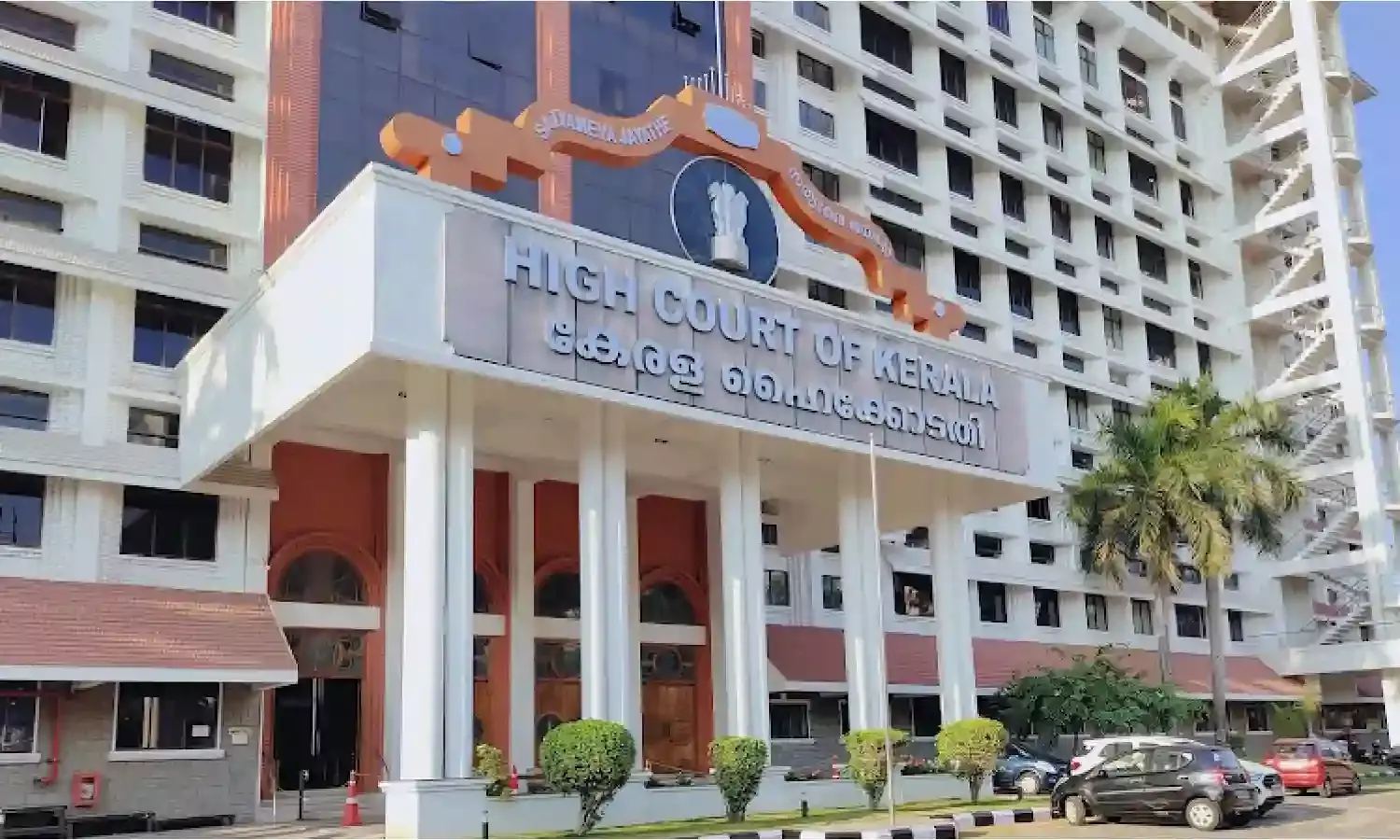
While observing that an order invoking the power of dismissal under Section 204 (4) of the Code Of Criminal Procedure must be a speaking order, the Kerala High Court has held that the order of dismissal of the criminal complaint by the Magistrate on the first posting date for the reason that the process had not been paid, without a proper explanation is anathema to the requirement of reasonableness embedded within such provision.
The High Court was considering a revision challenging the dismissal of a complaint filed by the petitioner for failure to take out steps for the issuance of a summons to the accused.
The Single Bench of Justice Syam Kumar V.M. held, “The cumulative effect of the words of Section 204(4) is that any order invoking the power of dismissal under the said Section must be a speaking order which would reveal that the learned Magistrate had applied his mind and exercised the mandate of the provision to ascertain the gravity of the failure to remit the process in a reasonable period, and if circumstances exist pointing to the need for dismissing the matter on the said count, the same should be elaborated and explained sufficiently. The application of mind by the learned Magistrate should thus be borne out from the order dismissing the complaint invoking Section 204 (4). Any order that is cryptic and insufficient when it comes to meeting the above mandates cannot be termed as one that meets the object and intend of the provision.”
“The order of dismissal of the criminal complaint by the Magistrate on the first posting date for the reason that the process had not been paid, without a proper explanation of the reason for such decision, is anathema to the requirement of reasonableness which is embedded within Section 204 (4) Cr.P.C.”, it added.
Advocate T. M. Chandran represented the Petitioner, while Public Prosecutor Sanal P. Raj represented the Respondent.
Factual Background
A complaint was filed by the petitioner alleging that the second respondent, after receiving an amount of Rs 1,80,000 from him towards arranging a tour to Japan, had cheated him by not returning the amount when the tour did not materialize. The complaint was forwarded by the CJM to the Museum Police Station for investigation. A refer report was filed by the police, to which the petitioner filed a protest complaint. The CJM took cognizance of the offence and ordered the issuance of a summons to the accused. However, on the very first posting date after the order for issuance of summons, the Magistrate dismissed the complaint on the ground that the complainant was absent.
The petitioner challenged the order before the Additional Sessions Judge, but the Sessions Court dismissed the same. The petitioner approached the High Court contending that the discretion vested with the Magistrate under Section 204 (4) of the Code of Criminal Procedure requires such power to be exercised judiciously and with due circumspection, and a mechanical dismissal on the very first posting date is not envisaged in law.
Reasoning
On a perusal of the facts of the case, the Bench noted that the matter was posted for return of summons on February 29, 2020. It was the very first posting for the said purpose, and the petitioner had been pursuing the matter. He, along with the witness, was present before the court on various days of postings for recording sworn statements. The Bench noticed that it was after such recording of evidence that an order for the issuance of a summons was rendered. Thereafter, on the next day of posting for the return of summons, the petitioner was absent. He had offered an explanation for his absence, which was a mix-up of dates at his counsel's office.
The Bench, at the outset, explained that Section 204 (4) CrPC empowers a Magistrate to dismiss a complaint when the process fees or other fees payable are not paid within a reasonable time. Referring to the judgments of the Apex Court, the Bench explained that the dismissal of a complaint for non-payment of the process fee invoking Section 204 (4) is not a routine or mechanical process. “The provision does not envisage it to be so at all. The words ‘reasonable time’, as used in Section 204 (4), mandates that the Magistrate shall, before proceedings to dismiss for non-remittance of process, ascertain whether there was a failure to remit the process within a reasonable time. What is reasonable would depend on the facts and circumstances of each case, thus giving sufficient leeway for the Magistrate to suit the time period to the fact situation of the matter at hand. Similarly, the word ‘may’ as used in the provision further facilitates the Magistrate to test the reasonableness and conveys that the provision does not impose a strict regimen leading to dismissal and dismissal alone”, it added.
The Bench further clarified that even if the time period exceeds what may be legally termed as reasonable, the Magistrate still has the option to weigh in the circumstances to ensure that justice is done and a complaint is not thrown out for a mere procedural non-compliance.
Coming to the facts of the case, the Bench held that the order of the Magistrate could not be termed as valid or legal. Thus, finding the impugned order to be unsustainable in law, the Bench set aside the same and resurrected the complaint back to the file. “...and the learned Magistrate shall dispose of the same in accordance with the law”, it concluded.
Cause Title: Aloysious Fernandez Dickson v. State of Kerala (Neutral Citation: 2026:KER:31483)
Appearance
Petitioner: Advocates T.M. Chandran R. Arun
Respondent: Public Prosecutor Sanal P. Raj