

Kerala High Court Stays Provision Of TV Ratings Policy 2026 Mandating Total Exclusion Of Landing Page Viewership
It was observed that since the Apex Court is already seized of the regulatory dispute regarding landing pages, it is appropriate to restrain the Union of India and BARC from enforcing the impugned restrictions.

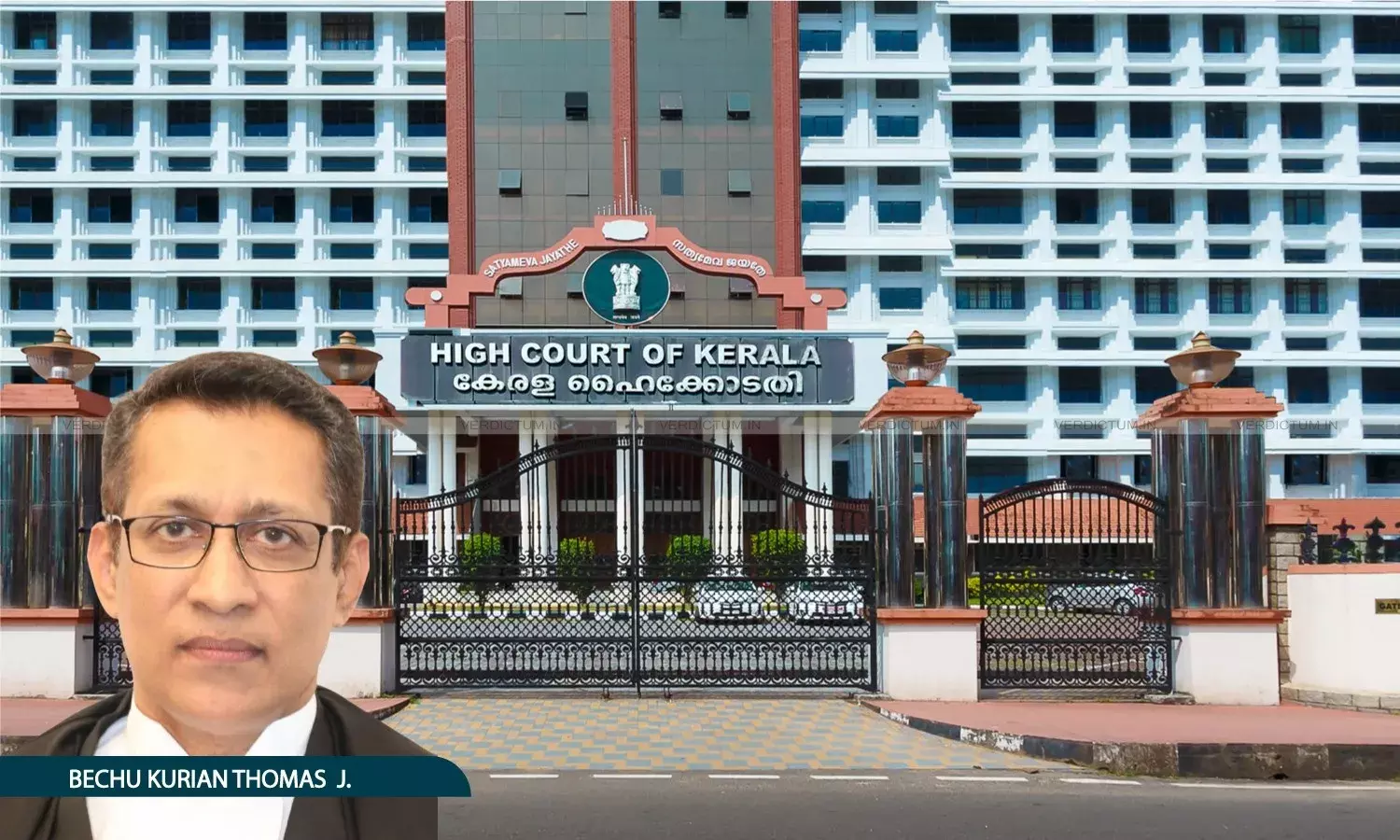
The Kerala High Court has stayed the operation and implementation of the proviso to Clause 5.4.1 of the newly notified TV Rating Policy 2026 and its subsequent operational guidelines, which mandated a blanket, total exclusion of the "Landing Page" viewership from Television Rating Points (TRP) calculations.
The Court passed the interim order in a writ petition filed by the All India Digital Cable Federation, noting that the regulatory jurisdiction over landing pages is currently sub-judice before the Supreme Court in TRAI v. Bennett Coleman & Co. Ltd..
A writ petition was filed by the All India Digital Cable Federation seeking inter alia a stay on the operation and implementation of the impugned proviso to Clause 5.4.1 of the TV Rating Policy 2026 as far as it excludes the viewership of the landing page from viewership measurement and the operational guidelines issued in furtherance of the proviso to Clause 5.4.1 of the TV Rating Policy 2026.
The impugned provisions mandate a blanket, total exclusion of "Landing Page" viewership from Television Rating Points (TRP) calculations, treating it strictly as a marketing tool.
The Bench of Justice Bechu Kurian Thomas ordered, "Since the Supreme Court is already in seisin of the matter in Civil Appeal No.6001-6003/2019, wherein, Exhibit-P28 order has been passed directing that the Telecom Regulatory Authority of India shall not enforce Landing Page Regulations/directions against the respondents and other similarly situated members of the Association, it is only appropriate that the respondents herein be directed not to implement the proviso to Clause 5.4.1 of Exhibit-P1 - TV Rating Policy of 2026, without getting further orders from this Court. Ordered accordingly."
Senior Advocate Arun Kathpalia appeared for the Petitioners, while the Additional Solicitor General appeared for the Respondents.
The Ministry of Information and Broadcasting (MIB) issued its first TV rating guidelines, which focused purely on eligibility and methodology without mentioning landing pages. The Telecom Regulatory Authority of India (TRAI) issued a direction prohibiting the placement of channels on the landing page or boot-up screen. Stakeholders challenged this before the TDSAT. In response, TRAI issued a consultation paper to seek industry feedback and subsequently withdrew its restrictive direction. Despite objections from stakeholders and a lack of empirical data showing any negative impact on TRPs, TRAI issued a fresh direction re-imposing the blanket ban on landing page placement.
The All India Digital Cable Federation (Petitioner), along with other broadcasters and distributors, challenged this fresh direction before the TDSAT. After a detailed hearing, the TDSAT passed a common judgment setting aside TRAI’s restrictive direction. TRAI challenged the TDSAT judgment before the Supreme Court. The Apex Court stayed the TDSAT order but explicitly directed TRAI not to enforce any landing page restrictions during the pendency of the appeal.
To resolve viewership concerns, the Broadcast Audience Research Council (BARC) launched the Landing Page Algorithm (LPA) to identify and filter out forced viewing from genuine traffic. While the Supreme Court appeal remained pending, MIB proposed a new TV Rating Policy that completely excluded landing pages from TRP calculations. Petitioner No. 1 strongly objected, warning that this amendment illegally circumvented the Supreme Court's stay order.
Disregarding the objections, MIB notified the new TV Ratings Policy containing the impugned proviso to Clause 5.4.1, which completely excluded landing pages from TRP measurements. Aggrieved by this arbitrary action, the Petitioners filed the present Writ Petition to strike down the proviso as invalid and illegal.
Senior Advocate Arun Kathpalia, appearing for the Petitioners, argued that treating genuine consumer exposure as "zero viewership" commercially hollows out a vital asset for Multi-System Operators (MSOs), directly violating their fundamental right to carry on trade and business under Article 19(1)(g) of the Constitution of India.
The Petitioner submitted that the said action of the Respondents, i.e. Union of India and Broadcast Audience Research Council, commercially hollows out a vital asset for Multi-System Operators (MSOs), who rely on contractually protected carriage and placement fees from the landing page, the default screen a consumer encounters upon booting up a set-top box, to survive intense competition from unregulated OTT platforms and social media.
The Plea said, "By declaring genuine consumer exposure as “zero viewership”, the policy inflicts irreversible financial damage on the cable TV sector and directly violates the Petitioners' fundamental right to carry on trade and business under Article 19(1)(g) of the Constitution of India."
It also said that administrative action directly circumvents an ongoing judicial proceeding. it added that the regulatory jurisdiction to restrict landing pages is currently sub-judice before the Supreme Court in TRAI v. Bennett Coleman & Co. Ltd., where the Apex Court explicitly directed that landing page restrictions shall not be enforced during the pendency of the appeal.
It was the case of the Petitioners that the Telecom Regulatory Authority of India (‘TRAI’) had issued a direction bearing No. 12-37/2017-B&CS (“2017 Direction”) seeking to restrain all broadcasters and distributors of television channels, from placing any registered satellite television channel, whose TV rating is released by TV rating agency, on the landing LCN or Landing channel or boot up screen within 15 days of issuance of the said notice. A challenge was made to the aforesaid 2017 Directions issued by TRAI before the TDSAT. In view of the challenge relating to the requirement of transparency, TRAI issued a Consultation Paper on “Issues related to Placing of Television Channel on Landing Page” seeking comments/ suggestions of all the stakeholders.
"By entirely bypassing this judicial stay, the Respondent No. 3 is attempting to do indirectly what the regulator was prohibited from doing directly. This drastic measure is also technically regressive and demonstrates a complete non-application of mind to ground realities; it ignores that BARC already utilizes Landing Page Algorithm (LPA) that successfully removes passive, forced viewing while retaining genuine, engaged viewer traffic", it added.
Accordingly, it was prayed that a direction may be issued striking down the impugned Clause and restraining the Respondents from giving effect to the operational guidelines issued in furtherance of the proviso to Clause 5-4.1 of the TV Rating Policy 2026.
Cause Title: All India Digital Cable Federation and Anr. v. Union of India and Ors. [WP(C) 17422/2026]
Appearances:
Petitioners: Senior Advocate Arun Kathpalia, Advocates M. Gopikrishnan Nambiar, K. John Mathai, Joson Manavalan, Kuryan Thomas, Paulose C. Abraham, Raja Kannan, Jai Mohan.
Respondents: Additional Solicitor General of India and Advocate Jaishankar V. Nair.