

Deceased’s Inferred Consent & Partner’s Interest In Becoming Parent Require Utmost Consideration U/S.22 Of Assisted Reproductive Technology (Regulation) Act: Kerala High Court
The writ petition before the Kerala High Court was presented by the wife of the deceased, who sought utilisation of the embryos for an IVF procedure.

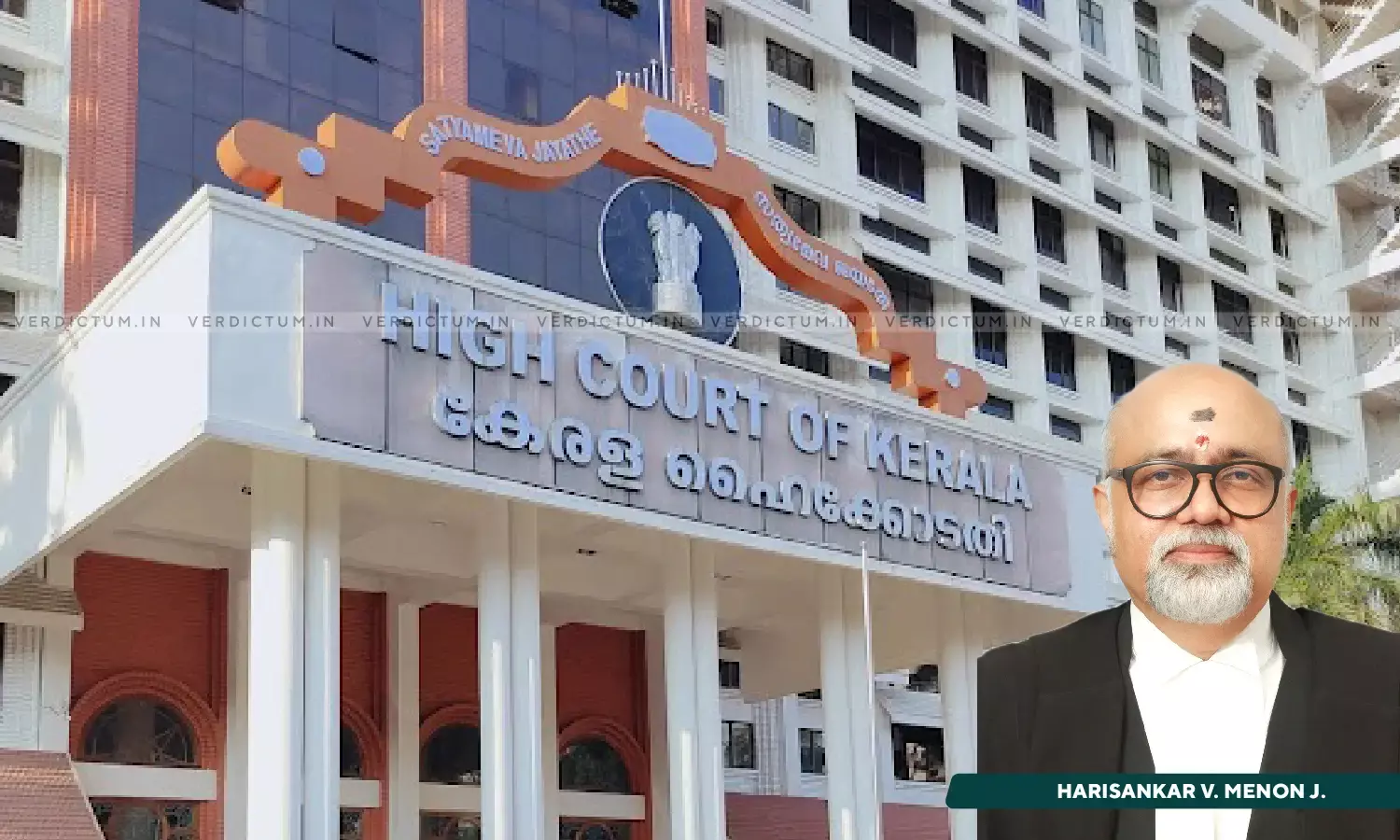
Justice Harisankar V. Menon, Kerala High Court
While observing that under Section 22 of the Assisted Reproductive Technology (Regulation) Act, 2021 (ART Act), the “deceased’s inferred consent” and the “partner’s interest” in becoming a parent require the utmost consideration, the Kerala High Court has directed a hospital to allow a widow to use the preserved embryos of her deceased husband for the purpose of assisted reproduction.
The writ petition before the High Court was presented by the wife of the deceased who sought utilisation of the embryos for an IVF procedure.
The Single Bench of Justice Harisankar V. Menon held, “Thus, the intention behind incorporating the provisions of Section 22 of the ART Act requires to be noticed. It is specifically found that it is the “deceased’s inferred consent” and the “partner’s interest” in becoming a parent that require the utmost consideration. As has been found, the intention of the deceased was to ensure the ‘actual use’ of the embryos, and, therefore, the wish of the petitioner-wife to become a parent deserves to be respected.”
Advocate B. Renjithkumar represented the Petitioner while Central Government Counsel K. Arjun Venugopal represented the Respondent.
Factual Background
The couple was undergoing infertility treatment with the respondent hospital. Embryos were cryopreserved during the lifetime of the deceased husband. The petitioner stated that the respondent hospital at the time of cryopreservation, had also obtained consent. Subsequently, after the death of the husband, the petitioner sought for utilising the embryos for the purpose of IVF procedure. However, when such a request was made, the hospital informed the petitioner that unless a specific written consent with reference to the provisions of Section 22(1)(a) of the Assisted Reproductive Technology (Regulation) Act, 2021 (ART Act) was available, the procedure couldnot be continued. The petitioner approached the High Court seeking a direction to the hospital to release, and also to allow the petitioner to use the preserved embryos of her deceased husband for the purpose of assisted reproduction.
Reasoning
Referring to Section 22 of the ART Act, the Bench explained that under the statute, the “written informed consent of all parties” is a mandatory requirement for performing the procedure under the statute. “The afore provision requires to be considered along with the provisions of Rule 13(1)(f)(iv) of the Rules, as per which the consent for freezing of embryos requires to be provided under Form 9”, it added.
Referring to Form 9, the Bench explained that under the provisions of the ART Act and Rules and the Form, the statute requires the husband/man to consider a situation where, in the unforeseen event of his death, what would be his intention as regards the use of the “embryos”. The Bench was of the view that when the ART procedure was commenced by the respondent hospital, in fact the hospital ought to have insisted on the petitioner and the deceased husband to execute the consent in Form 9.
On a perusal of the consent letter and Form 9, the Bench held that it could be assumed that the husband wanted the wife to use the embryos after his death and he wanted the same to be used for a meaningful purpose. “In such a situation, I am of the opinion that merely because the 4th respondent hospital has chosen to collect Ext.P3 as against the statutory format at Form 9, the request made by the wife is not to be disallowed”, it held.
The Bench thus allowed the writ petition directing the respondent hospital to allow the petitioner to use the preserved embryos of the deceased husband for the purpose of assisted reproduction.
Cause Title: A v. Union Of India (Neutral Citation: 2026:KER:66664)
Appearance
Petitioner: Advocates B. Renjithkumar, Clara Sherin Francis
Respondent: Central Government Counsel K. Arjun Venugopal, Government Pleader Dinesh Thankappan