

Serving Arrest Notice On Advocate Nominated By Accused Satisfies Section 48 BNSS Mandate: Kerala High Court
The Court said that in the present case, the documents demonstrate that the grounds of arrest were duly communicated to the applicants’ counsel.

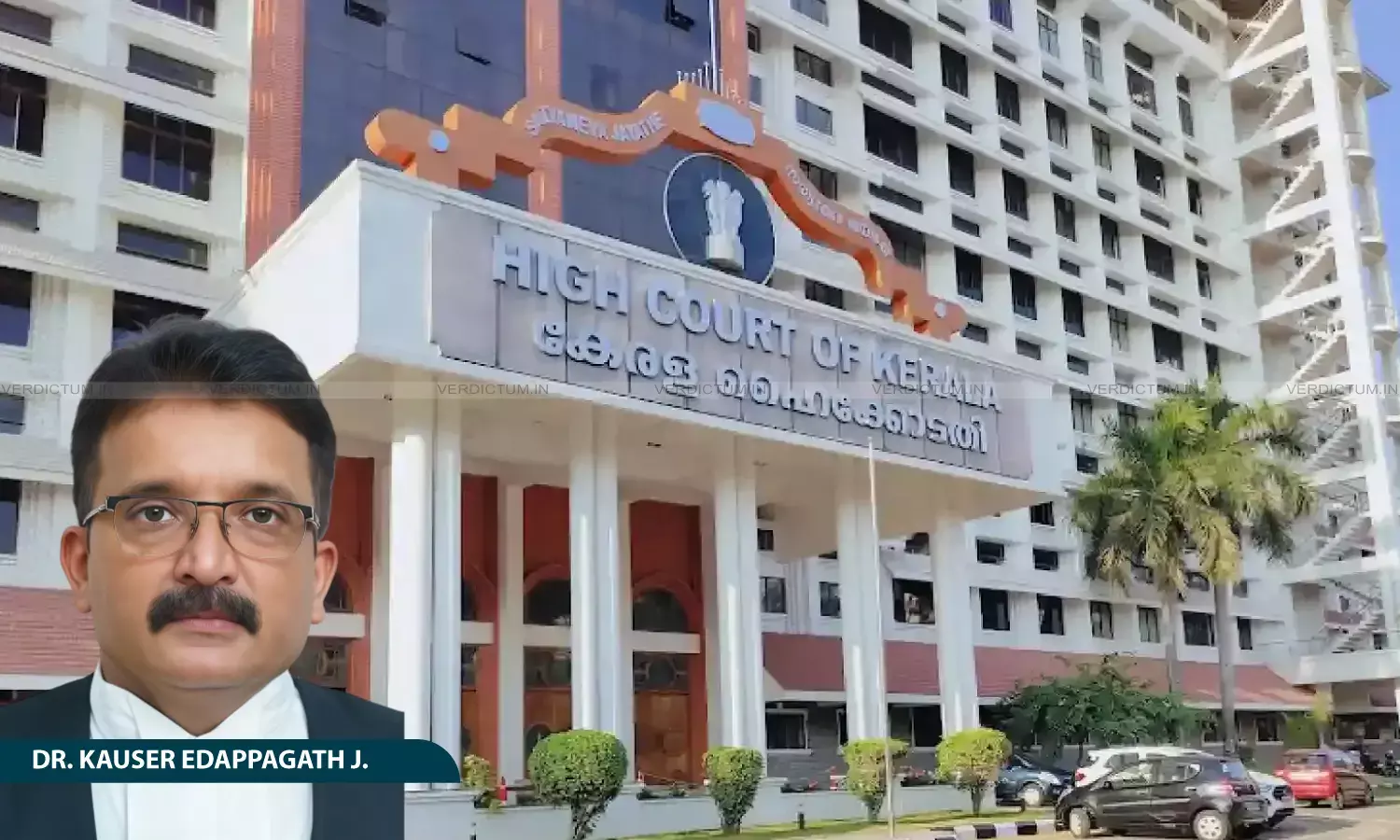
The Kerala High Court held that serving an arrest notice on an advocate explicitly nominated by the accused satisfies the statutory mandate of Section 48 of the Bharatiya Nagarik Suraksha Sanhita, 2023 (BNSS), which requires informing a relative, friend, or any other person disclosed or nominated by the arrestee.
The Court observed that since the applicants had specifically requested and nominated their legal counsel to receive the intimation of arrest, and the police had duly served the notices upon the said counsel, there was no procedural infraction or violation of Article 22(1) of the Constitution of India.
Consequently, finding sufficient prima facie material linking the applicants to the possession of commercial contraband under the NDPS Act, the Court dismissed the regular bail application.
The Bench of Justice Kauser Edappagath held, "Where the arrested person nominates his advocate for such intimation and notice of arrest under Section 48 is duly served upon the advocate, the requirement of the statute stands satisfied. A perusal of Annexure-2 remand report reveals that, in accordance with the applicants’ request, notices under Section 48 were issued to their advocate. The statutory obligation under Section 48 is thus duly complied with. Consequently, the bail is dismissed."
Advocate Richard Babu appeared for the Applicants/Accused, while Senior PP V Vinay appeared for the State.
Brief Facts
The applicants filed an application seeking regular bail under Section 483 of the Bharatiya Nagarik Suraksha Sanhita, 2023 (BNSS). The prosecution alleged that the applicants, arrayed as accused numbers 1 and 2, committed offences punishable under Sections 22(b) and 29 of the Narcotic Drugs and Psychotropic Substances Act, 1985 (NDPS Act). The case of the prosecution was that the applicants were found in conscious possession of three grams of MDMA at the rented premises of the first accused, which was allegedly kept there for the purpose of sale.
Contentions of the Parties
The Applicants contended that they were innocent and were falsely implicated in the alleged crime. It was further argued that there was no material on record to connect the applicants with the offence. The primary legal grievance raised by the applicants was that the grounds of arrest were not properly communicated to their relatives, which constituted a blatant infraction of Article 22(1) of the Constitution of India and Section 48 of the BNSS. It was vehemently urged that the delivery of the arrest notice to the applicants' legal counsel did not satisfy the mandatory statutory requirement of informing a relative or friend.
The State opposed the bail application, submitting that the incident occurred as a part of an intentional criminal act by the applicants. It was contended that there was no violation of either constitutional mandates or statutory provisions. The prosecution further asserted that notices of information of arrest were duly issued in accordance with the law, and given the gravity of the recovery, the applicants were not entitled to the grant of regular bail.
Observations/Findings of the Court
The High Court observed that there were sufficient prima facie materials on record to connect the applicants with the alleged crime. Examining the legal question regarding the communication of the grounds of arrest, the Court noted that while the requirement to inform an arrestee and their relatives of the grounds of arrest was a mandatory constitutional and statutory safeguard—failing which an arrest would be rendered illegal—the facts of the present case did not disclose any such infraction.
The Court perused the statutory mandate of Section 48 of the BNSS, which requires a police officer to give information regarding the arrest to a relative, friend, or "such other person as may be disclosed or nominated by the arrested person." Upon verifying the remand report, the Court found that the applicants themselves had requested and nominated their advocate to receive the said intimation.
"Annexures 3 and 4 are notices of information of arrest issued under Section 48 of the BNSS. These documents demonstrate that the grounds of arrest were duly communicated to the applicants’ counsel. The contention advanced by learned counsel for the applicants is that such grounds must necessarily be conveyed to the relatives or friends of the applicants, and that communication to their counsel is inadequate. I cannot subscribe to the said argument", the Court observed.
Since notices were duly served upon the nominated counsel in accordance with the specific request of the applicants, the Court held that the statutory obligation under Section 48 of the BNSS had been fully complied with.
Finding no procedural illegality in the arrest and considering the merits of the case, the Court dismissed the bail application.
Cause Title: Nithin KA & Anr. v. State of Kerala [Neutral Citation:2026:KER:46863]
Appearances:
Applicants: Advocate Richard Babu
Respondent: Senior PP V Vinay
Click here to read/download the Order