

Seized Vehicles Involved In Any Offence To Be Released Only After Valid Insurance Policy Is Produced: Karnataka High Court Directs Police & Courts
The Court noted that the liberal interpretation of beneficial legislation cannot condone violation of mandatory provisions, holds rider without licence or insurance and triple riding 50% negligent.

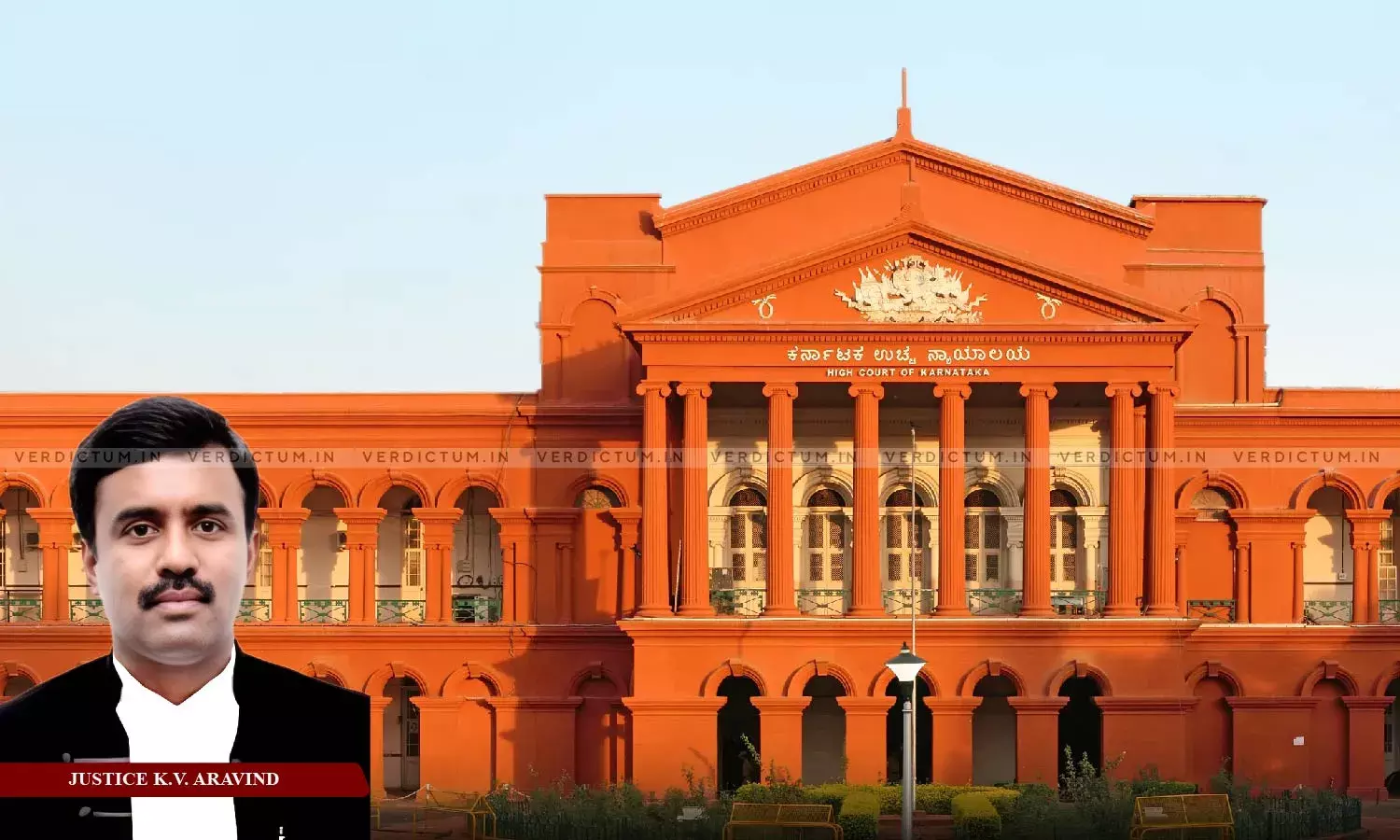
The Karnataka High Court, Kalaburagi Bench, has directed the Director General and Inspector General of Police to take steps to instruct all police authorities across the State to release seized vehicles involved in any offence only after a valid insurance policy covering the vehicle is produced. It has also directed the jurisdictional courts to order the release of seized vehicles only on production of such a policy. The Court noted that, in many cases, vehicles found to have no licence or insurance are released on payment of a fine, and the violation of the Motor Vehicles Act continues.
The Court observed, while deciding an appeal against a motor accident award, that although the Motor Vehicles Act is a beneficial legislation, the principle of liberal interpretation cannot be extended to condone violations of its mandatory provisions. Doing so, it said, would amount to giving a premium to such violations. It attributed 50% negligence to a motorcycle rider who had no valid driving licence, no insurance and was carrying two pillion riders, and set the matter for compliance on December 14, 2026.
A Single Bench of Justice K.V. Aravind observed, “The Director General and the Inspector General of Police is hereby directed to take necessary steps to instruct all the police authorities across the State, directing them to release seized vehicles involved in any offence only after the valid insurance policy covering the vehicle is produced”.
“…Though the M.V. Act is a beneficial legislation, the principle of liberal interpretation cannot be extended to condone violations of its mandatory provisions, particularly when such provisions are intended to ensure road safety, maintain road discipline and protect the interests of the public and the community at large. Extending such liberal interpretation in cases involving clear violations of the statutory mandate would have the effect of rewarding or giving a premium to such violations”, the Bench said.
Advocate Sangeeta Bhadrashetty appeared for the appellant while the respondent was served and unrepresented, Advocate Sanganagouda Biradar assisted the Court.
The claimant was injured in an accident on September 11, 2017 between his motorcycle and a bus of the North Eastern Karnataka Road Transport Corporation. In the matter, the Senior Civil Judge and MACT, Shorapur, held the bus driver negligent and awarded compensation of Rs 2,30,443 against the Corporation by its award of March 10, 2022.
The Corporation appealed under Section 173(1) of the Motor Vehicles Act, 1988, arguing that the claimant had no valid licence or insurance, was triple riding, and that the spot sketch showed his negligence. The claimant, though served, was unrepresented. The Court requested four advocates who regularly appear in motor accident cases to assist.
The Court held that the claimant’s failure to produce a driving licence called for an adverse inference, that the motorcycle was admittedly uninsured, and that the sketch in the Crime Detail Form showed the accident in the middle of the road with enough space for the two-wheeler to pass. It held that the filing of a charge sheet against the bus driver was not conclusive of negligence unless corroborated, and that it was contrary to the contents of the same document. It noted that it had consistently attributed 30% negligence to a rider without a valid licence. In this case, the uninsured motorcycle and triple riding, which increased the risk to the rider himself, justified 50%.
The Court also noted that police routinely release vehicles involved in accidents after imposing a fine, even where there is no licence or insurance, that the violation then continues, and that tribunals face difficulty recovering awards from uninsured owners. It referred to the Supreme Court’s observations in Oriental Insurance Co. v. Tuni Pati and National Insurance Co. v. Thungala Dhana Laxmi on fraudulent claims and uninsured vehicles. The Additional State Public Prosecutor submitted that the police have no power to retain a vehicle on these grounds.
The appeal was allowed in part and the award modified. The claimant remains entitled to Rs 2,30,443 with interest at 6% per annum, and the Corporation must deposit 50% of the amount with proportionate interest within eight weeks. The Tribunal’s order on release and investment of the amount was maintained, with no order as to costs. The Court directed the police to report the steps taken on December 14, 2026 and directed the Registrar General to circulate the order to all jurisdictional courts.
Cause Title: The Divisional Controller, NEKRTC v. Marenna (Neutral Citation: 2026:KHC-K:9088)
Appearances:
Appellant: Advocate Sangeeta Bhadrashetty.
Respondent: Served and unrepresented. Advocates Sanganagouda Biradar, Nagraj Patil, Sharanabasappa M. Patil and Manjunath Mallayya Shetty assisted the Court.