Karnataka High Court Quashes Defamation Case Against Siddaramaiah, D.K. Shivakumar Over Advertisement Alleging Corruption In BJP Government
The Court held that similarly situated co-accused could not be treated differently without cogent reasons when the allegations arose from the same incident and rested on substantially similar assertions.
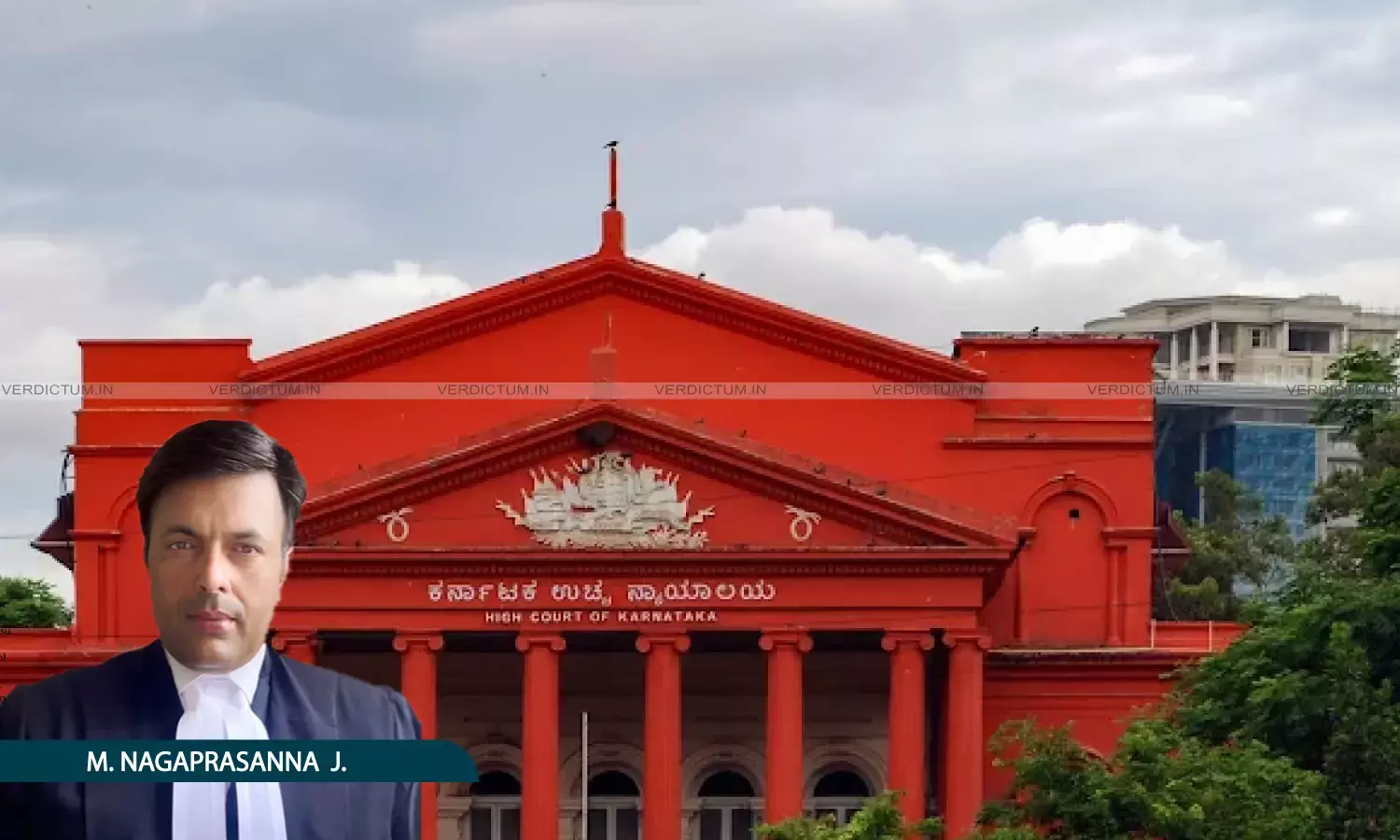
Justice M. Nagaprasanna, Karnataka High Court
The Karnataka High Court has quashed a defamation case against Former Karnataka Chief Minister, Siddaramaiah, CM D.K. Shivakumar and the Karnataka Pradesh Congress Committee over a newspaper advertisement alleging corruption in the Bharatiya Janata Party government.
The Court was hearing connected petitions under Section 482 of the CrPC challenging the criminal proceedings initiated for alleged offences under Sections 499 and 500 of the IPC.
Justice M. Nagaprasanna, while referring to a coordinate Bench’s decision in Rahul Gandhi v. Bharatiya Janata Party (2026), observed: “The coordinate Bench was considering the case of accused No.4 of the intention and involvement in publishing the advertisement and whether the political party is a person aggrieved. The issues that have fallen for consideration in the case also are the same, ostensibly so, as what the coordinate Bench considered was the case of accused No.4.”
The Bench, accordingly, held: “In the light of the issue being the same, evidence being the same and allegations being the same, all stemming from a solitary advertisement, the benefit that is granted to the co-accused by quashment cannot be denied to these petitioners.”
Senior Advocate K. Shashi Kiran Shetty appeared for the petitioners. Advocate Vinod Kumar M. appeared for the Bharatiya Janata Party.
Background
The Karnataka Pradesh Congress Committee allegedly published an advertisement in several major newspapers, allegedly setting out prices for various posts in the Bharatiya Janata Party Government during its tenure between 2019 and 2023. The Bharatiya Janata Party issued a legal notice seeking an unconditional apology and subsequently filed a private complaint after the notice was ignored.
The Magistrate took cognizance of alleged offences under Sections 499 and 500 of the IPC and issued summons. Siddaramaiah, D.K. Shivakumar and the Karnataka Pradesh Congress Committee then approached the High Court seeking quashing of the proceedings.
The petitioners argued that the procedure prescribed under Section 199 of the CrPC had not been followed and that the complainant was not a person aggrieved by the alleged imputations. They relied on the coordinate Bench’s decision in Rahul Gandhi v. Bharatiya Janata Party (2026), which had quashed the proceedings against the fourth accused arising from the same advertisement.
The Bharatiya Janata Party contended that publishing an advertisement concerning corruption in the government had defamed it because it was the party in power at the relevant time. It argued that the earlier quashing of the proceedings against Rahul Gandhi did not automatically entitle the other accused to the same relief.
Court’s Observations
Coordinate Bench Had Considered The Same Advertisement And Issues
The Court noted that the coordinate Bench had examined Rahul Gandhi’s alleged intention and involvement in publishing the advertisement, as well as whether the Bharatiya Janata Party was a person aggrieved.
In Rahul Gandhi v. Bharatiya Janata Party (2026), the coordinate Bench had observed: “An imputation that ‘party X’ is corrupt, is by itself defamatory and the entity which is alleged to be corrupt could be the political party. However, where the imputation made is against certain individuals or class of persons in the entity, then the person aggrieved would be such individuals or class of persons within the larger entity who have been defamed.”
The coordinate Bench had found that the advertisement referred to constitutional functionaries, government employees and irregularities in government schemes rather than to the political party itself. None of the functionaries or entities referred to in the advertisement had approached the Court.
It had further held: “Where a functionary such an office bearer of the party is defamed, then such functionary who would be the aggrieved person. In the present case, the imputation itself is by way of innuendo and such imputation is sought to be stretched to the party. However, sans the tweet the advertisement by itself makes no reference to the party but rather makes an imputation to the functionaries mentioned in the advertisement.”
The coordinate Bench had also found no material showing that the advertisement was published at Rahul Gandhi’s instance with the intention required under Section 499 of the IPC. His photograph alone was insufficient. The alleged tweet, however, had neither been marked as an exhibit before the Magistrate nor accompanied by a certificate under Section 65B of the Evidence Act.
Similarly Situated Co-Accused Could Not Be Treated Differently
The Court relied on Sajal Bose v. State of West Bengal (2026), in which the Supreme Court had disapproved of granting quashing to some co-accused while denying it to others without a cogent distinction.
The Supreme Court had observed: “The impugned judgment does not disclose any cogent or discernible reasoning for drawing such a distinction, particularly when the allegations stem from a common incident and are founded on substantially similar assertions. In the absence of a clear rationale justifying differential treatment, the approach adopted by the High Court is legally and factually unsustainable.”
The Court also referred to Susanta Kumar Dalei v. State of Odisha (2026), in which the Supreme Court held that similarly situated accused must be treated alike when the allegations and evidence against one accused are not stronger than those against co-accused who have already received relief.
Applying those decisions, the Court found that the allegations against the present petitioners were similar to those against Rahul Gandhi and arose from the same advertisement. The coordinate Bench’s order had attained finality, and the Court found no reason to deny parity.
Conclusion
The High Court held that the issue, evidence and allegations against the petitioners were the same as those considered while quashing the case against their co-accused. It allowed both petitions and quashed the defamation proceedings against Siddaramaiah, D.K. Shivakumar and the Karnataka Pradesh Congress Committee. All pending applications were also disposed of.
Cause Title: Siddaramaiah v. Bharatiya Janata Party c/w Karnataka Pradesh Congress Committee and v. Bharatiya Janata Party
Appearances
Petitioners: K. Shashi Kiran Shetty, Senior Advocate; S. A. Ahmed, Surya Mukundaraj L., Sanjay Yadav B. and Anishka Vaishnav, Advocates
Respondent: Vinod Kumar M., Advocate