

Mere Physical Appearance Or Non-Contagious Medical Condition Not Impairing Discharge Of Duties Can’t Be Basis For Differential Treatment In Employment: Karnataka High Court
The petitioner sought permission to continue performing the hereditary duties of a Sannidhi Paricharaka at the Chamundeshwari Temple, Chamundi Hills, Mysore.

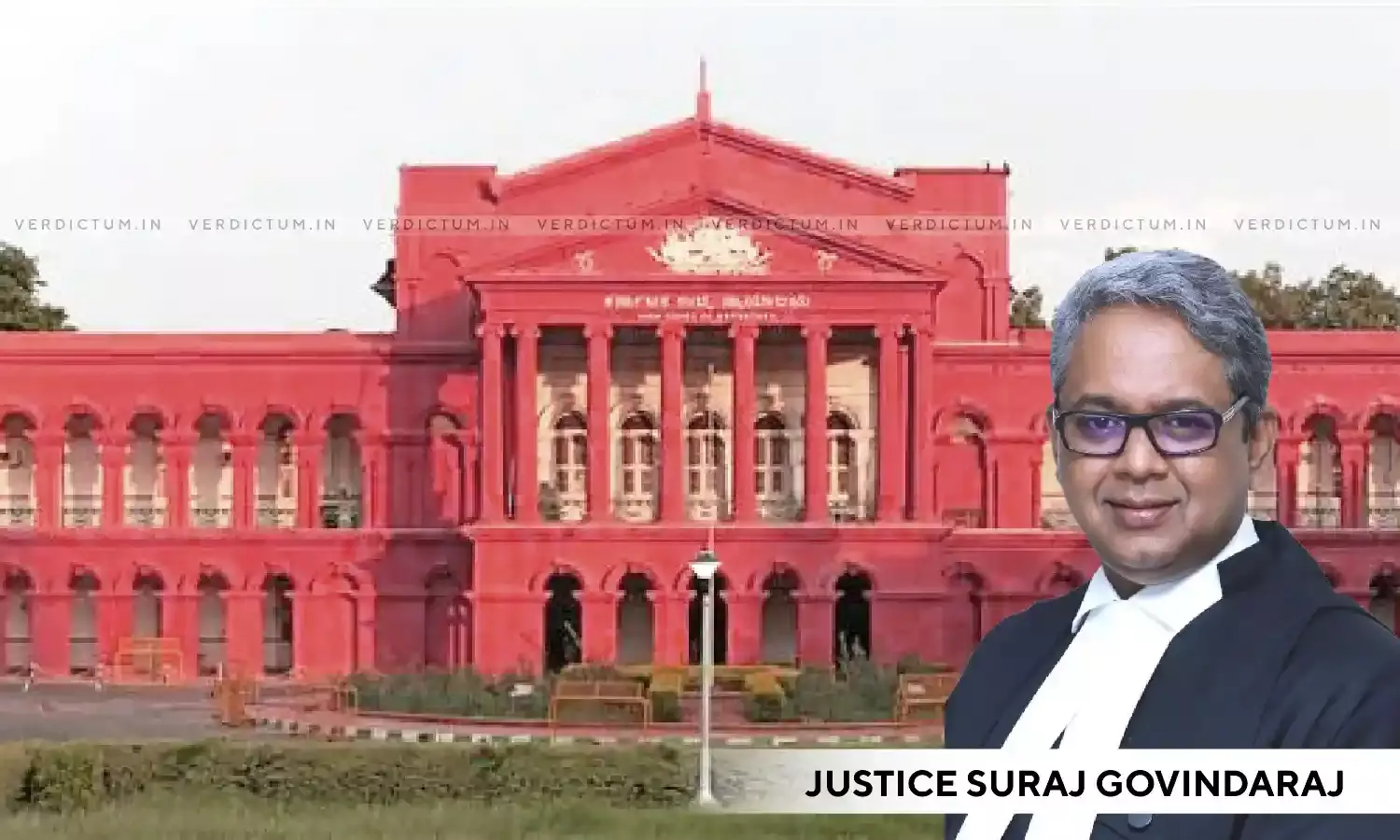
While granting relief to a priest performing the hereditary duties of Sannidhi Paricharaka, the Karnataka High Court has held that mere physical appearance or the existence of a non-contagious medical condition, which neither impairs the discharge of duties nor renders an individual incapable of performing the functions attached to the office, cannot constitute a valid basis for differential treatment.
The petitioner sought a direction restraining the respondents or any of their subordinate office bearers from interfering, objecting to, or obstructing the petitioner from performing the hereditary duties of a Sannidhi Paricharaka at the Chamundeshwari Temple, Chamundi Hills, Mysore for a period of two months on the ground of his ineligibility arising from his skin condition.
The Single Bench of Justice Suraj Govindaraj held, “Mere physical appearance or the existence of a non-contagious medical condition, which neither impairs the discharge of duties nor renders an individual incapable of performing the functions attached to the office, cannot constitute a valid basis for differential treatment.”
“Stigmatisation or exclusion of an individual solely on account of a medical condition such as vitiligo, particularly when expert medical opinion establishes that the condition is non-contagious and when there exists no religious prohibition against such individual performing the duties in question, would amount to discrimination and would be arbitrary. Such exclusion would offend not only Article 14 but also the constitutional values of dignity, inclusiveness and equal opportunity which form the foundation of the constitutional framework”, it added.
Advocate Pavan Sagar represented the Petitioner while Govt. Advocate C.H. Devaraj represented the Respondent.
Factual Background
The petitioner's uncle was serving as a Sannidhi Paricharaka at the Chamundeshwari Temple, Chamundi Hills, Mysuru, during his lifetime. He had executed a registered Will bequeathing his hereditary right to the said post in favour of the petitioner. Upon the death of the said uncle, the petitioner sought transfer of the inherited rights in his favour. Consequently, the Deputy Commissioner transferred the rights and privileges attached to the said post in favour of the petitioner. Thereafter, the petitioner commenced discharging the duties attached to the said post. Certain complaints were allegedly received from devotees objecting to the petitioner performing pujas on the ground that he was suffering from vitiligo.
An enquiry was conducted, and the petitioner was subjected to a medical examination. A certificate was thereafter issued by the competent medical authority certifying that the condition suffered by the petitioner was not contagious. Subsequently, a further dispute arose as to whether a person suffering from vitiligo could perform pujas. The Agama Pandits submitted a report stating that there was nothing in the texts which prohibited or prevented a person suffering from vitiligo from performing pujas or discharging duties as a Sannidhi Paricharaka. It was alleged that the Executive Officer had recently begun interfering with the discharge of duties by the petitioner on the ground that the petitioner suffered from vitiligo. In that background, the petitioner was prevented from performing the pujas and other related activities. Consequently, the petitioner submitted a representation, but the same was not considered. Aggrieved thereby, the petitioner approached the High Court.
Reasoning
The Bench noted that both the medical authorities and the Agama Pandits had categorically opined that vitiligo neither constituted a disqualification nor operated as a prohibition for the performance of pujas. The medical certificate issued by the competent authority recorded that the condition suffered by the petitioner was not contagious.
The Bench stated, “Article 14 of the Constitution of India guarantees equality before the law and equal protection of the laws to every person. The constitutional mandate embodied therein strikes at arbitrariness in State action and prohibits discrimination founded on irrational, unreasonable or extraneous considerations. Any classification sought to be made by the State or its instrumentalities must rest upon an intelligible differentia having a rational nexus with the object sought to be achieved.”
The Bench was of the view that the respondents could not rely upon the petitioner's medical condition as a ground to deprive him of the hereditary rights and privileges attached to the post or to prevent him from performing the pujas and other religious duties attached thereto.
The Bench also clarified that it was open to the respondents to impose such reasonable conditions as may be considered necessary about the performance of pujas by the petitioner, including stipulating the circumstances under which a substitute may be engaged and prescribing an upper limit on the number of days for which such substitution may be permitted. “However, such delegation, by itself, cannot constitute a ground to deny the petitioner his right to perform the pujas”, it added.
Thus, allowing the writ petition, the Bench directed the Executive Officer to permit the petitioner to carry out the necessary pujas without any interference by imposing necessary conditions as regards the number of days on which a delegate would perform the puja on behalf of the person.
Cause Title: N. Anil Kumar v. State of Karnataka (Neutral Citation: 2026:KHC:32814)
Appearance
Petitioner: Advocates Pavan Sagar, Shwetha L.
Respondent: Government Advocate C.H. Devaraj