

Bombay Public Trust Act Does Not Bar Archaks From Becoming Temple Trustees: Karnataka High Court
The Court held that persons managing the affairs of a religious trust are entitled to become trustees, and archaks cannot be excluded from trusteeship merely because they perform poojas or receive offerings.
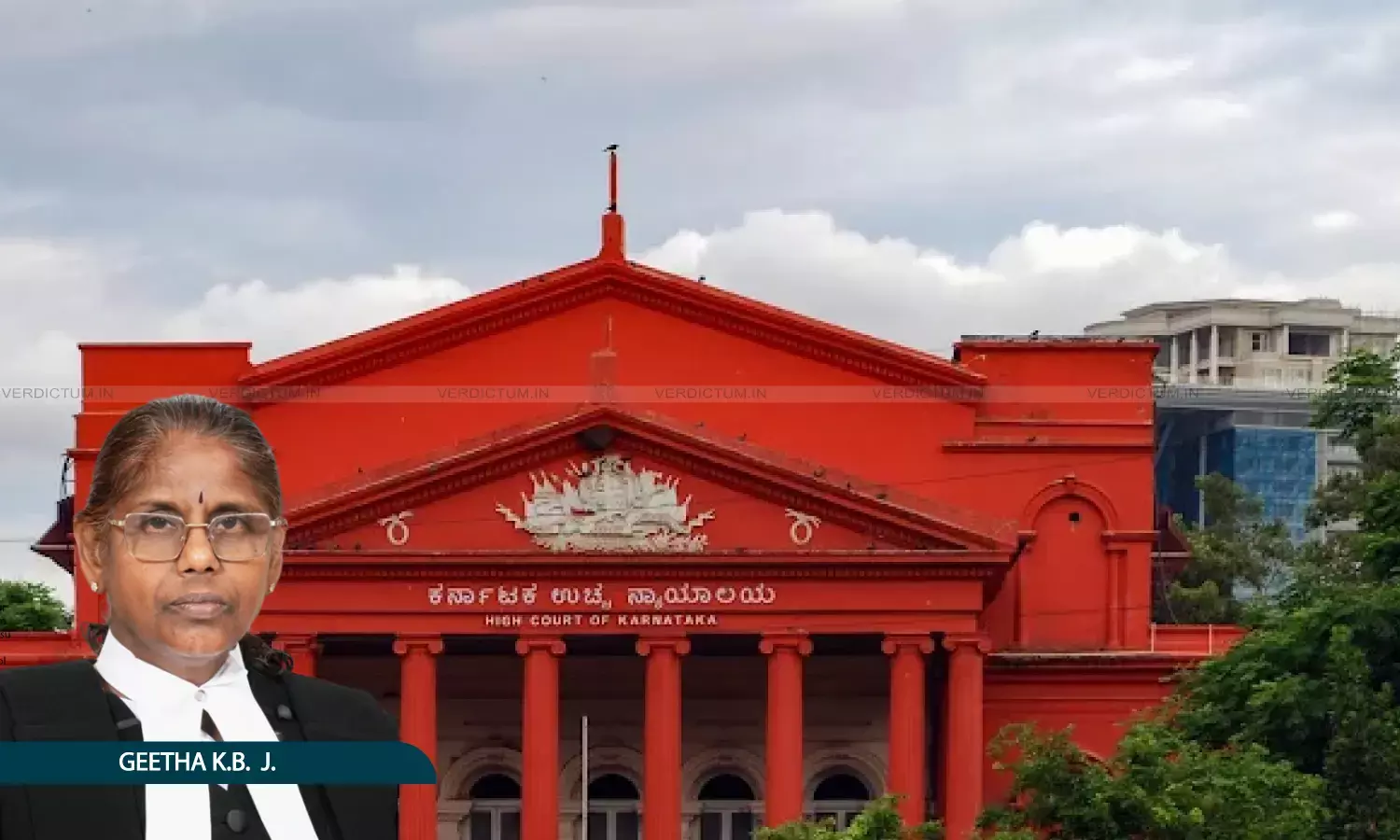
The Karnataka High Court has held that the Bombay Public Trusts Act, 1950, does not bar archaks from becoming temple trustees, observing that persons who manage the affairs of a religious trust are entitled to trusteeship and cannot be excluded merely because they perform poojas or receive offerings.
The Court observed that archaks perform poojas on behalf of devotees and act as a link between the devotee and the deity, and their inclusion as trustees would help in the overall development of the temple.
A Bench of Justice Geetha K.B. observed: “This definition does not say that the beneficiary is to be excluded from becoming trustee. The persons who manage the affairs of the religious trust are entitled to become trustees. The trustee is a person who holds legal ownership or possession over the subject of the trust and who will be bound to allow the beneficial enjoyment or use of the property.”
The Court further observed: “It is to be noted here that archaks are always performing poojas on behalf of devotees. They will be called as middlemen between the devotee and the deity. If they perform the pooja with great devotion and then that would be helpful to the public at large. If they are also made as trustees, definitely it would help the overall development of the temple because they are the pillars of the temple. Admittedly since from the time of ancestors of opponent Nos.1, 2, 5 and 6 they are performing poojas in the temple on rotation basis. If there is a small dispute between them in respect of who has to perform pooja that itself cannot be a ground to deny them to become trustees. There is no rule that archak of the temple cannot be trustee of the temple.”
Advocate Ramachandra A. Mali appeared for the appellant, while Advocate Shivakumar S. Badawadagi appeared for the contesting respondent.
Background
The appeal arose from proceedings for registration of Sri Yallamma Devi Temple as a public trust under the Bombay Public Trusts Act, 1950. The petition before the Assistant Charity Commissioner sought registration of the temple as a public trust and initially named 33 trustees. The petition was later amended to include hereditary poojaris of the temple also as trustees.
The Assistant Charity Commissioner held that Sri Yallamma Devi Temple was an ancient temple and a public trust, despite the absence of material showing endowment. However, he declined to include the archaks as trustees, holding that persons rendering services and receiving benefits could not be named as trustees under Section 2(18) of the BPT Act.
The Charity Commissioner reversed the finding that the temple was a public trust, and the District Judge confirmed that view. The High Court had earlier dismissed the appeal, but the Supreme Court remanded the matter for fresh consideration, observing that the earlier proceedings concerned poojari rights and that any incidental finding on the nature of the property would not govern the present issue.
Court’s Observations
The High Court first examined whether Sri Yallamma Devi Temple satisfied the statutory requirements of a “temple” and “public trust” under Sections 2(17) and 2(13) of the BPT Act. The Court noted that Section 2(13) defines “public trust” inclusively and includes temples, while Section 2(17) defines a temple as a place used as a place of public religious worship and dedicated to, or used as of right by, the Hindu community or any section thereof.
The Court referred to Rudrappa Channamallappa Patil v. Kadeppa Dareppa Patil (1967), where the Karnataka High Court had explained that the definition of public trust covers three categories: express or constructive trusts for religious or charitable purposes, temples and other religious or charitable endowments, and societies formed for religious or charitable purposes.
The Court also relied on Radhakanta Deb v. Commissioner of Hindu Religious Endowments, Orissa (1981), where the Supreme Court laid down tests to determine whether an endowment is private or public. The High Court noted that where the origin of the endowment cannot be ascertained, public use of the temple as of right becomes relevant to determine whether it is a temple under Section 2(17) of the BPT Act.
The Bench further relied on Bala Shankar Mama Shankar Bhattjjee v. Charity Commissioner, Gujarat State (1995), where the Supreme Court had held that a public place is a temple when it is used as a place of public religious worship and is dedicated to, or used as of right by, the Hindu community or any section thereof.
Applying these principles, the High Court held that Sri Yallamma Devi Temple was an ancient temple, a place of public religious worship, and a place used by members of the Hindu community as of right for offering pooja and worshipping the deity. It also noted that the property attached to the temple was shown in the name of the deity in government records.
The Bench observed: “In nutshell, it is established that Sri Yallamma Devi Temple is an ancient temple; place of public religious worship; dedicated to Hindu community for their benefit and Hindu community people are having right to use it as of right for their offerings to the deity and worship the deity. Thus, the ingredients of Section 2(17) of the BPT Act are fulfilled. Thus, Sri Yallamma Devi Temple comes under the definition of ‘Temple’ as per Section 2(17) of BPT Act.”
The Court held that once a temple under Section 2(17) exists, it would be a public trust under Section 2(13), because the definition of public trust is inclusive and includes temples.
The Bench observed: “Section 2(13) of the BPT Act is an inclusive definition. It includes temples. If ‘Temple’ as per Section 2(17) of the BPT Act is in existence, then it will be a public trust as per Section 2(13) of the BPT Act.”
The Court then examined whether archaks could be included as trustees. It noted that the Assistant Charity Commissioner had refused to include archaks by treating them as beneficiaries, but Section 2(18) did not exclude a beneficiary from becoming a trustee.
The Bench held that a trustee under Section 2(18) includes a manager, and persons managing the affairs of a religious trust are entitled to become trustees. It found that the archaks had been performing poojas in the temple on a hereditary and rotational basis, and that a dispute among them regarding performance of pooja could not by itself justify excluding them from trusteeship.
The Court further observed that devotees do not directly offer prayers before consecrated idols placed in the sanctum and approach the temple through poojaris or archaks. It held that making poojaris or archaks trustees would support the religious functioning of the temple.
The Bench observed: “The devotees themselves cannot directly offer prayers before the idols which are consecrated and placed in the sanctum. So, they approach the temple for worship. Only when the poojaris /Archaks performs the pooja with true inner devotion can the devotees successfully offer those prayers to the deity of ignite the same spiritual energy in the devotees. Thus making the poojaris/Archaks a trustee of the temple.”
The Court therefore held that while the Assistant Charity Commissioner was right in treating Sri Yallamma Devi Temple as a public trust, his finding that archaks could not be trustees was not proper. It also held that the orders of the Charity Commissioner and the District Judge were erroneous.
Conclusion
The Karnataka High Court allowed the appeal and set aside the orders of the District Judge and the Charity Commissioner.
The Court confirmed the Assistant Charity Commissioner’s order holding Sri Yallamma Devi Temple to be a public trust, but modified the trusteeship arrangement by including one archak from each of the two hereditary archak family groups as trustees.
The Court ordered Sri Yallamma Devi Temple to be registered as a public trust and held that trustees could be appointed for the period mentioned in the by-laws of the trust.
Cause Title: Mallari v. Laxman Raju Poojari & Ors. (Neutral Citation: 2026:KHC-D:8167)
Appearances
Appellant: Advocate Ramachandra A. Mali.
Respondents: Advocate Shivakumar S. Badawadagi; Advocate Ravikumar D. Gokakakar; HCGP Abhishek Malipatil.
