Section 141 NI Act| Cheque Bounce Complaint Must Show Director Was In Charge Of Company Affairs To Attract Vicarious Liability: Karnataka High Court
The Court held that substance prevails over form in complaints invoking vicarious liability under Section 141 of the Negotiable Instruments Act, while quashing proceedings against a Director in the absence of specific averments and permitting proceedings to continue against the Managing Director.
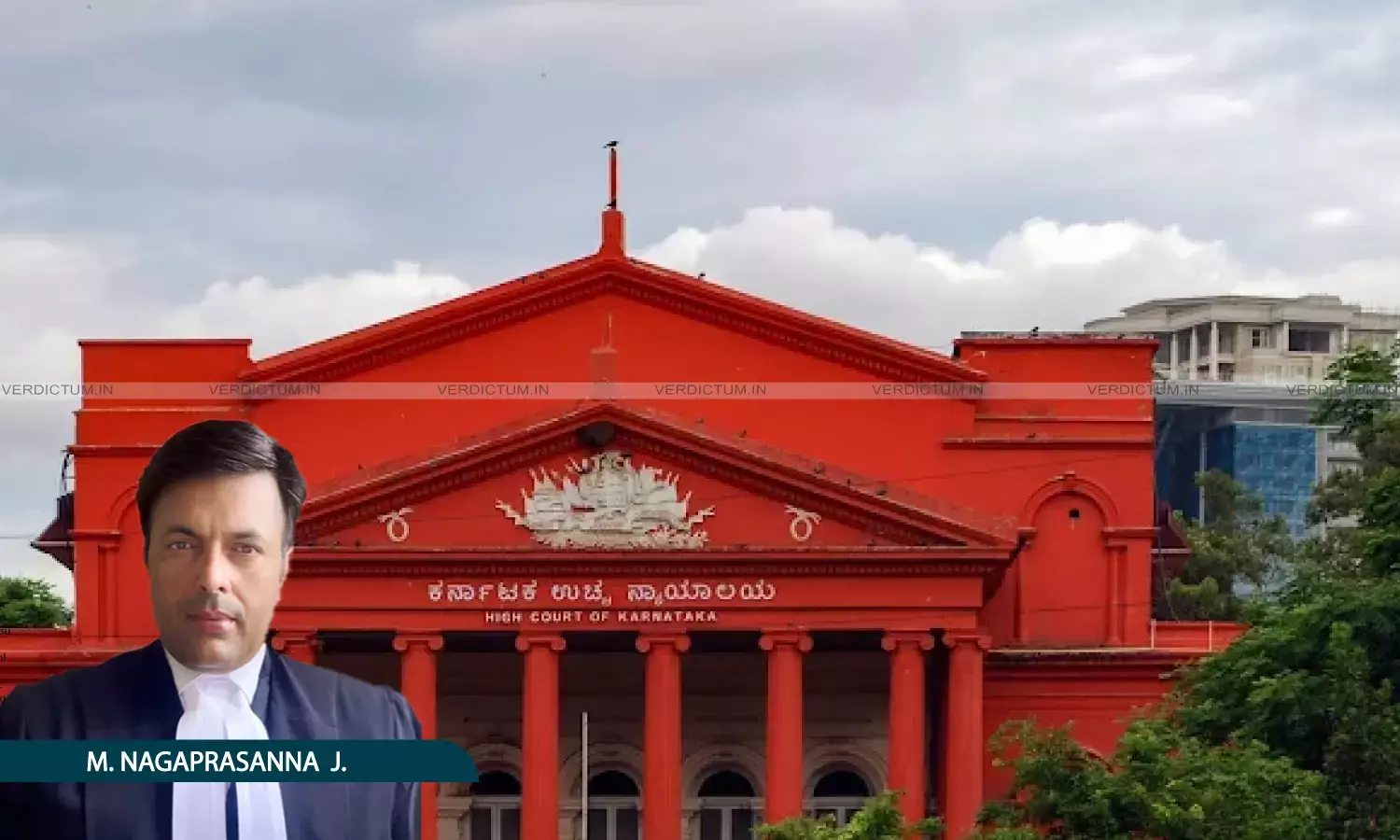
Justice M. Nagaprasanna, Karnataka High Court
The Karnataka High Court has held that a complaint invoking Section 141 of the Negotiable Instruments Act must disclose that the Director sought to be prosecuted was in charge of and responsible for the conduct of the company’s business at the relevant time, since vicarious liability cannot be inferred merely from a person’s designation as Director.
The Court was hearing criminal petitions seeking quashing of cheque dishonour proceedings arising from commercial transactions between a fresh produce supply company and a retail company, where the petitioners were arrayed as accused in their capacity as Directors or Managing Director of the company.
A Bench of Justice M. Nagaprasanna held: “…repetition of words in Section 141 of the Act in the same order is not the mandate of law; what the law mandates is that the complaint should spell out that the accused sought to be arrayed falls within the parameters of sub-section (1) of Section 141 of the Act. Only then vicarious liability can be inferred against the accused so as to proceed to trial”.
The Bench added: “Substance prevails over form. The administrative role of each of the Directors should be within the special knowledge of the Company or the Director of the firm. It is for them – accused to establish that they were not in-charge of the affairs of the Company.”
Advocate Keerthi Reddy appeared for the petitioners, while Advocate Bharath Kumar V. appeared for the respondent.
Background
The complainant alleged that the accused company had entered into a sale and purchase agreement for the supply of agricultural produce and that goods worth over Rs. 50 lakh were supplied pursuant to the purchase order. A cheque issued towards the discharge of liability was dishonoured for insufficient funds, leading to statutory notice and complaints under Section 138 of the Negotiable Instruments Act.
The petitions were filed by a Director and the Managing Director of the accused company, seeking the quashing of the proceedings. The Director contended that she was not involved in the day-to-day affairs of the company, was not a signatory to the cheques, and that the complaints contained no averment showing her role in the transaction or responsibility for the conduct of business.
The Managing Director also sought quashing, contending that the complaints did not sufficiently disclose his role. The complainant opposed the petitions, relying on company documents, board resolution and contemporaneous material to contend that the accused were authorised representatives and that the issues raised required trial.
Court’s Observation
The Court examined the complaints, sworn statements, Section 138 and Section 141 of the Negotiable Instruments Act, and the line of Supreme Court authorities on vicarious liability of directors and company officers in cheque dishonour prosecutions.
The Court first noted that merely describing a person as a Director is not enough to fasten criminal liability under Section 141. It relied on Susela Padmavathy Amma v. Bharti Airtel Limited (2024), where the Supreme Court had reiterated that the complaint must show how the Director was in charge of and responsible for the company’s business.
The Court observed: “The Apex Court holds that merely being a Director of the company would not render him or her liable for the offence under Section 138 of the Act. Vicarious liability cannot be fastened on the Director of a company by merely reproducing the words in Section 141 of the Act, without clearly averring as to how the Director was responsible for the affairs of the company.”
The Court further referred to K.S. Mehta v. Morgan Securities and Credits Private Limited (2025), where the Supreme Court held that non-executive and independent directors cannot be prosecuted unless specific allegations demonstrate their direct involvement in the affairs of the company at the relevant time.
The Bench noted that the position emerging from Supreme Court precedent is that Section 141 creates vicarious liability and must be strictly construed. However, the complaint need not use any fixed formula if, on a reading as a whole, it discloses the substance necessary to bring the accused within Section 141.
The Court relied on HDFC Bank Limited v. State of Maharashtra (2025), which clarified that the complaint need not reproduce Section 141 verbatim if the substance of the allegations fulfils the statutory requirement.
The Court highlighted: “What is important to note is that the repetition of the exact words of the section in the same order, like a mantra or a magic incantation is not the mandate of the law. What is mandated is that the complaint should spell out that the accused sought to be arrayed falls within the parameters of Section 141(1) of the NI Act. Only then could vicarious liability be inferred against the said accused, so as to proceed to trial. Substance will prevail over form.”
The Court also referred to S.P. Mani & Mohan Dairy v. Snehalatha Elangovan (2023), noting that the complainant is expected to know generally who was in charge of the company, while internal administrative roles would be within the special knowledge of the company and its directors.
The Bench added: “As was rightly held therein, the administrative role of each Director would be within the special knowledge of the company or the Director of the firm, and it is for them to establish that they were not in charge of the affairs of the company.”
Applying the law to the facts, the Court found that the averments in the complaint and sworn statement were inadequate insofar as the Director was concerned. It noted that the Managing Director was shown in company records as the person in charge of the company’s affairs, while there was no specific averment against the Director sufficient to permit the proceedings to continue against her.
The Court stated: “In the light of the afore-quoted judgments of the Apex Court, what becomes imperative is the averment in the complaint. The averment in the complaint and the sworn statement is blurring insofar as the wife Smt. Kavitha Chopra is concerned. The husband - Dhirendra Chopra is shown as the Managing Director of accused No.1/Company as per the company information obtained from the website of the Ministry of Corporate Affairs appended to the petition. It is the Managing Director who would obviously be the person in-charge of the affairs of the Company. Therefore, in the absence of specific averment against the wife Smt. Kavitha Chopra, permitting further proceedings to continue against her would become an abuse of the process of law.”
The Court also considered the proceedings arising from a cheque issued from a joint account and referred to Aparna A. Shah v. Sheth Developers (Private) Limited (2013), where the Supreme Court held that a joint account-holder cannot be prosecuted under Section 138 unless the cheque was signed by that person.
The Court concluded: “The Apex Court holds that a joint account holder can be prosecuted when he is a signatory to the cheque. Therefore, it is for the husband/Dhirendra Chopra who is shown to be the Managing Director of the Company to answer the allegations that is brought before the Court. In the considered view of the Court, the wife/ Smt. Kavitha Chopra cannot be permitted to be prosecuted.”
Conclusion
The Karnataka High Court allowed the petitions filed by Kavitha Chopra and quashed the cheque dishonour proceedings against her. However, it dismissed the petitions filed by Dhirendra Chopra, holding that he, being shown as the Managing Director and the person in charge of the company’s affairs, must answer the allegations before the trial court.
Cause Title: Kavitha Chopra v. M/s. 63Ideas Infolabs Pvt. Ltd. (Ninjacart)
Appearances
Petitioners: Advocate Keerthi Reddy for Advocate Madesh V.M.
Respondent: Advocate Bharath Kumar V.