Reference To Cash Loan Being Advanced In ₹2,000 Notes Before Their Introduction Not By Itself Sufficient To Rebut Presumption U/S 139 NI Act : Karnataka High Court
The Court upheld the accused’s conviction after finding that the mistaken reference to the currency denomination was insufficient by itself to displace the statutory presumptions, particularly when his security-cheque defence was not established, and the complainant’s financial capacity remained unshaken.
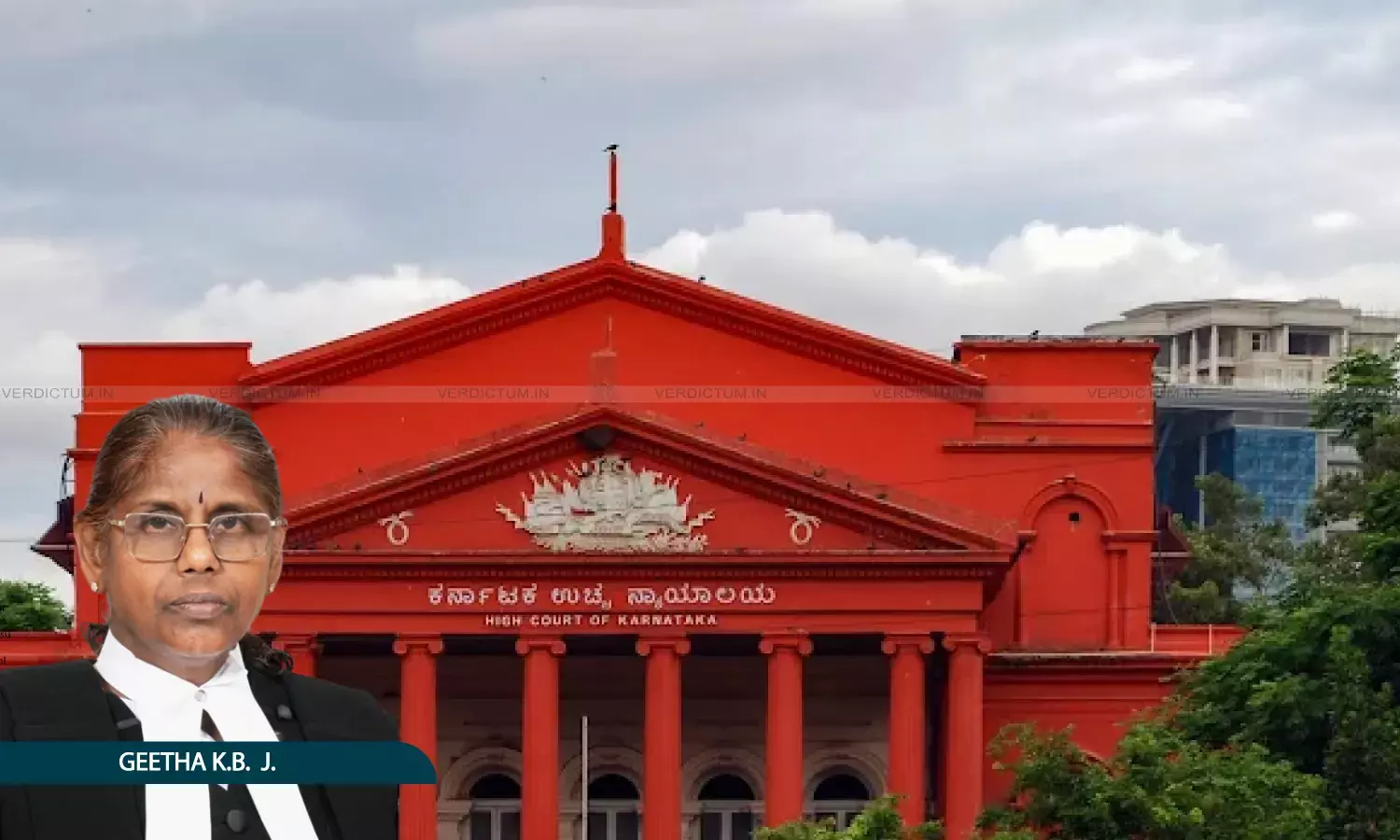
The Karnataka High Court has held that a complainant’s testimony that a cash loan was advanced partly in ₹2,000 notes during October 2016, before notes of that denomination were introduced, does not by itself rebut the statutory presumptions arising in a cheque-dishonour case.
The Court dismissed the accused’s revision petition and declined to interfere with his conviction under Section 138 of the Negotiable Instruments Act, 1881.
The Court was hearing a revision petition under Section 397 read with Section 401 of the Code of Criminal Procedure challenging concurrent judgments convicting the accused of cheque dishonour. The trial court had imposed a fine of ₹3.5 lakh, with one year’s simple imprisonment in default, and the appellate court had affirmed the decision.
A Bench of Justice Geetha K.B. observed: “In the cross-examination of the complainant, it is only elicited that the complainant has paid the amount in Rs.500/- and Rs.2,000/- denomination notes during October-2016. However, during October, 2016 there were no notes of Rs.2000 denomination. Only because of this reason, the presumption in favour of the complainant cannot be rebutted.”
Advocate Prajwala S.N. represented the accused.
Background
The complainant alleged that the accused had sought a hand loan of ₹2.5 lakh for family and legal necessities in October 2016. According to him, the amount was paid in cash and the accused issued a cheque towards repayment. The cheque was subsequently returned for insufficient funds.
The complainant issued the statutory demand notice, which was served on the accused. The accused neither replied to the notice nor paid the cheque amount, resulting in a complaint under Section 138 of the NI Act.
The trial court convicted the accused and imposed a fine of ₹3.5 lakh, with simple imprisonment for one year in default. The appellate court affirmed the conviction and sentence.
Before the High Court, the accused questioned the complainant’s financial capacity to advance the loan. He also relied upon the complainant’s statement during cross-examination that the cash had been paid in ₹500 and ₹2,000 notes, although ₹2,000 notes were unavailable during October 2016.
The accused had separately claimed that he had given the cheque as security to another person for a different loan and that it had not been returned after repayment. He also raised an alternative defence that he had instructed his bank to stop payment of the cheque.
Court’s Observations
Statutory Presumptions Were Rebuttable
The Court explained that once the ingredients of Section 138 of the NI Act were satisfied, presumptions arose under Sections 118 and 139 of the NI Act concerning the cheque and the existence of a legally recoverable debt. Those presumptions were rebuttable.
The Court observed: “There is also statutory presumption under Section 139 of NI Act that there exists legally recoverable debt and the cheque is issued for recovery of legally recoverable debt either wholly or in part. But the presumptions available under Section 118 and 139 of the NI Act are rebuttable presumptions.”
The Court held that the reference to ₹2,000 notes was insufficient by itself to discharge that burden. It assessed the discrepancy together with the accused’s conduct and the other evidence instead of treating it as automatically fatal to the complainant’s case.
Security-Cheque Defence Was Not Established
The accused relied on documents created after the statutory notice had been served and after he had appeared before the trial court. Those documents referred to a cheque allegedly given as security to another lender.
The Court found that the other lender’s testimony was materially different from the statement attributed to him during the police inquiry. It held: “However, when said defence was not at all established by him, the accused has taken another defence that he stopped payment of the cheque by giving instructions to the bank.”
The Court also noted that the accused had failed to reply to the statutory notice.
Financial Capacity Remained Unshaken
The complainant testified that he earned income from agriculture and rearing livestock and that his son worked as an engineer. The Court found that cross-examination had not elicited material sufficient to disbelieve his capacity to lend ₹2.5 lakh.
The Court said: “The complainant has deposed that he is doing agriculture, tethering cow, sheep, hen and getting substantial income and his son is also working as an Engineer.”
It consequently rejected the argument that the complainant had failed to establish his financial ability merely because he had sold a small parcel of land for constructing a house.
Concurrent Findings Did Not Warrant Revisional Interference
Referring to Kuntegowda v. Thurubaiah (2026), the Court reiterated that revisional jurisdiction was supervisory and could not be treated as a second appeal. Interference was justified only where the lower courts’ findings were perverse, grossly erroneous, glaringly unreasonable, legally untenable or based on irrelevant material, or where relevant material had been ignored.
The Court concluded: “Thus, the accused failed to rebut the presumptions in favour of the complainant, which is properly appreciated by the trial Court and the appellate Court.”
It found no perversity or material error in the concurrent judgments and held that reappreciating the evidence in revision was unwarranted.
Conclusion
The High Court dismissed the revision petition, leaving the conviction and sentence under Section 138 of the NI Act undisturbed. It held that the reference to ₹2,000 notes before their introduction, considered alongside the remaining evidence and the accused’s inconsistent defences, did not rebut the statutory presumptions supporting the complainant’s case.
Cause Title: K. Venkataswamy v. Chikka Hanumanthappa (Neutral Citation: 2026:KHC:60959)