

Advocates Must Be Shown Due Respect At Police Stations, Police Cannot Settle Civil Disputes: Karnataka High Court
The Court took suo motu cognizance of murders of two advocates and attempt on a Senior Advocate, calls for uniform SOP on treatment of advocates at police stations, strict implementation of directions against police settling civil disputes, and review of Advocates Protection Act.

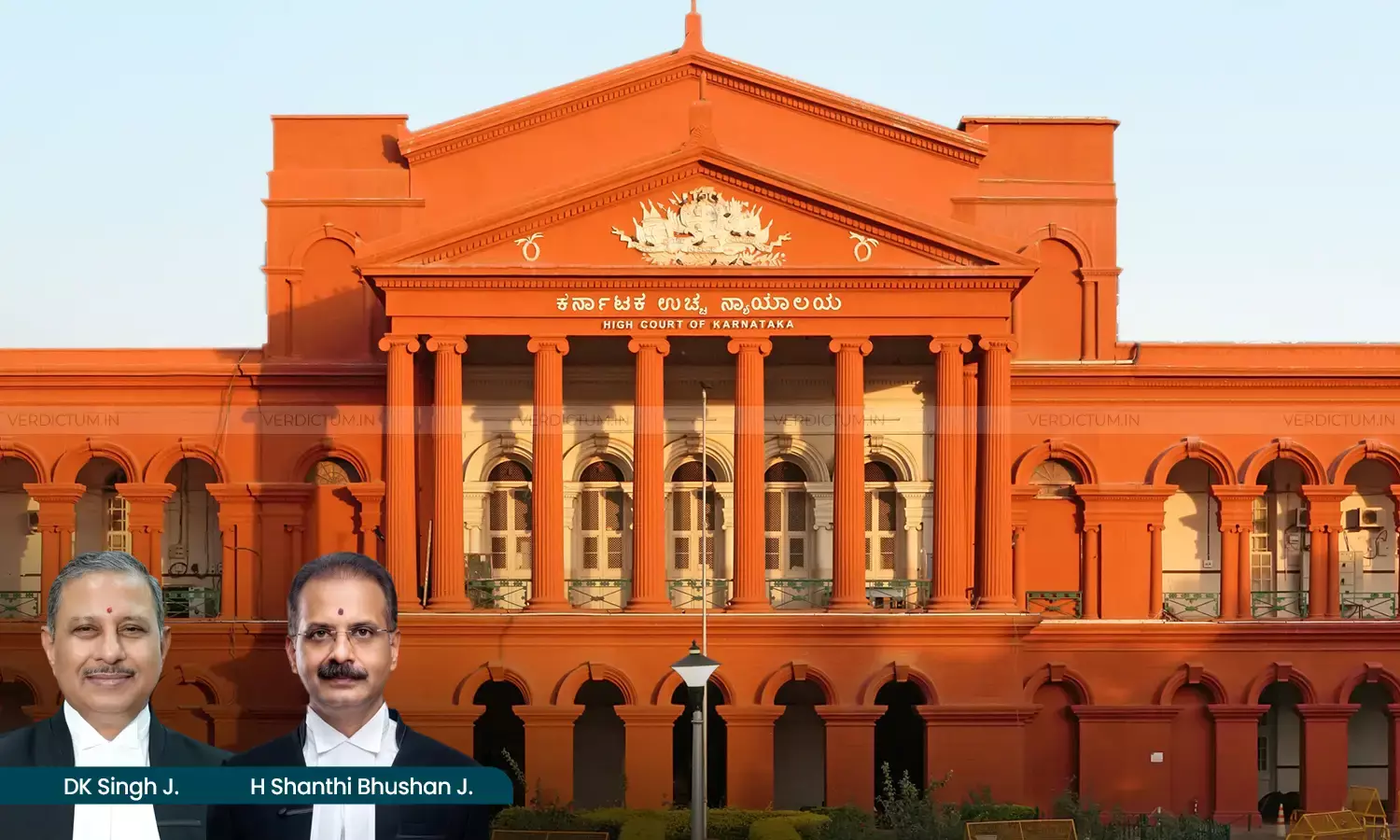
The Karnataka High Court has observed that advocates must be shown due respect, dignity and minimum professional courtesy when they approach police stations in the discharge of their professional duties, and that a police station cannot be converted into a forum for adjudicating civil rights or settling civil disputes. Taking suo motu cognizance of the killings of two advocates in the State and an attempt on the life of a Senior Advocate, the Court registered a public interest litigation to examine the safety and protection of members of the Bar.
The Court observed that advocates, as officers of the Court and partners in the administration of justice, must be able to represent their clients fearlessly, without apprehension of physical harm, threat or intimidation. It called for a uniform SOP on how advocates are to be received and dealt with by police personnel, and directed the State and police authorities to place on record the existing SOPs on the treatment of advocates and on police involvement in civil disputes, along with the steps taken to implement them. It also observed that repeated instructions “cannot remain confined to paper” and must be backed by proper supervision. The State was asked to examine the need to strengthen the Advocates Protection Act, and the police to furnish case-wise details of investigation in every case involving the murder of an advocate.
A Division Bench of Justice D K Singh and Justice H. Shanthi Bhushan observed, “Another aspect which requires attention is the manner in which Advocates are received and treated when they approach police stations or other police authorities in connection with their professional duties. A uniform Standard Operating Procedure is required to be put in place prescribing the manner in which Advocates are to be received and dealt with by police personnel. At the least, due respect, dignity and minimum professional courtesy must be extended to an Advocate who approaches a police station in the discharge of his professional obligations. This is not to confer any special privilege upon an Advocate, but to ensure that public servants maintain proper conduct and extend the courtesy expected of them towards members of the legal profession…”.
“…The Police personnel involving themselves in civil disputes between private parties is a serious issue and requires attention and direction to put an end to such illegal activities in the Police Station forthwith. A Police Station cannot be converted into a forum for adjudication of civil rights or settlement of disputes relating to property, possession, contractual obligations or other civil claims. The police authorities are required to act within the limits of their statutory jurisdiction…”, the Bench said.
K. Shashi Kiran Shetty, Advocate General, requested to accept notice for the State of Karnataka and the police authorities.
“…'Legal Profession' is a noble profession. Advocates are not merely representatives of litigants; they are officers of the Court and partners in the administration and dispensation of justice. They assist the Courts in the discharge of their constitutional and legal functions and play an important role in protecting the rights of citizens. Their safety, dignity and professional independence are, therefore, matters of considerable importance. An Advocate must be able to represent the cause of his client fearlessly, without apprehension of physical harm, threat or intimidation. An attack upon an Advocate, particularly one resulting in the loss of life, cannot be viewed as an isolated incident, since it also affects the independence of the Bar and the administration of justice”, it noted further.
The Advocates’ Association, Bengaluru, and the Karnataka State Bar Council brought to the Court’s notice increasing incidents of violence, threats and murders of advocates. They cited the murders of advocates Sriram V. (reported on October 9, 2026) and Manjunath (reported on October 18, 2026), and the attempt to murder Senior Advocate Venkataramanappa Sannakki of Gauribidanur on October 28, 2026. Advocates across the State abstained from judicial work on November 3, 2026 in protest.
The Bar also complained that police stations have assumed the role of parallel courts by settling civil disputes between private parties, and that advocates visiting police stations are not treated with due courtesy. The Advocates’ Association had resolved on October 29, 2026 to seek stronger non-bailable provisions in the Advocates Protection Act, an SOP on treatment of advocates at police stations, directions against settling civil disputes in police stations, and a court-monitored investigation in Manjunath’s case.
The Court noted that the Commissioner of Police and the DGP and IGP had already issued SOPs restraining police from interfering in civil disputes, but the Bar alleged that field-level officers were not following them. It observed that attacks on advocates affect the independence of the Bar and the administration of justice.
The Court framed four issues for examination: safety of advocates, a uniform SOP on receiving advocates at police stations, strict implementation of SOPs barring police from settling civil disputes, and the need to strengthen the Advocates Protection Act. It directed the Registry to register a suo motu PIL, array the State, police authorities, the Bar Council of India, the Karnataka State Bar Council and the Advocates’ Association as respondents, and issue notice returnable on December 8, 2026. The Advocate General was asked to file a status report on the investigations, and the DGP and IGP to file a verified consolidated statement of case-wise details on the next date.
Cause Title: Re: In the matter of murder of two Advocates by name Sriram V. and Manjunath and attempt to murder of Senior Advocate Venkataramanappa Sannakki and other connected matters, Suo Motu Writ Petition (PIL), Karnataka High Court, order dated November 3, 2026
Appearances:
Petitioner: K. Shashi Kiran Shetty, Advocate General.