

Right To Statutory Bail U/S 187 BNSS Cannot Be Derived From Investigation Timeline U/S 193 BNSS In POCSO Cases: Karnataka High Court
POCSO timelines are directory and victim-centric, ensuring speedy investigation; their breach does not create an enforceable right for the accused.

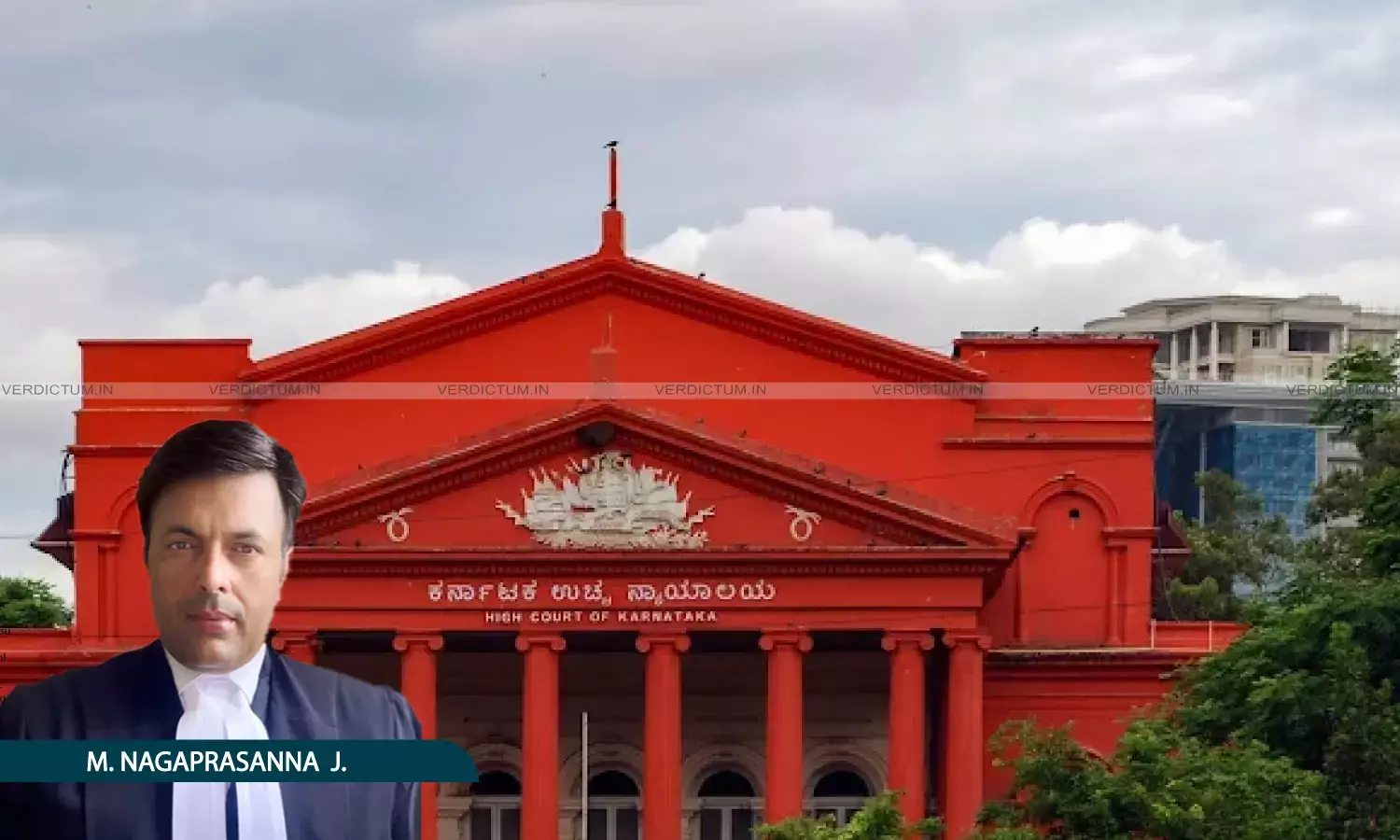
Justice M. Nagaprasanna, Karnataka High Court
The Karnataka High Court has held that the right to statutory or default bail is governed strictly by the temporal boundaries under Section 187(3) BNSS. The Bench observed that while Section 193(2) BNSS serves as a "legislative exhortation" to ensure alacrity in investigations for the benefit of victims, it does not operate as a fountainhead for the accused to seek liberty.
Consequently, even if an investigation exceeds the two-month period mentioned in Section 193(2), an accused remains ineligible for default bail as long as the charge sheet is filed within the 60 or 90-day windows prescribed by Section 187(3). The Court further held that Section 193(2) BNSS, which prescribes a two-month timeline for completing investigation in specified offences including those under the POCSO Act, is directory and victim-centric, intended to ensure expeditious investigation. Its breach does not create an enforceable right in favour of the accused to seek statutory bail, it noted.
Justice M. Nagaprasanna in a writ petition challenging orders of the trial court rejecting the petitioner’s applications for default bail, observed, “Section 193(2), though couched in mandatory language, operates in a distinct domain. It is a legislative exhortation to ensure alacrity in investigation, particularly in heinous offences - in relation to an offence under Sections 64, 65, 66, 67, 68, 70 and 71 of the BNS or Sections 4, 6, 8 and 10 of the POCSO Act. Yet, it does not, in its text or spirit, confer upon the accused a right to default bail upon its breach. To construe it otherwise, would render Section 187 nugatory – a consequence that must be eschewed”.
Upon noting the mandate of Section 187(3) that the charge sheet should be filed within 90 days, the Bench further observed, “…The petitioner cannot claim that the charge sheet was filed on 84th day and, therefore, he is entitled to the grant of statutory bail, owing to the analogous provision under Section 193 of BNSS.”.
Advocate Abhishek A appeared for the petitioner and B.N. Jagadeesha, Additional Special Public Prosecutor appeared for the respondents.
The case arose from allegations that the petitioner, a housekeeping staff member, was in a relationship with a minor who later died by suicide. The prosecution alleged sexual assault under the POCSO Act and rape under the BNS, noting that the deceased was pregnant at the time of death. The petitioner was arrested on October 14, 2025 and remanded to judicial custody.
The petitioner initially sought default bail after 60 days, contending that the charge sheet had not been filed within the period prescribed under Section 193(2) BNSS. This plea was rejected on the ground that the offences attracted a 90-day period under Section 187(3)(i). A second application, filed after submission of the charge sheet on the 84th day, argued that the report was incomplete due to absence of FSL, DNA, and electronic evidence.
The High Court upheld both rejections, and held that Section 187(3) clearly demarcates the statutory timelines based on the gravity of offences, and in cases involving punishment of ten years or more, the permissible period is 90 days.
“…the petitioner cannot place reliance upon Section 193(2) of the BNSS to contend that he is entitled to a statutory bail, if the investigation is not complete within 60 days as obtaining under 38 Section 193(2). The jurisprudence consistently underscores that timelines under special statutes like the POCSO Act, are victim centric, intended to ensure swift justice, not to furnish escape routes for the accused. Thus, the issue must be answered in the negative. The petitioner cannot draw sustenance from Section 193(2) of the BNSS to claim statutory bail”, the Bench noted.
On the argument that the charge sheet filed was grossly incomplete., the Court noted that once a report satisfying the requirements of a final report is filed, the right to default bail stands extinguished, irrespective of further investigation.
“…mere filing of an incomplete charge sheet or the post-script in a charge sheet by reserving a right to file supplementary charge sheet, cannot mean that the accused can be released on grant of statutory bail…”, the Bench while citing precedents noted.
Dismissing the petition, the Court affirmed that neither delay under Section 193(2) nor alleged deficiencies in the charge sheet can be used to circumvent the statutory scheme of default bail under Section 187.
Cause Title: Govinda v. State of Karnataka & Anr. Writ Petition No.5248 OF 2026 (GM - RES)
Appearances:
Petitioner: Abhishek A., Advocate.
Respondents: B.N. Jagadeesha, Additional Special Public Prosecutor.