

Father’s Admission Of Relationship Do Not By Themselves Justify DNA Test In Maintenance Case: Karnataka High Court
The Court said that the Family Court must first assess available evidence, privacy rights and proportionality; earlier civil court refusal of DNA test is no bar unless paternity was conclusively decided.

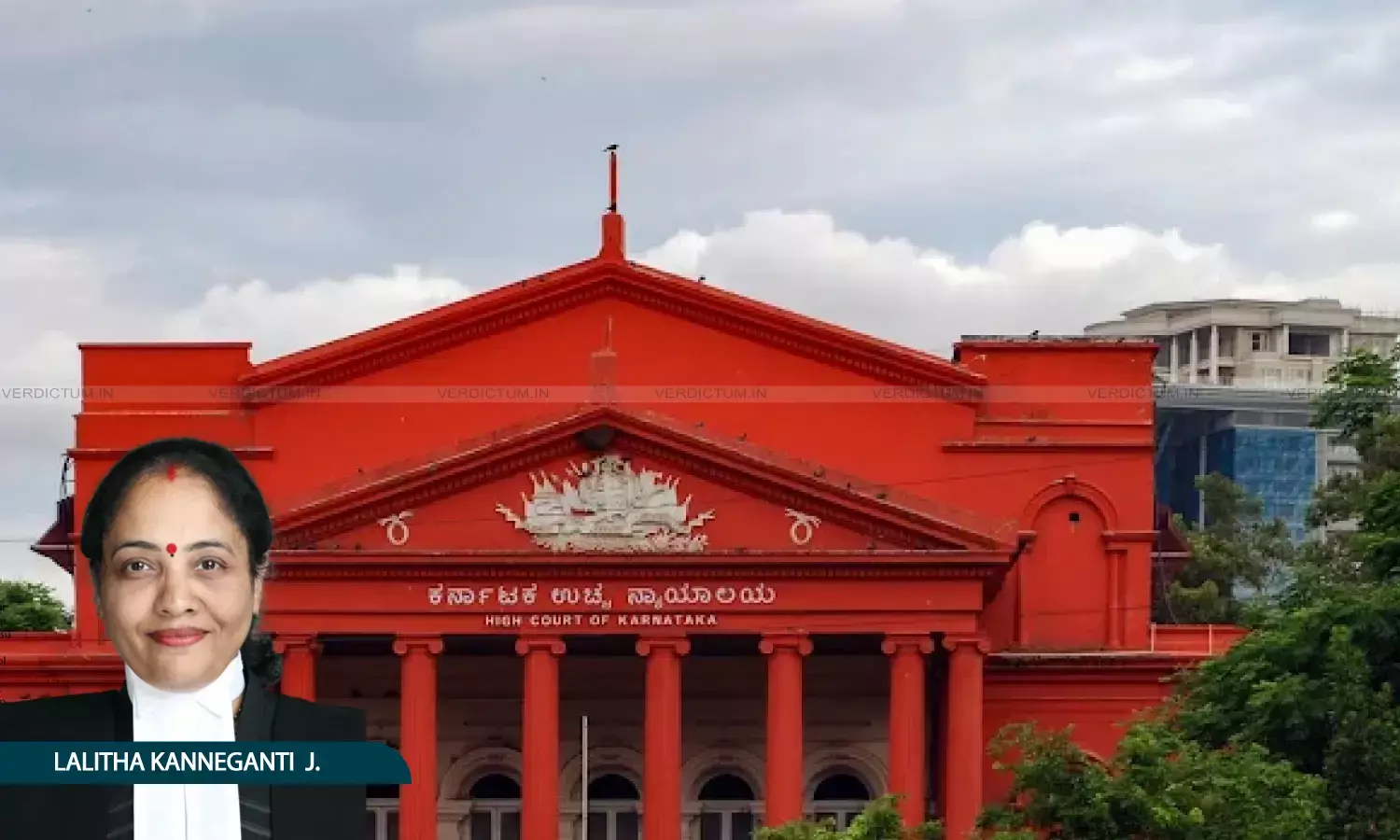
The Karnataka High Court has held that a child’s welfare, the need for maintenance and a father’s admission of a physical relationship with the mother do not, by themselves, justify a DNA test to determine paternity. A court must first assess the evidence otherwise available, and the necessity and proportionality of the test. The Court set aside a Family Court order directing a paternity test in a maintenance case and remanded the matter.
The Court held that these considerations show only that paternity is relevant to a maintenance claim, and not that a DNA test is the way to decide it. It also held that an earlier civil court order refusing a DNA test does not bar the mother from seeking one again, unless that order conclusively decided paternity.
A Single Judge Bench of Justice Lalitha Kanneganti observed, “…Nevertheless, the welfare of the child, important as it is, cannot be treated as a substitute for the judicial inquiry required before directing DNA examination. The child's need for maintenance establishes the importance of deciding the claim expeditiously. It does not necessarily establish that the claim is decided only through scientific testing. The trial court was required to consider whether the mother could establish the alleged parental relationship through the evidence otherwise available. The circumstances concerning the period of the admitted relation, the birth of the child, any acknowledgment of parentage and other relevant evidence would have a bearing upon the inquiry. Only if such evidence was insufficient to resolve a dispute, would the necessity of a DNA examination arise”.
Advocate Ravinson M. appeared for the petitioner and Advocate Mithun U. appeared for the respondent.
A mother had filed a case before the Principal Judge, Family Court, Bengaluru, seeking maintenance for her minor child. She also filed an I.A. under Section 45 of the Bharatiya Sakshya Adhiniyam, 2023, seeking a DNA test to determine the child’s biological relationship with the petitioner.
By an order dated March 18, 2026, the Family Court allowed the application and directed the child and the petitioner to give blood samples. The petitioner challenged that order before the High Court under Articles 226 and 227 of the Constitution of India.
He argued that a DNA test cannot be ordered as a matter of course, that an admission in a reply notice is not proof of paternity, and that the civil court had already rejected a similar application. The respondent said the petitioner had admitted a sexual relationship in his reply of March 25, 2024. She also relied on his written assurances and said she had specifically pleaded non-access by her first husband. She said the earlier suit concerned a property injunction and did not decide paternity.
The Court noted that Section 125(1)(b) of the CrPC and Section 144(1)(b) of the BNSS entitle even an illegitimate child to maintenance. It added that the child’s entitlement and the liability of the person from whom maintenance is sought are distinct matters. The admission was relevant, but “cannot be treated as conclusive proof of paternity”.
While citing Ivan Rathinam v. Milan Joseph 2025 INSC 115 and later decisions, the Court said the existing evidence must be examined first, and a test considered only if that evidence is insufficient and the balance of interests justifies it.
The Family Court’s order, it found, rested mainly on the child’s welfare, the need for maintenance and the admission. It did not assess the evidence, nor balance the petitioner’s right to privacy and bodily autonomy under Article 21 of the Constitution of India. The Court added that the petitioner’s admission of the relationship does not amount to consent to a DNA test.
The Court set aside the order and the direction under Section 45 of the BSA, and remanded the matter. The Family Court must examine the effect of the earlier civil proceedings, the Section 112 presumption of legitimacy if applicable, and the other available evidence. If it finds a test necessary, it must record reasons showing that other evidence cannot resolve the dispute and that the intrusion is proportionate. It must decide the application expeditiously, without being influenced by the High Court’s observations.
Cause Title: FM v. N (Neutral Citation: 2026:KHC:61121)
Appearances:
Petitioner: Advocate Ravinson M.
Respondent: Advocate Mithun U. and Advocate Shubhasri M.V. for Advocate Usha Reddy K.P.