Vague Allegations By Wife Cannot Draw Husband’s Relatives Into Cruelty Proceedings Without Specific Role Attribution: Karnataka High Court
The Court found that the complaint substantially concerned the marital discord between the spouses, while the allegations against the husband’s mother and other relatives were bald, general and insufficient to attract criminal liability.
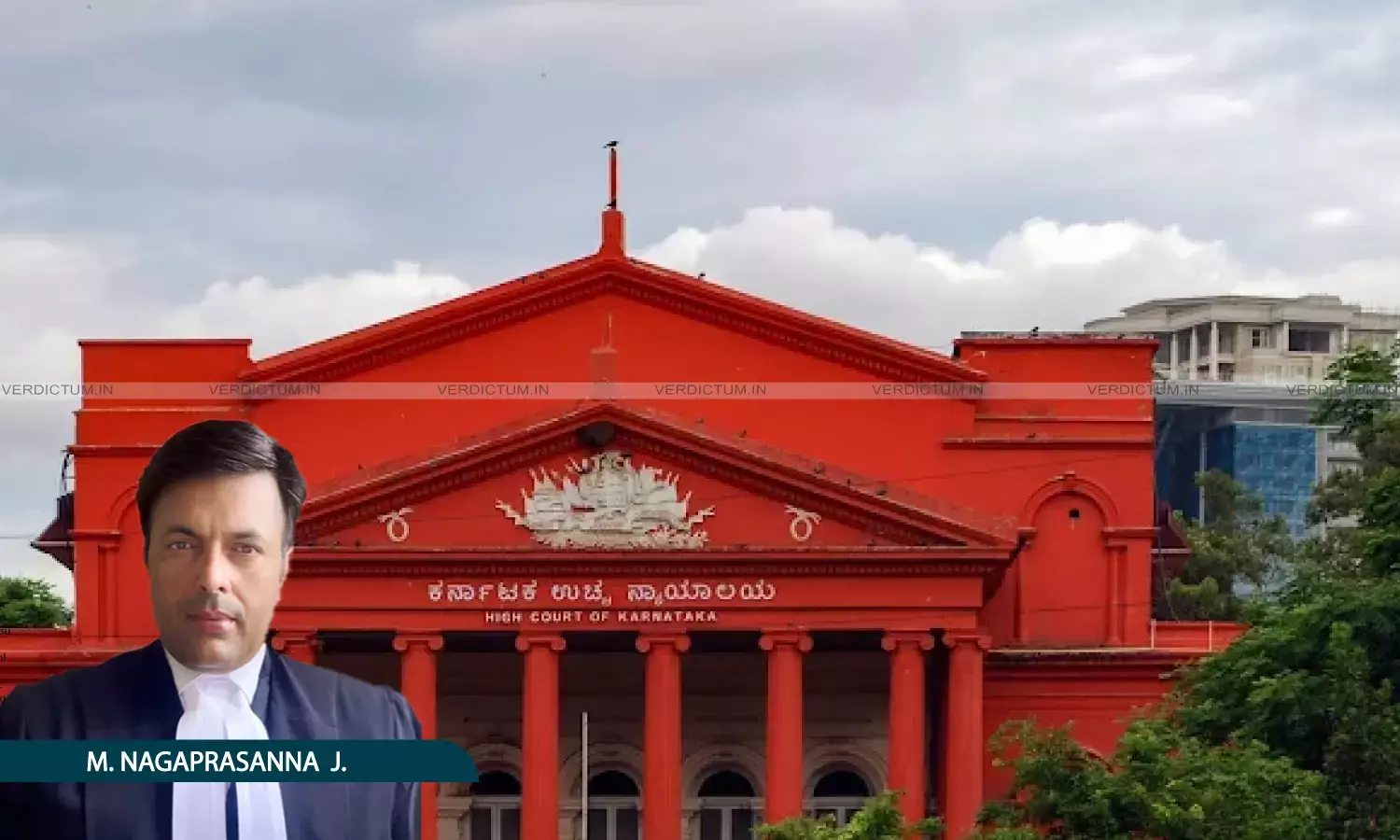
Justice M. Nagaprasanna, Karnataka High Court
The Karnataka High Court has held that relatives and family members of a husband cannot be drawn into cruelty proceedings based on vague and omnibus allegations, unless the complaint attributes a specific and distinct role to each of them.
The Court was hearing a criminal petition filed by accused Nos. 2 to 5, namely the mother-in-law and other relatives of the husband, seeking quashing of an FIR registered for offences under Sections 85 and 352 of the Bharatiya Nyaya Sanhita, 2023 and Sections 3 and 4 of the Dowry Prohibition Act, 1961. The husband, who was accused No. 1, was not before the Court.
A Bench of Justice M. Nagaprasanna, while observing that “relatives and family members of the husband cannot be drawn into proceedings under Section 498A of the IPC on the basis of vague and omnibus allegations in the absence of specific allegations attributing a distinct role to them”, held that permitting further investigation against the petitioners would amount to abuse of process and result in miscarriage of justice.
Advocate Ankith S. Reddy appeared for the petitioners, while High Court Government Pleader Deepthi Alva appeared for the State. The complainant appeared in person.
Background
The complainant and the husband married in May 2024. The Court recorded that even before completion of one year, the relationship between the complainant, her husband and members of his family had turned sour, leading to several proceedings.
The complainant lodged the FIR alleging mental cruelty, dowry demand and harassment by the husband and four relatives. The complaint referred to alleged demands for gold before marriage, the husband allegedly keeping her gold in a bank locker, disputes over her salary, restrictions on visiting her parents, and allegations of physical and mental abuse.
The petitioners argued that the husband was facing investigation, but the remaining accused, comprising the mother-in-law, brothers-in-law and a relative of the husband, had been dragged into the proceedings without any specific material. The complainant opposed quashing and relied on her complaint, objections, documents and WhatsApp messages to contend that the allegations disclosed torture and dowry demand by the in-laws.
Court’s Observations
The Court noted that several grievances in the complaint were directed against the husband, who was not before it. It therefore confined its consideration to whether the allegations against the petitioners disclosed ingredients of Section 85 BNS or the earlier provision under Section 498A IPC.
The Court observed: “The grievances galore against the husband. It is for the husband to answer those allegations as he is not before the Court. The persons who are before the Court are the mother-in-law and distant relatives. Bald and vague allegations are made against the mother-in-law or even the other three accused.”
It then held: “In the considered view of the Court, they do not form the ingredients of the offence under Section 85 of the BNS or Section 498A of the IPC, the earlier regime.”
The Court relied on a series of Supreme Court decisions cautioning against roping in all family members of the husband in matrimonial disputes without specific allegations. Referring to Rajesh Chaddha v. State of Uttar Pradesh (2025), the Court noted that allegations under Section 498A IPC and Sections 3 and 4 of the Dowry Prohibition Act cannot be ambiguous or “made in thin air”.
Quoting the Supreme Court, the Court recorded: “In order to meet the threshold of the offences under Section 498A IPC & Sections 3 & 4 of the D.P. Act, 1961, the allegations cannot be ambiguous or made in thin air.”
The Court also referred to Ghanshyam Soni v. State (Government of NCT of Delhi) (2025), Maram Nirmala v. State of Telangana (2025), Dr. Sushil Kumar Purbey v. State of Bihar (2026) and Arti Mehta v. State of Madhya Pradesh (2026) on the need for specific allegations against relatives in matrimonial offence cases.
The Court found that the principle emerging from the Supreme Court’s decisions was clear: relatives cannot be prosecuted merely because of their relationship with the husband.
The Court held: “If the facts obtaining in the case at hand or the complaint is considered on the bedrock of the elucidation of law declared by the Apex Court in the afore-quoted judgments, what would unmistakably emerge is, permitting further investigation even against these petitioners would become an abuse of the process of law and result in miscarriage of justice.”
The Court distinguished between genuine cases of cruelty and cases where allegations against relatives are derivative, general or lacking particulars. It found that the complaint did not contain legally sustainable allegations sufficient to continue investigation against accused Nos. 2 to 5.
Conclusion
The High Court allowed the criminal petition and quashed the FIR registered before East Women Police Station, Pulakeshinagar Sub-Division, Bengaluru, insofar as it concerned accused Nos. 2 to 5.
The Court clarified that its observations were confined to the petitioners’ case and would not apply to the husband or any other pending proceedings between the parties.
Cause Title: EV v. State of Karnataka
Appearances
Petitioners: Ankith S. Reddy, Advocate
Respondents: Deepthi Alva, High Court Government Pleader for the State; Monica Jerusha, Party-in-Person