Annual Proceeds From Sale Of Shares Form Part Of Husband’s Income For Determining Maintenance: Karnataka High Court
The Court rejected the husband’s attempt to exclude ₹20 lakh to ₹28 lakh received annually from selling shares merely because the amounts were not realised every month.
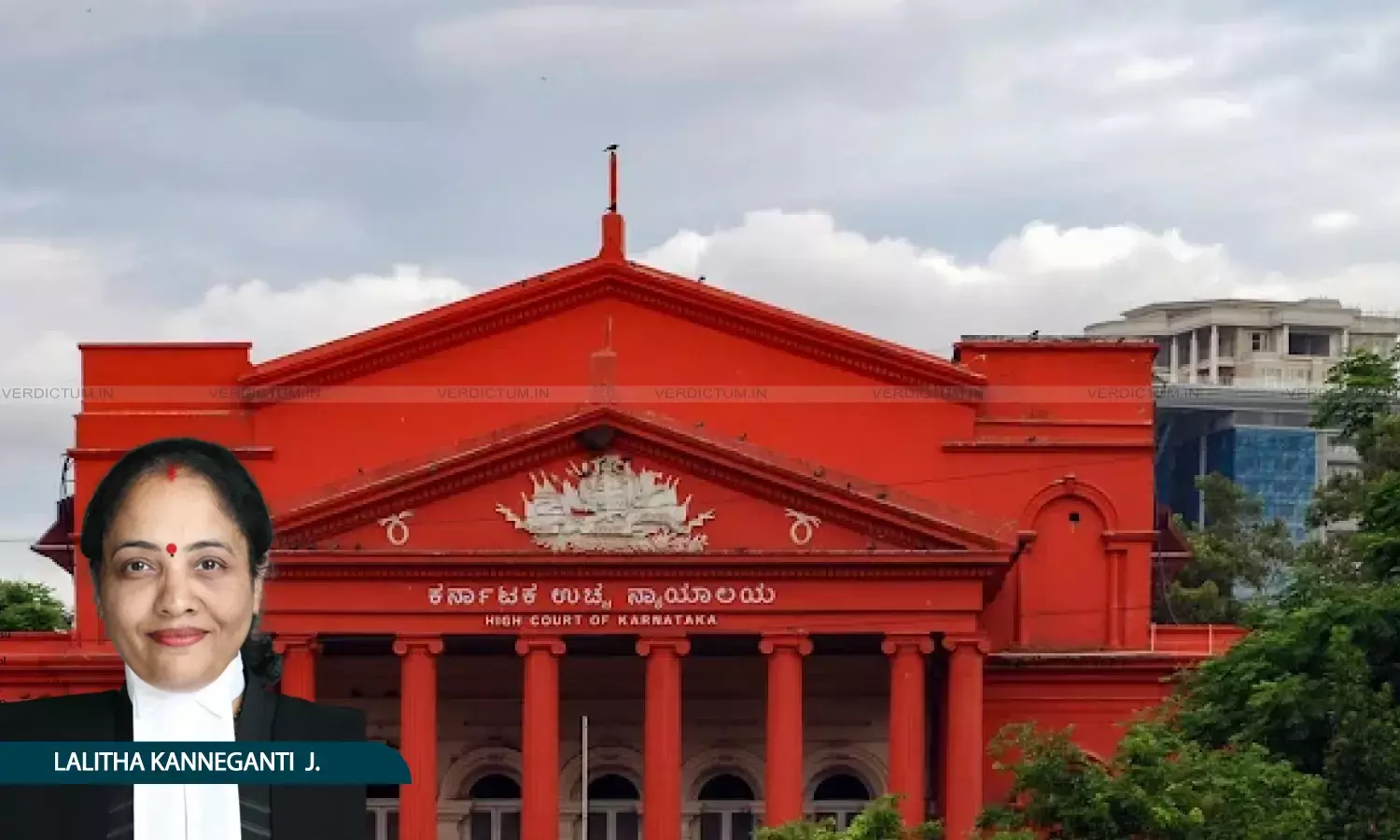
The Karnataka High Court has held that recurring annual amounts received by a husband from selling shares must be treated as part of his income while determining interim maintenance, even though the amounts are not received every month.
The Court enhanced the combined monthly maintenance awarded to his wife and minor son from ₹50,000 to ₹1.2 lakh.
The Court was hearing connected petitions filed by the spouses against a Family Court order granting interim maintenance to the wife and child in pending matrimonial proceedings. The husband sought reduction of the amount, while the wife sought its enhancement.
A Bench of Justice Lalitha Kanneganti observed: “This Court has perused the income tax returns, and every year he is getting an amount of Rs. 20 to 28 lakhs by selling the shares and it is part of the husband's income, though he may not be getting it every month. That has to be considered as his income.”
Advocate Nishan G.K. appeared for the wife. Senior Counsel B.V. Shankar Narayana Rao appeared for the husband.
Background
The wife had sought interim maintenance of approximately ₹1.75 lakh per month for herself and the minor son, besides educational expenses, reimbursement of certain expenditure and litigation costs. The Family Court granted ₹50,000 per month for the wife and child from the period after she lost her employment and directed the husband to pay the child’s school fees directly.
The judgment noted that the wife was previously employed and earning a net monthly salary of ₹83,450. She subsequently lost her employment because her position was identified as redundant during organisational restructuring.
The husband disclosed a monthly income of approximately ₹2.91 lakh from his employment with Cisco Systems (India) Private Limited. He also claimed monthly expenditure on housing, commuting, groceries, domestic assistance, his parents and other dependants.
The husband argued that his gross annual salary was approximately ₹62.92 lakh and that the value of stock options, amounting to approximately ₹28.42 lakh, should not be treated as regular salary. He submitted that after tax, disclosed expenditure, the child’s educational expenses and interim maintenance, only about ₹50,000 remained with him every month.
The wife contended that the income-tax returns disclosed substantially higher financial capacity. She submitted that the husband received between ₹20 lakh and ₹28 lakh every financial year by selling shares and paid tax on those transactions. She also relied upon medical records concerning glaucoma and an autoimmune condition to submit that she was presently unable to secure employment.
Court’s Observations
The Court rejected the submission that proceeds from the sale of shares should be excluded merely because they were not received every month. After examining the income-tax returns, it found that the husband consistently received between ₹20 lakh and ₹28 lakh annually from such transactions.
The Court also examined the husband’s clarification that his gross salary was approximately ₹62.92 lakh and that perquisites valued at approximately ₹28.42 lakh did not form part of his income. It stated: “This Court is not able to appreciate that the submission.”
The Court applied Nayanika Thukar Mehta v. Mohit Mehta and Others (2017), in which the Delhi High Court held that variable employee stock-option benefits could not be overlooked while assessing the husband’s financial status and capacity merely because they were not a regular feature of his salary.
The Court also applied Deepa Joshi v. Gaurav Joshi (2026), where the Supreme Court held that loan repayments resulting in the creation or acquisition of assets are capital investments and cannot take precedence over a legally enforceable maintenance obligation.
The Court examined the expenditure claimed by the husband for his dependants. It noted that the great-grandmother for whom expenditure had been claimed was no longer alive and that the husband’s sister was employed with a private company.
The Court consequently held that the amounts claimed towards their maintenance could not be treated as continuing expenditure incurred by the husband while assessing his available income.
The Court considered the medical records produced by the wife concerning her health after the Family Court’s order. It held that the documents could be considered even though they had not been placed before the Family Court.
The Court observed: “Considering the health condition of the wife, she requires maintenance. No doubt, before the trial court, it was not placed. However, the medical records have been placed before this court, and this court finds no reason to doubt the said documents.”
The Court noted that the wife was suffering from an autoimmune condition and glaucoma. It further observed that the husband could not deny that her medical condition affected her present ability to work.
After considering the medical requirements of the wife and the other needs of the wife and child, the Court held: “In these circumstances, this court is of the view that, considering the medical necessities and other necessities of the wife, the amount of maintenance of Rs.50,000/- that is granted is not sufficient to take care of herself and the child.”
The Court found that the Family Court had not adequately considered the wife’s and child’s financial requirements during the period before the wife lost her employment. It noted that she had to meet the child’s needs and was also paying instalments towards loans.
The Court stated: “If the court had granted Rs.50,000/- after she lost the job, some reasonable amount ought to have been granted from the date of application, as it is the responsibility of the husband to take care of the child at that point of time.”
The Court clarified that it was not expressing any opinion on the merits of the wife’s allegations concerning her contribution towards the properties or the transfer of her salary to the husband.
The Court noted that the husband had been paying the child’s educational expenses, except for the academic year 2024-25. It directed the wife to furnish the relevant fee details and ordered the husband to reimburse that expenditure.
The Court also granted both parties liberty to seek modification of the maintenance arrangement if there was any subsequent change in their circumstances or any incapacity on the husband’s part.
Conclusion
The Court allowed the wife’s petition and dismissed the husband’s petition. It enhanced the combined monthly maintenance for the wife and child from ₹50,000 to ₹1.2 lakh, payable from the date of the Family Court’s order.
The operative order separately awarded the wife ₹30,000 per month from the date of her maintenance application until September 24, 2024. It directed the husband to continue bearing the child’s educational expenses and to reimburse the fees paid by the wife for the academic year 2024-25.
The Court directed payment of the arrears within four weeks. It permitted the wife to file an appropriate application under Section 151 of the Code of Civil Procedure, 1908, if the amount was not paid.
The Court closed the pending applications and directed the Registry to return the Family Court record along with a copy of its order.
Cause Title: EG v. JG (Neutral Citation: 2026:KHC:53083)
Appearances
Appellant: Advocates Nishan G.K., Skand Arun Kumar and Vijaylaxmi
Respondent: Senior Counsel B.V. Shankar Narayana Rao, instructed by Advocate Dharani Krishna D.