Woman’s Remarriage Does Not By Itself Wipe Out Alimony Entitlement But Is Material Factor To Determine Its Quantum: Karnataka High Court
The Court applied Section 25 of the Hindu Marriage Act, 1955 and reduced the permanent alimony to ₹10 lakh after the wife remarried during the pendency of the husband’s appeal.
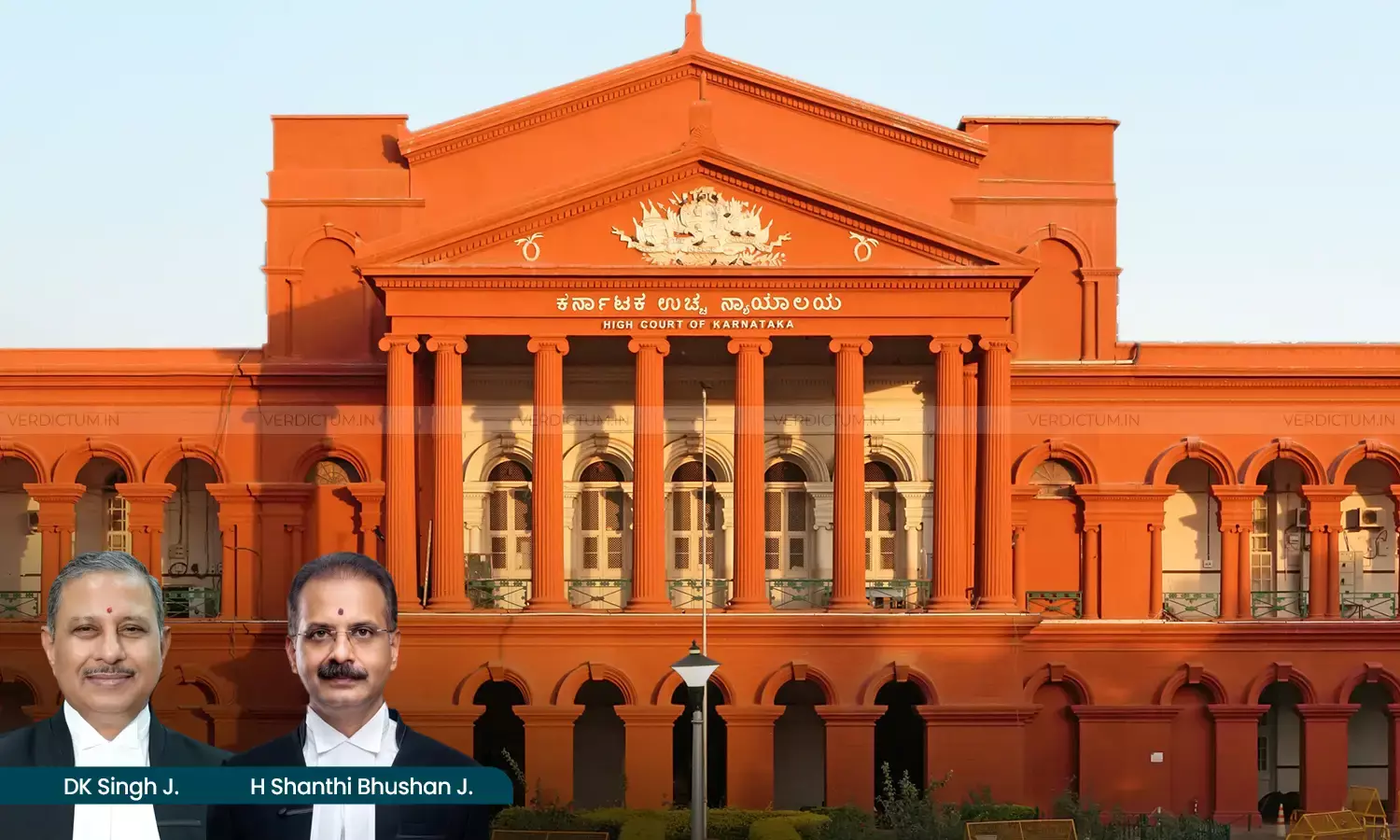
The Karnataka High Court has held that a divorced woman’s subsequent remarriage does not, by itself, erase the circumstances giving rise to an entitlement to permanent alimony.
However, the Court held that remarriage constitutes a material change that must be considered while fixing the amount payable. Applying this principle, the Court reduced a permanent-alimony award from ₹25 lakh to ₹10 lakh.
The Court was hearing the husband’s appeal under Section 19(1) of the Family Courts Act, 1984 against the part of a Family Court decree directing him to pay ₹25 lakh as permanent alimony. The decree dissolving the marriage was not under challenge.
A Bench of Justice D.K. Singh and Justice H. Shanthi Bhushan observed: “The principle emerging from the aforesaid decision is that the subsequent remarriage of the petitioner does not, by itself, obliterate the circumstances giving rise to her entitlement to permanent alimony. At the same time, such remarriage is a material change in circumstance which is required to be taken into consideration while determining the quantum payable. In the present case also, the petitioner remained unmarried from the date of dissolution of marriage until her remarriage on 21.04.2024. This period, together with the financial circumstances of the parties and the subsequent change in the petitioner’s circumstances, is therefore relevant for reassessing the amount awarded by the Family Court.”
Advocate Vachana N.V. appeared for the appellant-husband. Advocate Harshitha S., instructed by Advocate Venkatesh R. Bhagat, appeared for the respondent-wife.
Background
The parties married in May 2021. In February 2023, the Family Court at Mysuru allowed the wife’s petition for dissolution of the marriage and awarded her ₹25 lakh as permanent alimony against her claim for ₹1 crore.
While determining the amount, the Family Court noted that the husband had disclosed an annual salary of ₹25 lakh and a monthly take-home salary of ₹1.70 lakh. It also considered the wife’s admission that she earned ₹7 lakh annually. The Family Court further noted that the husband had not filed an affidavit of assets and liabilities or produced his bank statements, income-tax returns and salary documents.
The husband challenged only the quantum of permanent alimony. During the appeal, the wife filed a memo informing the High Court that she had remarried on April 21, 2024 and produced a certificate registering the subsequent marriage.
The husband submitted that the Family Court had not considered his obligations towards his dependent parents or the wife’s remarriage. The wife defended the award as having been based on a proper assessment of the material before the Family Court.
Court’s Observations
Section 25 Permits Reassessment After Remarriage
The Court observed that Section 25 of the Hindu Marriage Act empowered courts to vary, modify or rescind a permanent-alimony order following a change in circumstances. It further noted that Section 25(3) specifically contemplated such reconsideration when the recipient had remarried.
The Bench held: “The subsequent remarriage of the petitioner is a circumstance which has a bearing on the determination of permanent alimony. Section 25 of the Act enables the Court to vary, modify or rescind an order for permanent alimony upon a change in circumstances and sub-section (3) of Section 25, specifically contemplates such variation where the party in whose favour the order has been made, has remarried.”
The Court found that the Family Court had assessed the wife’s future requirements on the basis that she would have to lead her life following the dissolution of the marriage. Her subsequent remarriage materially altered the circumstances underlying that assessment.
No Fixed Formula For Permanent Alimony
The Court held that permanent alimony could not be calculated through a fixed formula. It stated that the income, property, means, status, earning capacity, future prospects and reasonable requirements of both parties had to be considered, together with subsequent events affecting those circumstances.
The Court observed: “The determination of permanent alimony does not rest on any fixed formula. The Court is required to have regard to the income and property of both parties, their respective means, status, earning capacity and future prospects, reasonable requirements and the other circumstances of the case. The subsequent events having a bearing on these circumstances are also required to be taken into consideration while determining the amount payable.”
The Bench relied on Sharath Cariappa K.S. v. Smt. Sharin N.S. (2024), where the Karnataka High Court had reduced permanent alimony from ₹25 lakh to ₹10 lakh after the wife remarried during the husband’s appeal. That decision held that remarriage did not make the wife’s earlier entitlement legally untenable, but was relevant to reassessing the amount.
Husband Did Not Prove Other Financial Obligations
The Court also considered the husband’s contention that the wife had not disclosed complete particulars concerning her income and that he had financial obligations towards his dependent parents.
The Bench, however, found that he had not filed an affidavit of assets and liabilities or produced evidence substantiating those obligations, as required under Rajnesh v. Neha (2021).
The Court stated: “However, the respondent has not placed on record any affidavit of assets and liabilities or material evidence substantiating the financial obligations claimed by him, as per the law laid down in Rajnesh –vs- Neha. These contentions, therefore, do not furnish sufficient ground to interfere with the basis on which the Family Court assessed the permanent alimony.”
Award Reduced To ₹10 Lakh
Considering the parties’ financial position, the period during which the wife remained unmarried after the divorce and her subsequent remarriage, the Court concluded that the award required reassessment.
The Bench held: “The subsequent remarriage of the petitioner, however, constitutes a relevant change in circumstance. Having regard to the financial position of the parties, the period for which the petitioner remained unmarried following the dissolution of marriage and her subsequent remarriage, we are of the view that the permanent alimony awarded by the Family Court requires to be reassessed. In order to bring quietus to the dispute relating to permanent alimony, we deem it appropriate to reduce the award of Rs.25,00,000/- to Rs.10,00,000/-.”
Conclusion
The High Court partly allowed the husband’s appeal and modified the Family Court decree by reducing permanent alimony from ₹25 lakh to ₹10 lakh. It directed that the ₹10 lakh already deposited by the husband before the High Court be appropriated towards permanent alimony in full satisfaction of the award. No further amount was held payable under the decree. Pending applications were disposed of.
Cause Title: BNP v. SAG (Neutral Citation: 2026:KHC:51576-DB)