

No Requirement Of Removing Sacred Thread: Examination Authority Tells Karnataka HC; Court Directs Uniform Conduct Of CET
The Karnataka Examinations Authority told the High Court that there are no guidelines requiring students to remove the sacred thread.

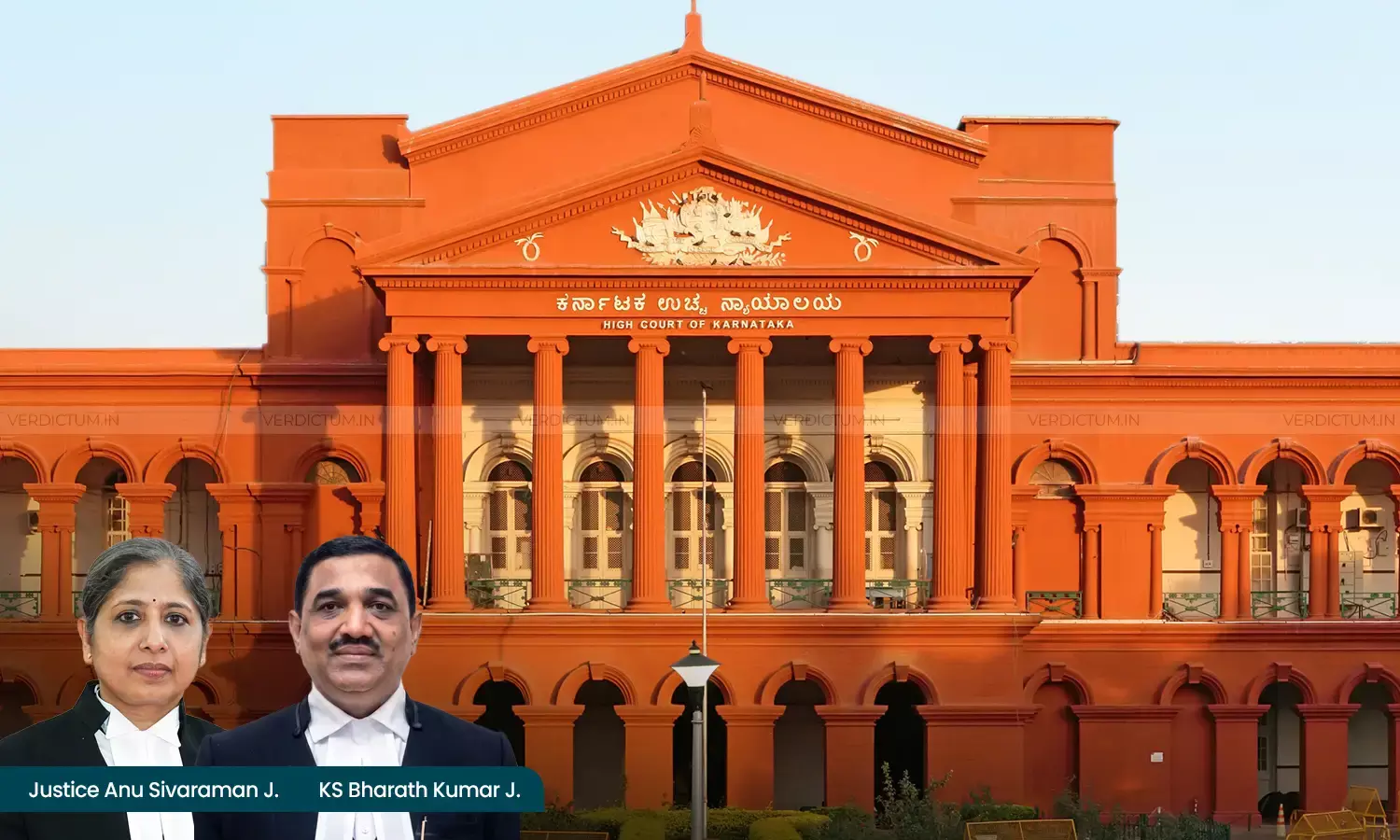
The Karnataka High Court has directed the Karnataka Examinations Authority (KEA) to take appropriate steps for the conduct of examinations in an orderly and uniform manner across the State, on a plea alleging that students wearing the sacred thread were selectively not permitted to appear in the Common Entrance Test (CET) 2025.
The Court disposed of the public interest litigation after recording the KEA’s submission that there are no instructions requiring students to remove the sacred thread, and that instructions are being issued to Deputy Commissioners and all persons involved in conducting the examinations to prevent such incidents in the future.
The Division Bench of Justice Anu Sivaraman and Justice K.S. Bharath Kumar observed, “Having considered the contentions advanced, we are of the opinion that it is for respondent No.3 to take appropriate steps to see all arrangements for the proper conduct of the examinations are uniformly provided across the State.”
Advocate Ashwini N. Ravindra appeared for the Petitioner, while Additional Government Advocate Pramodhini Kishan appeared for the State and Advocate N.K. Ramesh appeared for the KEA.
The public interest litigation was filed by the Akhila Karnataka Brahmana Maha Sabha, seeking directions for the formulation of specific guidelines on the conduct of examinations in the State, particularly with regard to frisking by officials at examination centres set up by the KEA.
The petitioner also sought a declaration that the action of not permitting students wearing the sacred thread to appear in the CET was unconstitutional, arbitrary and illegal, and a direction to re-conduct the test for the affected students. It further sought a direction not to discriminate against such students or interfere with their essential religious practice.
The petitioner contended that there had been instances of the authorities selectively not permitting students wearing the sacred thread to appear for the CET, which amounted to discrimination, and that such incidents continued even after the writ petition was filed. It placed on record FIRs registered by the Shimoga Police on 18.04.2025.
The KEA submitted that the Deputy Commissioners are the Chief Superintendents for the conduct of the entrance test in each district, assisted by Deputy Chief Superintendents, and that dress code guidelines had been issued. It submitted that there are no instructions or guidelines requiring students to remove the sacred thread, and that necessary steps were taken wherever such incidents were reported.
It added that the Karnataka State Human Rights Commission and the Karnataka State Commission for Protection of Child Rights had taken cognizance of the matter and that status reports had been filed before them.
Taking note of the KEA’s submission that necessary steps and instructions would be given to avoid such incidents in the future, the Court held that nothing further remained in the matter.
The Court accordingly disposed of the writ petition, “directing that appropriate steps shall be taken for the conduct of the examinations in an orderly and uniform manner across the State and for the issuance of appropriate directions to the Commissioners and Deputy Superintendents in this regard.”
Cause Title: Akhila Karnataka Brahmana Maha Sabha v. State of Karnataka & Ors. [Neutral Citation: 2026:KHC:61247-DB]
Appearances:
Petitioner: Advocate Ashwini N. Ravindra for Advocate Sumana Naganand.
Respondents: Additional Government Advocate Pramodhini Kishan and Advocate N.K. Ramesh.