Failure Of Family Members To Rescue Victim Cannot Sustain Their Dowry-Death Conviction Without Specific Proof: Jharkhand High Court
The Court found no specific evidence that the appellants had subjected the deceased to cruelty or harassment connected with a dowry demand. It also noted that the trial court had not invoked Section 34 of the IPC to impose constructive liability based on common intention.
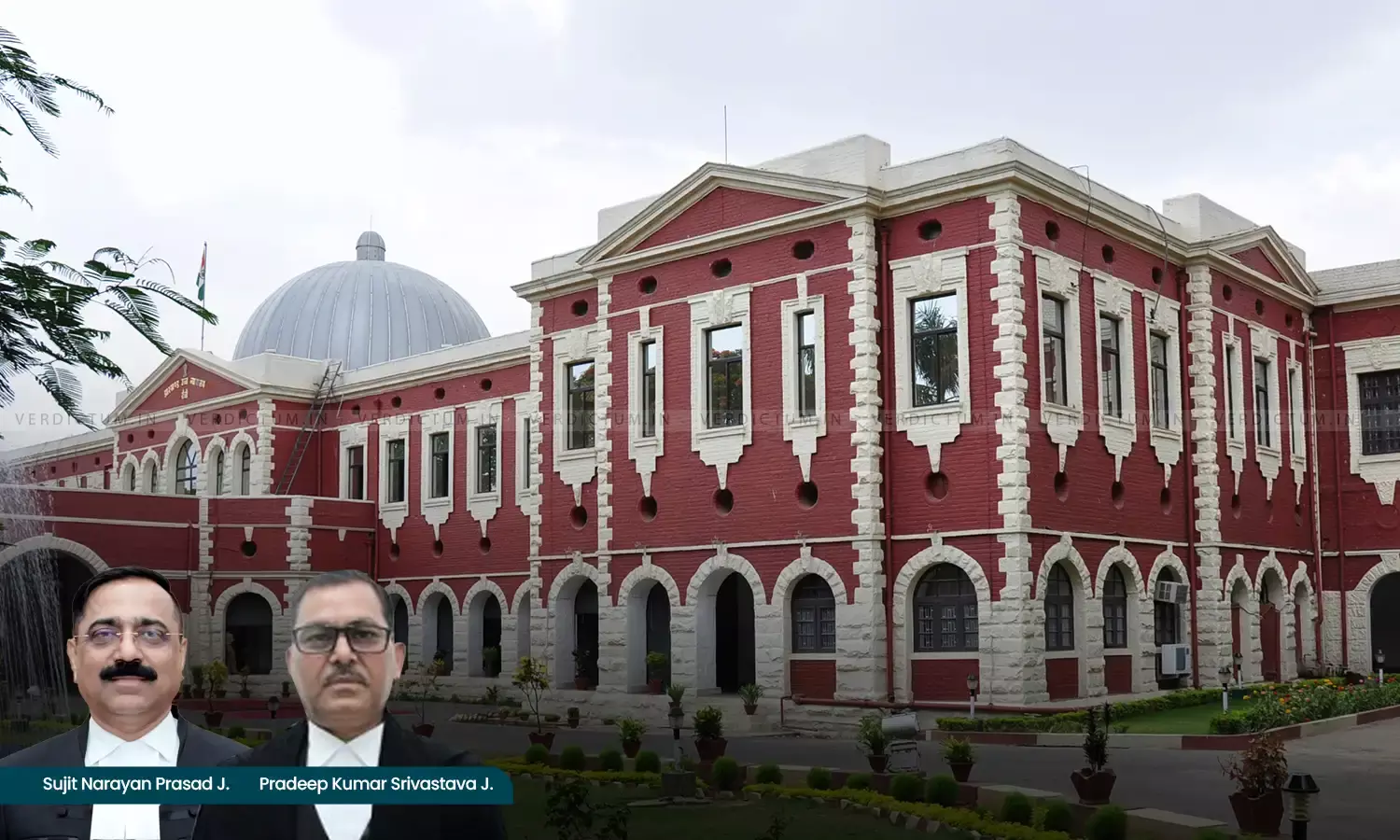
Justice Sujit Narayan Prasad, Justice Pradeep Kumar Srivastava, Jharkhand High Court
The Jharkhand High Court has held that the mere failure of members of a deceased woman’s matrimonial family to intervene or rescue her during a fatal incident cannot sustain their conviction for dowry death without specific and reliable evidence establishing cruelty, harassment or active participation.
The Court was hearing an appeal under Section 374(2) of the CrPC against the conviction of two family members under Section 304B of the IPC. The trial court had sentenced each appellant to seven years’ rigorous imprisonment.
A Division Bench of Justice Sujit Narayan Prasad and Justice Pradeep Kumar Srivastava observed: “In the totality of circumstances, even if one were to assume that the appellants were, at some stage, involved in raising a demand for dowry, the prosecution has failed to adduce any cogent or reliable evidence to establish that such demand was accompanied by harassment of the victim which directly resulted in her death. The specific case of the prosecution, as borne out from the record, is confined to the allegation that the appellants stood by during the occurrence and did not make any effort to rescue the deceased. Thus, the imputation against them is essentially one of passive presence rather than active participation in the alleged ghastly crime, and in absence of substantive proof of cruelty or harassment, their culpability cannot be legally sustained.”
Advocate Pratiush Lala appeared for the appellants. Additional Public Prosecutor Bishambhar Shastri represented the State.
Background
The prosecution case was that the deceased had been subjected to demands for ₹50,000 and a motorcycle after her marriage. It alleged that her mother-in-law poured kerosene oil upon her and that her husband ignited the fire with a matchstick. The present appellants were accused of remaining at the scene without attempting to rescue her.
The deceased sustained extensive burn injuries and died during treatment. Her relatives testified that she had made oral statements in the hospital identifying her mother-in-law and husband as the persons who poured the kerosene and lit the fire. They alleged that the other accused had watched the incident and failed to save her.
The defence denied the prosecution allegations and claimed that the deceased had suffered accidental burns while lighting an oven. It argued that the witnesses had attributed no specific act to the present appellants apart from alleging that they did not intervene.
The trial court convicted the appellants of dowry death under Section 304B of the IPC. Their appeal was heard alongside the husband’s separate appeal. The husband’s appeal was subsequently dismissed as not pressed because he had already completed the ten-year sentence imposed upon him.
Court’s Observations
Dowry Death Required Proof Of Cruelty Or Harassment
The Court reiterated that a conviction under Section 304B of the IPC required the prosecution to establish that the woman’s unnatural death occurred within seven years of marriage and that, soon before her death, she had been subjected to cruelty or harassment connected with a dowry demand.
Referring to Major Singh v. State of Punjab (2015), the Court noted that the cruelty or harassment must be shown to have been meted out to the woman soon before her death. It further observed that the presumption under Section 113B of the Indian Evidence Act, 1872, could arise only after the prosecution proved the foundational fact of dowry-related cruelty or harassment by the accused concerned.
The Court held: “It has not been the specific case of the prosecution that prior to her death the deceased was subjected to cruelty by these appellants.”
The general allegation of a dowry demand could not substitute for distinct evidence showing that these appellants had harassed or treated the deceased cruelly in connection with that demand.
Allegation Was Confined To Passive Presence
The Court examined the testimony of the prosecution witnesses and found that the specific acts of pouring kerosene and igniting the fire were attributed to the mother-in-law and husband. As against the present appellants, the allegation was that they had watched the incident and had not attempted a rescue.
The Court observed: “The role attributed to the appellants herein is merely that they were present at the scene, witnessed the occurrence, and failed to intervene or make any effort to rescue the deceased.”
It held that suspicion, regardless of its strength, could not replace clear and specific evidence establishing active participation. The appellants could not be convicted merely because they were allegedly present when the incident occurred.
Constructive Liability Was Not Invoked
The Court noted that the trial court had neither invoked nor applied Section 34 of the IPC while framing the charge or delivering its judgment against the appellants. No statutory basis had therefore been laid for attributing joint liability to them for acts allegedly committed by the other accused.
The Court stated: “In absence of any reference to or reliance upon Section 34 IPC, the principle of constructive liability through common intention has not been fastened upon them.”
The appellants’ culpability for the fatal acts attributed to the husband and mother-in-law could consequently not be sustained through the doctrine of common intention.
Evidence Did Not Prove Active Participation
The Court also examined the evidence concerning the alleged oral dying declaration. It noted discrepancies between the medical evidence recording extensive burns and the witnesses’ descriptions of the deceased’s condition and ability to speak. The investigating officer had neither visited the hospital nor recorded the statement of a doctor.
The Court cautioned that immaterial discrepancies would not ordinarily undermine a prosecution case, but material contradictions affecting its foundation had to be considered. It found that the evidence did not establish the present appellants’ direct involvement beyond reasonable doubt.
The Court held: “Accordingly, in the absence of any cogent, reliable and specific evidence establishing the active participation of the present appellants in the commission of the alleged offence, this Court is of the considered view that the prosecution has failed to prove the charges against them beyond all reasonable doubt.”
The Court also referred to Supreme Court decisions cautioning against indiscriminately implicating every relative of the husband in dowry-death cases without specific allegations and supporting material.
Conclusion
The Court allowed the appeal and set aside the appellants’ conviction and sentence under Section 304B of the IPC. It acquitted them by extending the benefit of doubt.
Since both appellants were already on bail, the Court discharged them from the liabilities arising from their bail bonds. The pending interlocutory applications were also disposed of, and the trial court records were directed to be returned.
Cause Title: X v. State of Jharkhand (Neutral Citation: 2026:JHHC:31680-DB)
Appearances
Appellants: Pratiush Lala, Advocate
State: Bishambhar Shastri, Additional Public Prosecutor