Wife’s Pursuit Of Higher Education Or Employment Is A Right, Not Husband’s Favour: Jharkhand High Court
The Court termed portraying of the wife as ambitious or over-ambitious as gender stereotyping.
The Jharkhand High Court held that a wife’s pursuit of higher education or employment after marriage is an exercise of her rights, not a privilege or favour granted by her husband.
The High Court set aside a Family Court judgment founded substantially on contrary gender stereotypes and granted the wife a decree of divorce on the ground of cruelty.
The Court was hearing the wife’s first appeal against the Family Court’s dismissal of her petition seeking dissolution of marriage under Section 13(1)(i-a) of the Hindu Marriage Act, 1955.
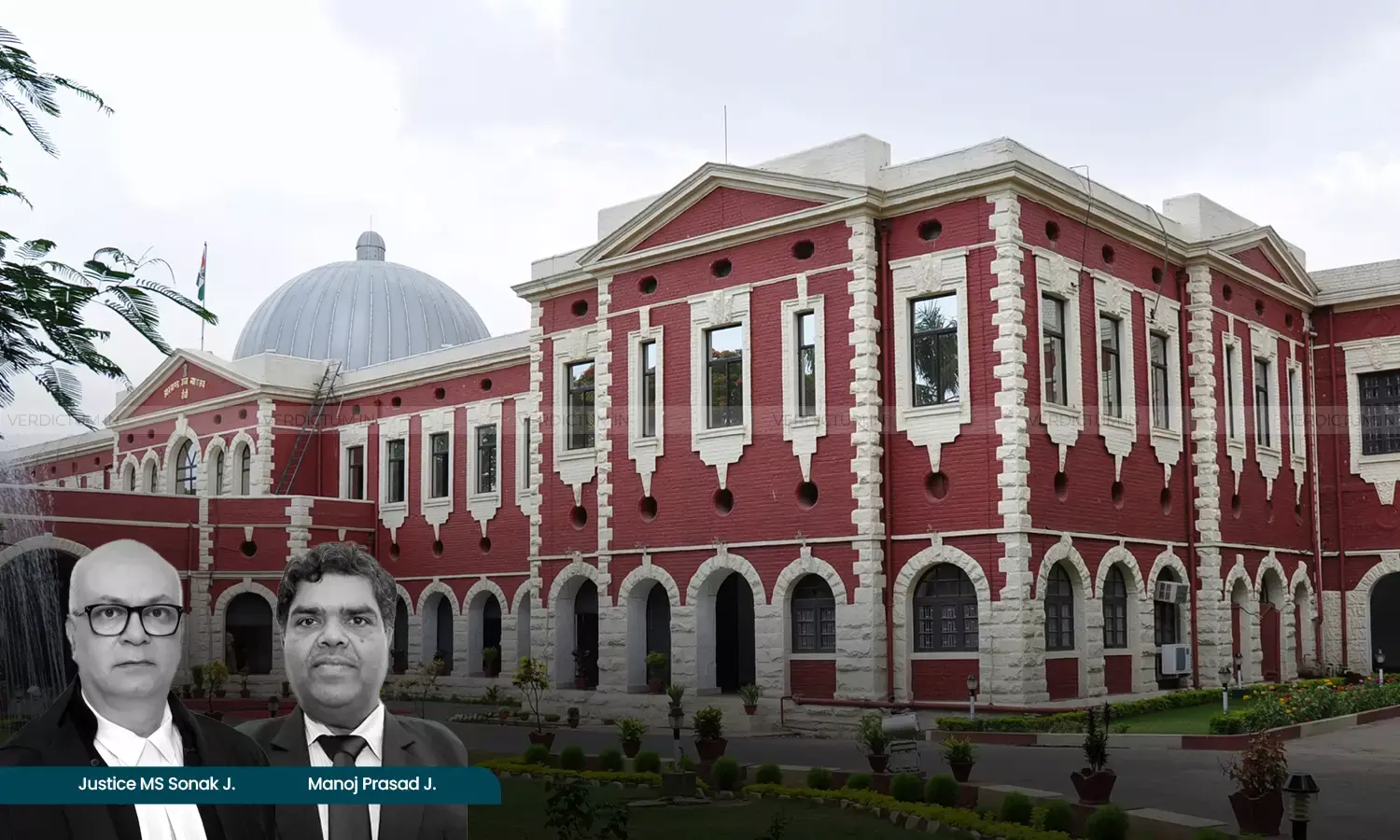
A Bench of Chief Justice M. S. Sonak and Justice Manoj Prasad observed: “Pursuing higher education after marriage is not a privilege granted by the respondent, but a right which the wife is always entitled to exercise. Similarly, if the wife wishes to take up a government or even a private job, based on merit and eligibility, allowing her to do so is not some favour the husband does to his wife. A wife who is intent on further studies or on taking up a job after marriage cannot be considered ambitious or over-ambitious. A husband studying further or taking up a job after marriage is regarded as normal, perhaps as it should be. But the reverse cannot be stigmatised as abnormal or suggestive of ambition or over-ambition. Accordingly, the appellant’s plea should not have been rejected on the basis of such gender stereotyping.”
Advocate Anurag Kashyap appeared for the wife. Advocate Birendra Kumar appeared for the husband.
Background
The parties married in 2004 and had a daughter. The wife sought divorce on the ground of cruelty, alleging dowry demands, physical and mental ill-treatment, lack of financial support, and that her husband induced her to resign from her job and move to Delhi before leaving for Raigarh, compelling her and the child to stay with her sister.
The husband denied those allegations in his written statement. He claimed that he had financed the wife’s education and maintained their daughter. He also alleged that the wife’s behaviour changed after she secured employment and that she no longer wished to resume matrimonial life.
The wife examined herself, her father and a neighbour. The husband examined no witness and did not materially cross-examine the wife’s witnesses.
The Family Court nevertheless dismissed the suit. It treated the husband’s support for the wife’s education and employment as evidence of his liberal and accommodating attitude, described the wife as highly ambitious and rejected her witnesses’ evidence based on an alleged contradiction.
Reconciliation was attempted during the appeal, but mediation failed. The High Court therefore decided the appeal on its merits.
Court’s Observations
Vague Denials Could Not Displace Unchallenged Evidence
The Court found that the husband’s written statement contained vague and evasive denials that did not comply with Order VIII Rules 3, 4 and 5 of the CPC. It noted that facts must be specifically denied and that facts not denied shall be deemed to have been admitted.
The Court observed: “In this case, while the appellant wife led evidence in support of her plea, the respondent husband led no evidence or did not even seriously cross-examine the appellant or her witness. Still, the learned trial judge dismissed the suit, relying on the denials in the written statement. This was even though even such denials were vague and evasive.”
It further held that pleadings were not a substitute for proof. Photocopies annexed to the counter-affidavit filed in the appeal could not be taken on record or relied upon without an application under Order XLI Rule 27 of the CPC or a properly established case for adducing additional evidence.
Alleged Contradiction Concerned Different Incidents
The Family Court had perceived a contradiction between the wife’s evidence that she had been verbally abused and her father’s evidence concerning physical assault.
The High Court found: “The learned trial judge has rejected the evidence of the appellant and her witnesses by citing some minor contradiction. Upon perusal and evaluation of the evidence, we find nothing contradictory in the evidence of P.W.1 and P.W.2.”
The Court noted that the alleged verbal abuse and physical assault concerned two different incidents. It held that the wife’s testimony concerning dowry demands and physical and mental cruelty was corroborated by her father and an independent neighbour. Their evidence remained substantially unrebutted.
Marriage Is A Partnership Of Equals
The Court rejected the Family Court’s approach as gender stereotyping and held that a marital relationship could not be understood in terms of superiority, inferiority or domination.
It observed: “Such gender stereotyping cannot be permitted in such matters. The husband and wife are equal partners in marriage. The law is settled that the relationship between a husband and wife is not one of a superior and an inferior, nor of one person dominating another. This relationship rests on the premise that the husband and wife exercise equal rights and move in tandem. Even if moving in tandem may not always be possible, mutual respect is to be striven for.”
The Court held that a wife’s desire to study further or take up employment could not be stigmatised as abnormal or treated as evidence that she was over-ambitious. It said that the same conduct was ordinarily regarded as normal when undertaken by a husband.
Cruelty Was Established
Considering the wife’s substantially unrebutted pleadings and testimony, the Court found that she had proved both physical and mental cruelty.
The Court held: “Considering the unrebutted pleadings and the virtually unrebutted oral testimony in their entirety, we are of the considered view that the appellant has successfully proved the case under Section 13(1)(i-a) of the Hindu Marriage Act, i.e., the respondent meted out cruelty to the appellant, making conjugal life incompatible and rendering the possibility of the parties residing together remote. Such cruelty is sufficient for the purpose of dissolving the marriage by a decree of divorce under Section 13(1)(i-a) of the Hindu Marriage Act.”
Conclusion
The High Court allowed the appeal, set aside the Family Court’s judgment and decree, and dissolved the marriage by granting the wife a decree of divorce on the ground of cruelty under Section 13(1)(ia) of the Hindu Marriage Act, 1955.
The wife had not sought interim maintenance or permanent alimony. The Court therefore made no alimony order but reserved the right of the wife and daughter to seek maintenance or alimony from the husband before a competent court. All pending applications were disposed of.
Cause Title: RD v. DK (Neutral Citation: 2026:JHHC:32647-DB)