Executive Act Cannot Contravene Judicial Order: Jharkhand High Court Quashes JSSC-CGL Recruitment Cancellation, Restores Appointments
The Court found no concluded inquiry establishing systemic fraud. The appointments remain subject to the criminal prosecutions, while the investigation must continue fairly.
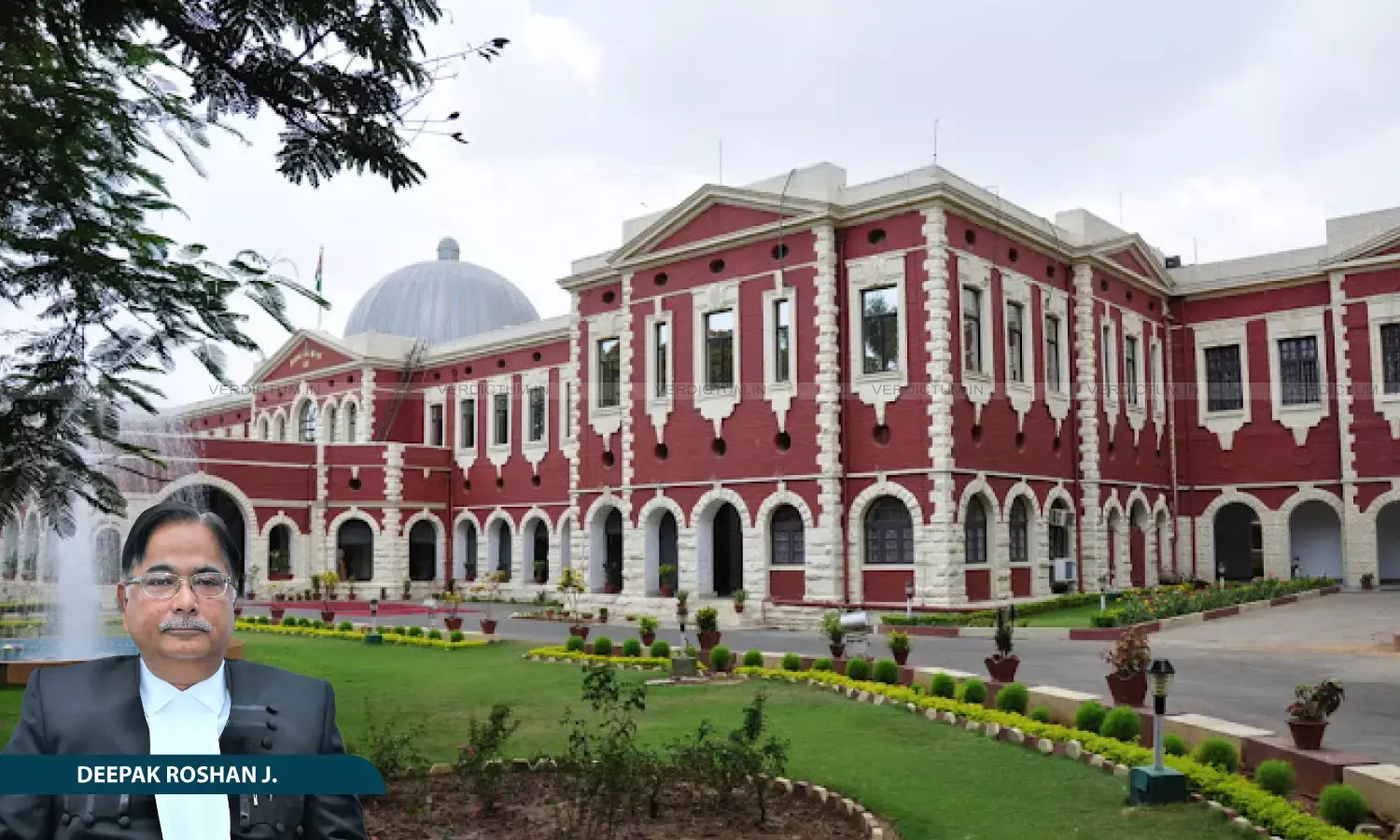
Justice Deepak Roshan, Jharkhand High Court
The Jharkhand High Court, while stating that actions of the executive cannot contravene or overreach a binding judicial order, quashed the State’s decision cancelling the Jharkhand Staff Selection Commission’s General Graduate Level Combined Competitive Examination recruitment and directed that the petitioners be treated as continuously in service with all monetary and other benefits.
The Court was hearing service writ petitions filed by appointees challenging the State’s cancellation of a recruitment that an earlier Division Bench had directed to be completed.
A Bench of Justice Deepak Roshan observed: “In view of the above, there can be no hesitation to hold that State of Jharkhand has breached the orders passed by the Hon’ble Division Bench and the Hon’ble Supreme Court of India and the impugned decision as contained in Notification dated 18.08.2026, bearing No. 06/LO.S.A.-01-07/5408 of 2026 runs completely contrary to the said judgment and order and seeks to overreach the same.”
The Court further observed: “An act of the executive cannot be contrary to a judicial order. Likewise, judicial decisions, inter alia, are aimed to give quietus to a dispute and bring about certainty. Legal certainty is a Rule of Law. Post final determination of the issues by the Division Bench and the Supreme Court, it is not permissible for the State Government to reopen the same issue that too in a manner in which it has been done by the impugned notification.”
Senior Advocates P.S. Patwalia, Gopal Sankarnarayan and Rajiv Ranjan appeared for the petitioners. Senior Advocate Meenakshi Arora, Advocate General Rohitashya Roy and Senior Additional Advocate General Achyut Keshav appeared for the State.
Background
The JSSC conducted the Jharkhand General Graduate Level Combined Competitive Examination for recruitment to State posts. Two earlier petitions challenged the examination over alleged paper leakage and other malpractices. One sought an independent investigation and restraint on publication of the result pending inquiry, while the other sought cancellation of the recruitment process. The Division Bench declined to cancel the examination, directed publication of the result and appointments, directed the Special Investigation Team to complete the investigation within six months and permitted action against successful candidates found involved in malpractice.
The Supreme Court declined to interfere and made the appointments subject to the final outcome of all criminal prosecutions. The petitioners were subsequently appointed and entered service.
While the investigation remained incomplete, the State Cabinet cancelled 22 examinations, including this recruitment. The petitioners alleged that the State had reopened a concluded issue without proving systemic compromise. The State maintained that later material disclosed institutional fraud and made segregation unreliable.
Court’s Observations
State Could Not Reopen The Settled Issue
The earlier judicial orders contemplated further investigation and additional candidates being implicated, but did not permit cancellation of the concluded recruitment before completion of the prosecution.
It observed: “Once the High Court and the Supreme Court had the occasion to deal with the issue, which is directly and substantially the same as the present one, the respondents only by claiming that some further material has been collected and further arrests had been made cannot undo the judgment and order of Constitutional Courts.”
The State remained bound by the framework of investigation, candidate-specific action and appointments subject to the prosecutions.
Cabinet Note Did Not Disclose A Reasonable Foundation
The Court noted that the Cabinet acted partly because of protests and also referred to the investigation. However, the Cabinet note did not disclose the precise material considered before cancelling the recruitment along with 21 other examinations.
The Court observed: “However, the cabinet note does not disclose what were the exact materials placed before it to arrive at the decision to cancel not only the present examination but 21 other examinations. It is true that a writ court is not supposed to look into the sufficiency of the materials, but it is equally true that reasonable materials must exist, which must be considered to arrive at a conclusion and in absence thereof the decision is liable to be struck down as perverse.”
The Court distinguished decisions involving completed inquiries or concrete evidence of systemic compromise. Here, the investigation was incomplete, the facts remained “hazy and sketchy,” and the State disclosed no cogent basis for claiming segregation was impossible.
Incomplete Investigation Could Not Displace Natural Justice
Unlike candidates merely included in a merit list, the petitioners had already been appointed and were removed from service by the cancellation.
It held: “However, in the present case the petitioners have already been appointed and therefore a right has been created and the same cannot be taken away without following the due process. It may, in a given case, be possible that prior notice or hearing be done away with, but such an exception can only be made when facts supporting such exercise are available on record. In the present case as noted, the materials collected in an incomplete investigation cannot be pressed into service to do away with the principles of natural justice.”
Whether tainted candidates could be identified and segregated could be determined only after the investigation. Until then, continuance depended on the prosecutions’ final outcome.
Continuity Restored, Investigation Preserved
The Court quashed the notification insofar as it cancelled the recruitment and restored the petitioners’ service continuity and benefits.
It ordered: “Accordingly, it is ordered that the Notification dated 18.08.2026, bearing No. 06/LO.S.A.-01-07/5408 of 2026, cancelling the recruitment pursuant to Advertisement No. 10 of 2023 is quashed and set aside and the petitioners would be deemed to be in service with continuity in service without any break and they should not be denied of any service benefits, be it monetary or otherwise, on account of the impugned order.”
The earlier judicial orders remained binding. The appointments continued to be subject to the prosecutions, while the investigation had to proceed fairly and the petitioners had to cooperate.
Conclusion
The Jharkhand High Court allowed the writ petitions, quashed the State notification cancelling the JSSC-CGL recruitment and deemed the petitioners continuously in service without any break, with all monetary and other service benefits.
The appointments remain subject to the criminal prosecutions. The investigation must continue fairly, the petitioners must cooperate and the Court’s observations cannot prejudice it. There was no order as to costs, and all pending applications were disposed of.
Cause Title: Ramesh Oraon and Others v. State of Jharkhand and Others (Neutral Citation: 2026:JHHC:32695)
Appearances
Petitioners: P.S. Patwalia, Gopal Sankarnarayan and Rajiv Ranjan, Senior Advocates; Indrajit Sinha, Amritansh Vats, Saurav Shekhar, Arpan Mishra, Kumar Abhishek, Arpan M. Ekka, Ashish Choudhary, Rahul Ranjan, Shray Mishra, Deepankar, Sonal Tiwary, Ritesh Ranjan, Kumar Chayan and Nikhil Anand, Advocates
Respondents: Meenakshi Arora, Senior Advocate; Rohitashya Roy, Advocate General; Achyut Keshav, Senior Additional Advocate General; Tejo Mistri, Advocate; Vibhour Mayank, Assistant Counsel to the Advocate General; Ruchi Mukti, Assistant Counsel to the Additional Advocate General-I-A; Ritu Kumar, Samvesh Bhanj Deo and Kumar Harsh, Advocates