Jharkhand High Court Issues Directions To Curb Illegal Stone Mining In Hazaribagh Region
The Court held that illegal mining activities and operation of non-compliant stone crusher units in the Ichak region stood established and observed that continued administrative inaction had resulted in environmental degradation, hazardous mining pits and violation of residents’ right to life under Article 21.
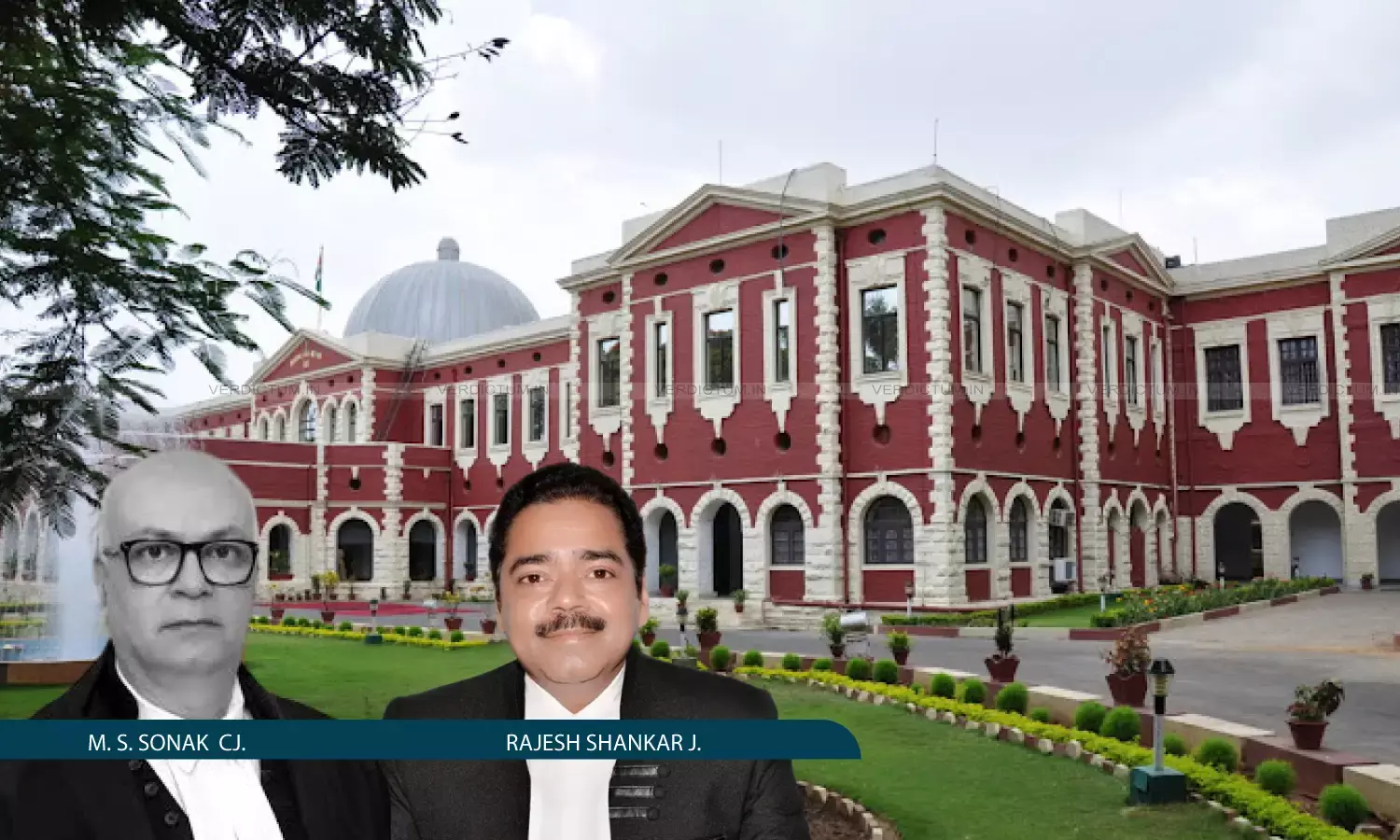
The Jharkhand High Court has issued a series of mandatory directions to curb illegal mining and operation of non-compliant stone crusher units in the Ichak region of Hazaribagh district, holding that the material on record established large-scale unauthorised quarrying, environmental degradation and continuing regulatory failure by the authorities.
The Court observed that the State could no longer plead “institutional unpreparedness as a ruse for inaction” in the face of persistent violations affecting cultivable land, river ecology and human life.
The Court was hearing a public interest litigation concerning illegal stone mining and the operation of crusher units around the Siwane River in the Ichak region. The petitioner alleged that rampant illegal quarrying and crusher operations had damaged cultivable land, polluted the environment and endangered residents, while authorities failed to take effective action despite repeated complaints.
A Division Bench comprising Chief Justice M. S. Sonak and Justice Rajesh Shankar observed: “…upon a cumulative assessment of the pleadings, affidavits, and the independent report of the Secretary, DLSA, Hazaribagh, this Court is satisfied that illegal mining activities and the operation of noncompliant stone crusher units in Village Tepsa and its surrounding areas stand established”.
The Bench, while issuing directions to that State, further observed: “the gravity of the disclosed lapses and the urgent necessity for restoration necessitate the issuance of final, enforceable directions to the State machinery, …By disposing of this matter today, we translate judicial oversight into a mandatory blueprint for administrative accountability”.
Advocate Vijay Narayan Singh appeared for the petitioner, while Gaurav Raj, A.C. to A.A.G.-II, Advocates Prabhash Kumar and Manish Sharma appeared for the respondents.
Background
The PIL was instituted alleging rampant illegal stone mining and operation of unauthorised crusher units around the Siwane River in the Ichak region of Hazaribagh district. The petitioner alleged that the crusher units emitted massive quantities of dust, damaging approximately 100 hectares of cultivable land and disrupting the ecological balance of the river system.
The petitioner further alleged collusion between local authorities and illegal mining operators and stated that residents raising objections were threatened with dire consequences.
According to the petitioner, several crusher units were operating without mandatory environmental clearances, explosive licences and statutory permissions under mining and environmental laws.
The Court noted that despite repeated judicial directions since 2013 and multiple affidavits filed by authorities acknowledging illegal mining, the environmental situation in the region continued to deteriorate.
In 2025, the Court directed the Secretary of the District Legal Services Authority, Hazaribagh, to conduct a surprise inspection of the area. The independent report submitted thereafter documented illegal quarrying, abandoned mining pits and continuing environmental damage.
The Court also recorded that after the DLSA inspection report, authorities imposed a temporary ban on mining activity in the area and identified crusher units operating without mandatory “Consent to Establish” clearances from the Pollution Control Board.
Court’s Observation
The High Court extensively examined environmental jurisprudence concerning the right to a clean environment under Article 21 of the Constitution and referred to decisions including Subhash Kumar v. State of Bihar (1991), M.C. Mehta v. Union of India (1987), Vellore Citizens Welfare Forum v. Union of India (1996) and Virender Gaur v. State of Haryana (1995).
The Bench observed that the stone dust generated by crusher units had become a “silent and invisible toxin” affecting air quality, vegetation, agriculture and human health.
The Court noted scientific material placed on record indicating that mining activity had caused severe ecological imbalance, reduced agricultural productivity and exposed residents to respiratory and occupational diseases, including silicosis and tuberculosis.
While rejecting the petitioner’s contention that the entire area fell within an eco-sensitive zone, the Court nevertheless held that the absence of such classification did not permit ecological destruction or relieve authorities of their constitutional obligations.
The Bench remarked: “… the absence of a 'protected' label does not grant a license to engage in ecological destruction. While the strictures of the Godavarman case (supra) regarding Eco-Sensitive Zones may not apply by default, the overarching duty of the State to prevent the "suffocation" of the landscape, as discussed in our earlier paragraphs, remains unextinguished.”
The Bench reiterated that a one-kilometre buffer zone from the Hazaribagh Wildlife Sanctuary would continue to apply and further directed that no “Consent to Establish” or “Consent to Operate” be granted for stone mining within 500 metres of forests and for stone crushers within 400 metres of forests.
The Court expressed serious dissatisfaction regarding the functioning of the District Level Task Force constituted under a 2005 Government directive to curb illegal mining. The Bench observed that records suggested prolonged periods of inactivity and that recent administrative vigilance appeared attributable more to judicial oversight than regular governance.
The Bench further observed that although numerous FIRs had been registered, authorities failed to place any material showing actual prosecutions, confiscation proceedings or recovery actions under the Mines and Minerals (Development and Regulation) Act, 1957.
Referring to State (NCT of Delhi) v. Sanjay (2014) and Jayant v. State of Madhya Pradesh (2021), the Court reiterated that prosecutions under the IPC and the MMDR Act could simultaneously proceed against illegal mining operators.
The Court also criticised the authorities for failing to effectively utilise available technological systems such as satellite imagery, GIS mapping, geo-tagging and GPS-based vehicle tracking despite having access to the Jharkhand Integrated Mines and Mineral Management System (JIMMS) and the Central Government’s Mining Surveillance System.
The Bench observed that abandoned mining pits filled with rainwater had turned into “death traps” for villagers and children due to the absence of fencing and reclamation measures. The Court noted material on record showing fatalities caused by such abandoned pits.
The Court held that continued inaction by the Mining Department, police authorities and the Pollution Control Board amounted to abdication of statutory and constitutional duties.
The Bench further observed: “… the collective inaction of state authorities violates the Right to Life. The failure to reclaim mining pits has created hazardous conditions that jeopardise the very survival of local inhabitants. Consequently, the continued neglect by the statutory authorities of the Mining Department under the MMDR Act, 1957, constitutes a clear violation of the Right to Life guaranteed under Article 21 of the Constitution”.
The Court also recorded allegations made by the petitioner regarding possible involvement of officials in illegal mining activities for “extraneous considerations”, observing that such allegations could not be completely dismissed considering the magnitude of violations and the “lukewarm” official response.
Conclusion
The High Court disposed of the PIL after issuing a detailed set of enforceable directions to the State authorities for curbing illegal mining and restoring ecological balance in the region.
The Court directed the District Level Task Force to conduct monthly meetings, review all statutory permissions granted to mining and crusher units and prohibit all mining and crusher operations until verification of full statutory compliance.
The Bench further directed implementation of a technology-driven surveillance regime, including GPS tracking, geo-fencing protocols and CCTV monitoring of mining transit routes.
The Court ordered the District Mining Officer to initiate proceedings under Sections 21 and 22 of the MMDR Act against all persons involved in illegal extraction and further directed recovery proceedings for illegally extracted minerals under Section 21(5) of the Act.
The Jharkhand State Pollution Control Board was directed to initiate prosecutions under environmental laws, disconnect electricity supply to non-compliant units and assess environmental compensation applying the “Polluter Pays” principle.
The Court additionally directed reclamation and securing of abandoned mining pits in accordance with mine closure plans and directed senior district officials to file compliance reports within four months.
Cause Title: Hemant Kumar Shikarwar v. The State of Jharkhand & Ors. (Neutral Citation: 2026:JHHC:13668-DB)