

“No Purpose Will Be Served In Sailing The Dead Wood”: Jharkhand High Court Grants ₹40L Permanent Alimony To Wife After 36 Years Of Separation
The Bench considered the wife’s age, lack of independent income, future medical needs, inflation, dependency on alimony and that the husband was to receive retiral benefits of around ₹38 lakh with pensionary benefits.

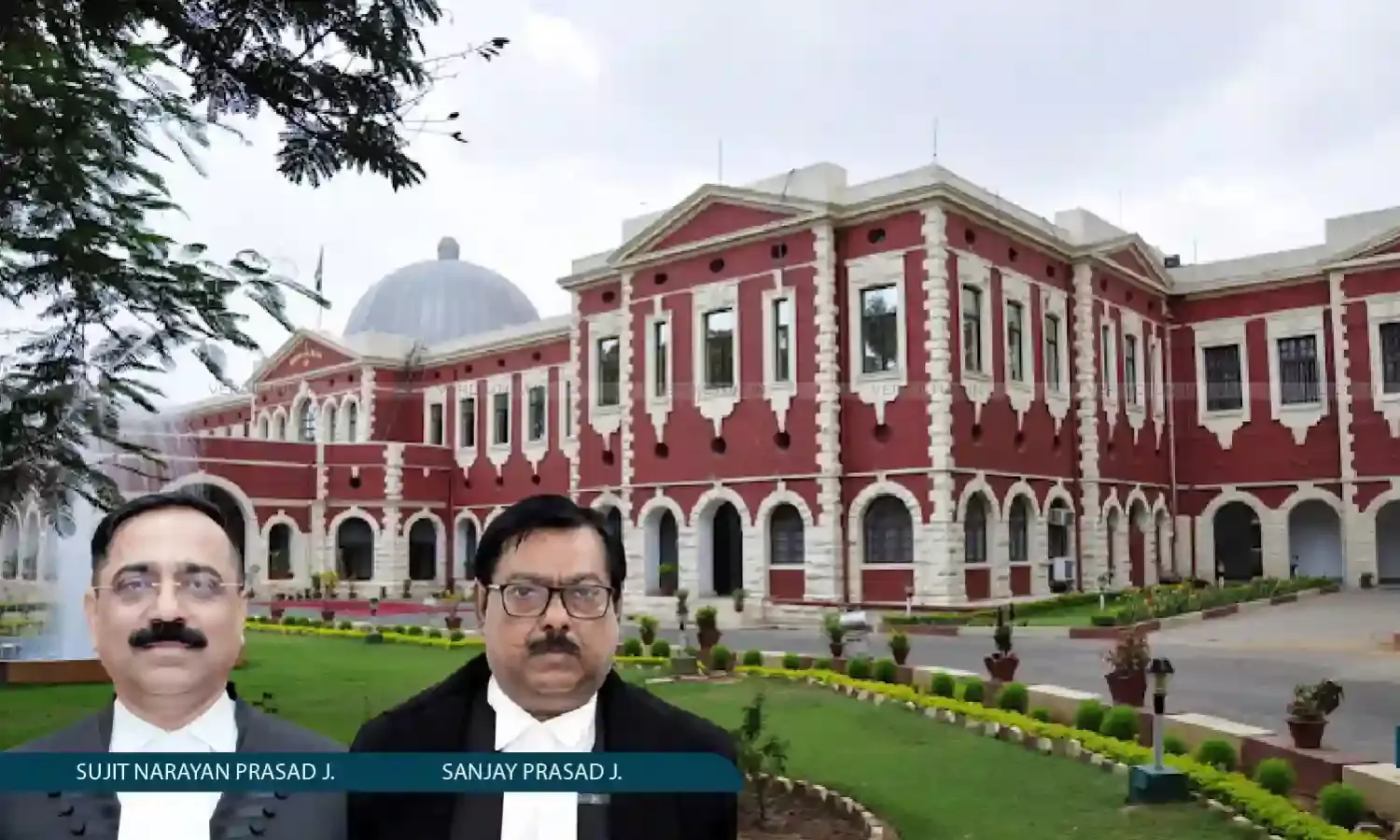
The Jharkhand High Court has upheld the dissolution of a 42-year-old marriage while enhancing the financial relief granted to the wife, directing the husband, a Railway employee, to pay ₹40 lakh as one-time permanent alimony. Accordingly, the Court directed the husband to pay ₹40 lakh as permanent alimony in four equal instalments within 12 months, with the first instalment payable within one month from the date of the order.
The Bench observed that after 36 years of separation, the matrimonial relationship had become a “dead wood marriage” and compelling the parties to continue such a relationship would serve no purpose.
A Division Bench comprising Justice Sujit Narayan Prasad and Justice Sanjay Prasad observed, “In the aforesaid circumstances, the considered view of this Court is that now the marital relation between the parties has become ‘dead wood marriage’ and marital relation has become lifeless and without emotional or practical value. It is settled proposition of law that when a marriage is deemed a dead wood situation, the Courts may consider it a valid reason to grant a divorce, recognizing that forcing a couple to remain in such a relationship only prolongs their suffering and no purpose will be served in sailing the dead wood”.
Advocate Shadab Bin Haque appeared for the appellant and Advocate Ritu Kumar appeared for the respondent.
The appeal was filed challenging the judgment of the Family Court, Jamtara, which had dissolved her marriage with the respondent under Section 13(1)(ia) and 13(1)(ib) of the Hindu Marriage Act, 1955, on the grounds of cruelty and desertion.
The parties were married on May 29, 1984 and had a daughter from the marriage. According to the husband, the wife left the matrimonial home in 1990 and thereafter lived at her parental house despite repeated efforts for reconciliation. He contended that she had also initiated criminal proceedings under Section 498A IPC, which were later settled, and a maintenance proceeding where he agreed to pay monthly maintenance.
The wife, however, alleged that she was compelled to live separately due to the husband’s alleged relationship with another woman and claimed that the husband had deserted her. She argued that the Family Court failed to properly appreciate the evidence and that the ₹10 lakh permanent alimony granted was inadequate considering the husband’s salary and impending retirement benefits.
While affirming the divorce decree, the High Court noted that both parties had been living separately for nearly 36 years and there was no possibility of reunion. Referring to the concept of desertion, the Court observed that permanence of separation is a key element and found that the long period of separation demonstrated that the marital relationship had lost its emotional and practical value.
The Court further examined the issue of permanent alimony under Section 25 of the Hindu Marriage Act and held that while fixing maintenance, factors such as the income of the parties, standard of living, financial capacity, liabilities, and future requirements of the spouse must be considered.
The Bench noted that the husband, a Senior Technician (M.V. Driver) at Chittaranjan Locomotive Works, was due to retire on August 31, 2026 and would receive retiral benefits of around ₹38 lakh along with pensionary benefits. Considering the wife’s age, lack of independent income, future medical needs, inflation, and dependency on alimony, the Court held that ₹40 lakh would be a just and reasonable amount.
Cause Title: S v. R & Anr. (Neutral Citation: 2026:JHHC:17922-DB)
Appearances:
Appellant: Shadab Bin Haque, Aryamann Relan, Advocates.
Respondent: Ritu Kumar, Anjani Kumar, Advocates.