

Old Age Does Not Exonerate Father-In-Law From Pious Responsibility To Maintain Widowed Daughter-In-Law & Grandchildren: Jharkhand High Court
The Court upheld the Family Court’s order directing an 83-year-old pensioner to pay monthly maintenance to his widowed daughter-in-law and minor grandsons under the HAMA.

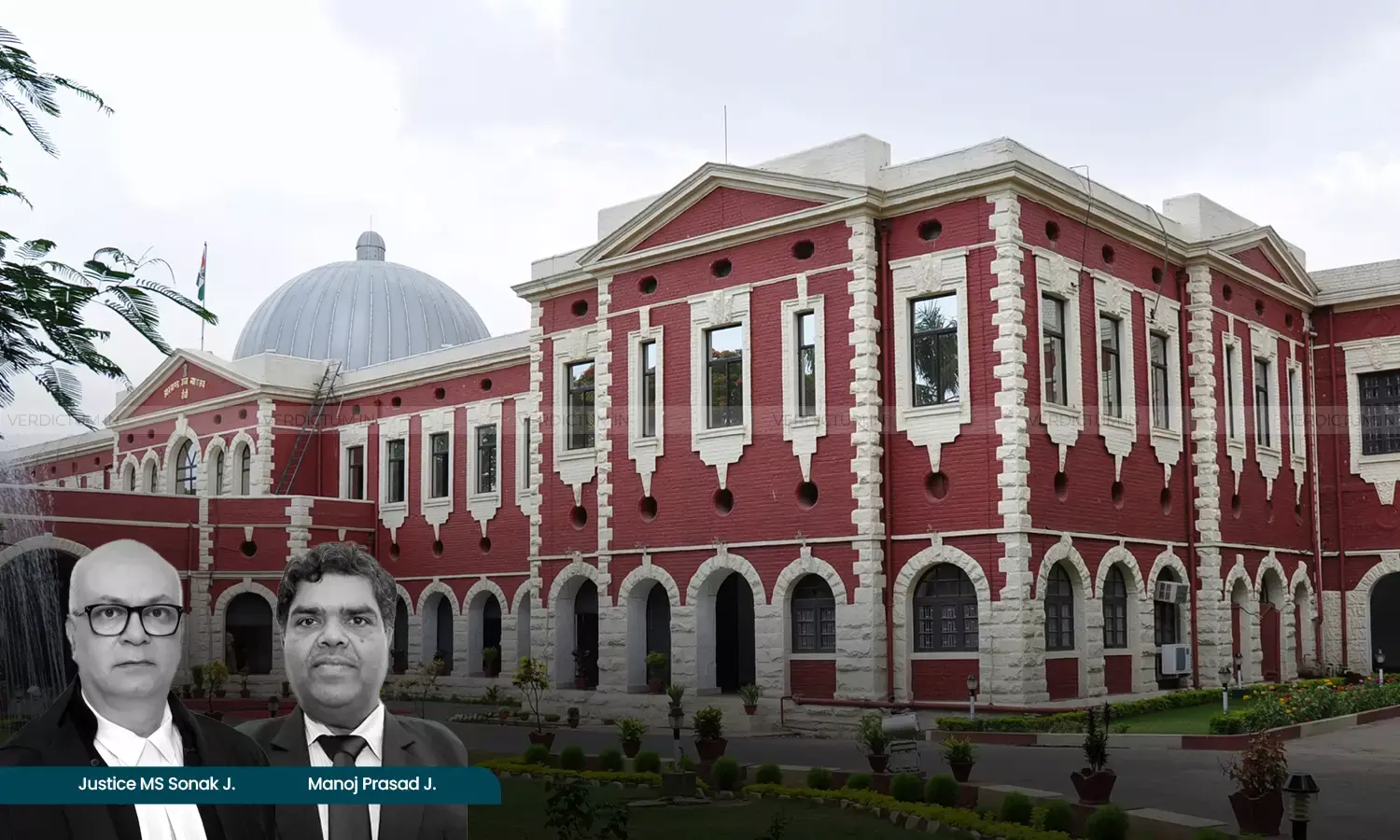
The Jharkhand High Court has held that the pious responsibility of a father-in-law to maintain his widowed daughter-in-law and grandchildren does not get exonerated on account of his age, where he has sufficient income and the dependants have no independent source of livelihood.
The Court observed that a composite reading of Sections 19, 20, 21 and 22 of the Hindu Adoption and Maintenance Act, 1956 undoubtedly creates a duty on a Hindu to maintain a widowed daughter-in-law who does not have any independent source of livelihood, and that this duty extends to the minor sons of a predeceased son who are also dependants.
The Court dismissed the appeal filed by the father-in-law and upheld the order of the Family Court, Dhanbad awarding a total maintenance of ₹17,000 per month. It also directed that the unpaid arrears be cleared within a maximum of two months.
The Division Bench of Chief Justice M.S. Sonak and Justice Manoj Prasad observed, “Be that as it may, the fact remains that the pious responsibility of maintaining the widowed daughter-in-law and the grandchildren does not get exonerated on account of the age of the present appellant. Nothing rebuts the claim that a monthly rental of more than Rs.18,000/- is paid to the present appellant or his wife, leading to a cumulative monthly income of more than Rs.50,000/-. Therefore, in view of the statutory mandate contained under the provisions of the Hindu Adoption and Maintenance Act, the appellant was under a legal obligation and pious duty to maintain his widowed daughter-in-law and grandchildren who are dependents.”
Advocate Mahesh Tewari appeared for the Appellant, while Advocate Rakesh Kumar Gupta appeared for the Respondents.
Brief Facts
An appeal was filed under Section 19(1) of the Family Courts Act against the judgment of the Principal Judge, Family Court, Dhanbad, passed on an application filed by the respondents under Sections 19 and 20 of the Hindu Adoption and Maintenance Act, 1956.
The respondent-widow was married to the only son of the appellant in 2010, and two sons were born out of the wedlock. Her husband died in October 2020 at Hyderabad due to an illness. She alleged that after her husband’s death, the appellant’s behaviour towards her and her children was not good, and they were not maintained by him. Attempts at reconciliation through the Panchayat failed. She stated that she had no independent source of livelihood and had not received any share in her deceased husband’s estate.
She alleged that the appellant was receiving more than ₹32,000 per month as pension, had more than ₹80,00,000 in fixed deposits and had other sources of income, with a cumulative monthly income of about ₹1,00,000. She sought monthly maintenance of ₹75,000.
The appellant admitted the relationship but alleged that after her husband’s death, the daughter-in-law stopped taking care of him and his wife, and that the case was instituted at the instigation of others. While admitting receipt of a pension of about ₹32,000, he stated that his wife, aged more than 80 years, was also dependent on him. He denied the fixed deposits, stating that his retirement benefits had been used to construct a house in his paternal village, and claimed that he had no income from agriculture. He also stated that he was bearing the school fees of his grandsons. Notably, the appellant did not examine himself as a witness before the Family Court.
The Family Court found that the appellant received ₹32,000 as government pension and ₹18,000 per month as rent from a shop. It directed him to pay ₹7,000 per month to the widowed daughter-in-law and ₹5,000 per month to each of the two grandsons until they attain majority, payable from the date of the application.
Aggrieved, the father-in-law approached the High Court.
Contentions of the Parties
The appellant contended that the Family Court failed to appreciate the ambit and scope of Sections 19, 20, 21 and 22 of the Act, and that the respondents failed to bring any documentary evidence of his earnings.
It was submitted that his only source of livelihood was his pension, from which he had to maintain himself and his wife, both above 80 years of age and suffering from various old-age diseases, and that the entire educational expenses of the children were borne by him. It was further contended that the agricultural land was ancestral property in which the deceased son was also a coparcener and could not be the basis for determining maintenance, and that an order for maintenance cannot be passed from pension.
The respondents contended that the appellant, being the Karta of the family, was the custodian of the entire ancestral and other properties, and that they had not received any share in the estate of the deceased husband. They submitted that there was nothing on record to show that they had any source of livelihood. They relied on a photocopy of a rent agreement showing a monthly rent of about ₹17,000 for a shop in the name of the appellant’s wife.
Observations/Findings of the Court
The Court framed the point for determination as whether the respondent-petitioner was entitled to maintenance under the Hindu Adoption and Maintenance Act from her father-in-law.
The Court noted that a lease deed on record showed that the shop was let out for 15 years from July 2017 at ₹17,000 per month, with a 10% enhancement every five years, and observed that since 2022, the rent in respect of the said shop must have become payable at Rs.18,700/-.
The Court observed, “A composite reading of these provisions undoubtedly creates a duty on a Hindu to maintain the widow daughter-in-law who does not have any independent source of livelihood to maintain herself, and the duty extends to maintaining the dependents where the son of a predeceased son is also dependent.”
The Court relied on the recent decision of the Supreme Court in Kanchan Rai v. Geeta Sharma & Ors., where it was held that the words “any widow of his son” in Section 21(vii) cannot be restricted to the widow of a predeceased son. The Supreme Court had held that such a restrictive reading would be arbitrary under Article 14 and would offend the right to live with dignity under Article 21.
Noting that the appellant’s only defence was his age, the age of his dependent wife and the inability to put ancestral land to gainful use, the Court held that the pious responsibility of maintaining the widowed daughter-in-law and grandchildren does not get exonerated on account of age.
On the quantum, the Court noted that the appellant’s monthly pension exceeds ₹32,000 and the rent agreement shows a monthly income of more than ₹18,000 in the name of his wife. It held, “Thus, the cumulative admitted income exceeds Rs.50,000/-.” It concluded that the respondents were entitled to the quantum of maintenance awarded by the Family Court, which was “not unreasonable.”
The Court also took note of the respondents’ counter-affidavit showing that, out of ₹8,33,000 payable, only ₹1,99,000 had been paid, leaving outstanding dues of ₹6,34,000. It observed that the arrears had not been paid “despite the record showing that no order of stay was passed by this Court,” and directed that they be paid forthwith, within a maximum of two months.
Accordingly, the Court dismissed the appeal without costs.
Cause Title: xxx v. yyyy [Neutral Citation: 2026:JHHC:32181-DB]
Appearances:
Appellant: Advocate Mahesh Tewari.
Respondents: Advocate Rakesh Kumar Gupta.