

Lack Of Communication Or Refusal To Cohabit Does Not Amount To Cruelty Under Section 498A IPC: Jharkhand High Court
The Court said that emotional coldness and reluctance to discharge conjugal duties do not amount to criminal cruelty under Section 498A IPC

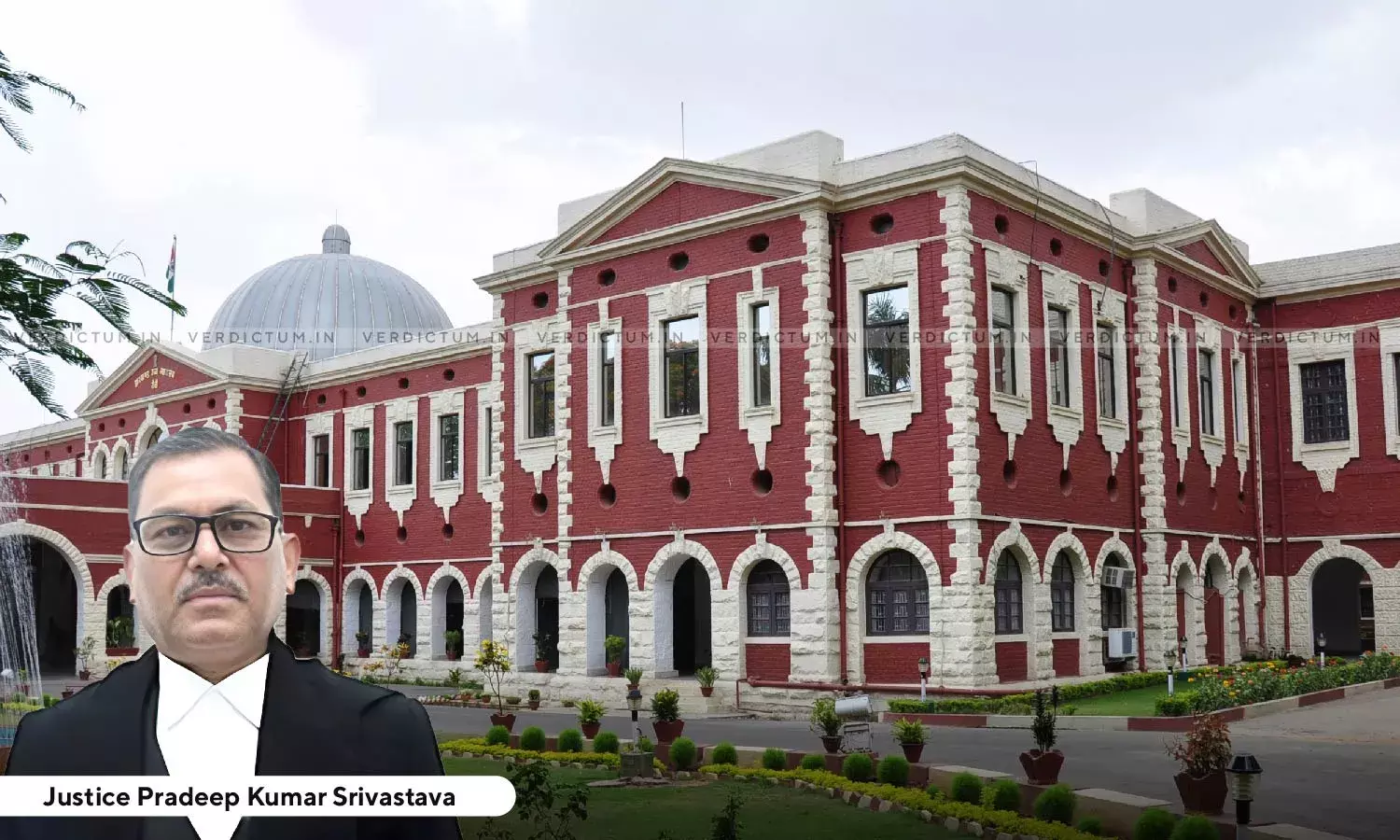
The Jharkhand High Court has held that mere matrimonial discord, emotional detachment, and a refusal by a spouse to maintain communication or fulfil conjugal obligations cannot be classified as "culpable cruelty" under Section 498A of the Indian Penal Code.
The Court held that for an offence to be made out under this section, there must be evidence of active, systemic statutory cruelty, rather than a simple breakdown of the marital bond or physical separation caused by ongoing disputes.
It was also noted that sub-ordinate courts cannot rely on conjectures and surmises to elevate an irretrievable marital breakdown into a criminal offence, especially when underlying allegations of dowry harassment and physical assault are found to be untruthful.
The Bench comprising Justice Pradeep Kumar Srivastava held, "Mere status of husband and wife showing some matrimonial discard and paying no attention against each other and showing reluctance in discharging conjugal rights and obligations does not fall within ambit of Section 498A I.P.C. as culpable cruelty."
Ashok Kumar Sinha appeared for the Petitioner, APP Sardhu Mahto for the State and Advocate Anurag Kumar appeared for the Opposite Party No. 2.
Factual Matrix
The marriage between the informant and the petitioner was solemnized in accordance with Hindu rites and customs. Following the nuptials, the informant cohabited peacefully at her matrimonial home for a few years. Subsequently, the petitioner proceeded to Delhi for higher studies and secured employment there. Upon his return, a marked change was observed in his demeanor, and he, along with his parents, allegedly subjected the informant to physical assault and mental cruelty.
Consequent to the escalating discord, a domestic Panchayati was convened, wherein it was resolved that the informant would return to her matrimonial house. However, upon her return, the petitioner and his relatives raised an illegal demand for a motorcycle and a cash amount as dowry, accompanied by continuous taunts and systematic harassment. Following a specific instance of physical assault and an alleged attempt on her life, the informant narrated the incidents to her brother, leading to the registration of a First Information Report (FIR) under Sections 323, 498A, 379, and 506 read with 34 of the Indian Penal Code (I.P.C.).
The Trial Court convicted the petitioner and his parents under Sections 498A and 323 I.P.C. On appeal, the learned Sessions Judge extended the benefit of doubt to the parents-in-law and acquitted them, but sustained the conviction and sentence of the petitioner under Section 498A I.P.C. Aggrieved by the concurrent findings of the courts below, the petitioner moved the High Court by way of the instant criminal revision.
Contentions of the Parties
It was contended by the Petitioner that the impugned judgments passed by the sub-ordinate courts were perverse, arbitrary, and diametrically opposed to the weight of evidence available on record. It was submitted that the Appellate Court gravely erred in sustaining the conviction solely on the ground that the petitioner was residing separately from his wife, erroneously equating a fractured marital relationship with statutory cruelty. It was further argued that both courts failed to appreciate the evidence in its true perspective, especially the vital admissions elicited during the cross-examination of the informant, which effectively demolished the prosecution case.
The the State & Opposite Party No. 2 defended the impugned orders, arguing that there were concurrent findings of fact recorded by two competent courts. It was submitted that the sub-ordinate courts committed no error of law or jurisdiction in holding the petitioner guilty, as his persistent abandonment and refusal to cohabit with the informant constituted continuous mental cruelty.
Observations and Findings
The High Court observed that out of the nine witnesses cited by the prosecution, the majority were hearsay witnesses, leaving the informant as the sole material witness of fact.
The Court noted that during her cross-examination, the informant explicitly admitted that she had not raised any grievances regarding physical assault or illegal dowry demands during the Panchayati. Furthermore, she admitted to residing continuously at her matrimonial home while utilizing the produce of her husband’s agricultural lands.
It was highlighted that both the Trial Court and the Appellate Court had already arrived at a concurrent finding that the specific allegations concerning the demand for a motorcycle, cash, and physical torture were completely untruthful.
The Court took serious exception to the approach of the lower courts, noting that the conviction was sustained primarily on the premise that the petitioner was living separately in Delhi and maintaining no emotional or physical contact with his wife.
The High Court laid down that mere matrimonial discord, emotional coldness, reluctance to discharge conjugal obligations, or the simple act of living apart due to strained relations do not automatically attract the penal provisions of Section 498A of the I.P.C. as culpable cruelty.
"It appears that the learned trial court has assumed the conduct of the appellant (petitioner herein) amounting to cruelty against his wife, which is absolutely unfounded and merely based on conjecture and surmises. Therefore, the very basis for conviction of the petitioner for the offence under Section 498A of the I.P.C. is upheld by the learned appellate court, appears to be not justified under law, illegal and improper", the Court observed.
It was further observed that the petitioner had already moved for and obtained a decree of divorce under the Hindu Marriage Act, which reinforced the existence of an irretrievable marital breakdown rather than a case of criminal cruelty.
Concluding that the findings of the courts below were founded upon mere conjectures, surmises, and an erroneous interpretation of law, the High Court held the conviction to be legally unsustainable, allowed the criminal revision, and acquitted the petitioner of all charges.
Cause Title: XXXX v. State of Jharkhand and Anr. [Neutral Citation: 2026:JHHC:18898]
Appearances:
Petitioner: Advocates Ashok Kumar Sinha and Sumeet Anand
Opposite Parties: APP Sardhu Mahto and Advocate Anurag Kumar
Click here to read/download the Judgment