

Death Caused By Complications In Pre-Existing Condition Originating From Assault By Accused: Jammu & Kashmir and Ladakh HC Upholds Order Framing Murder Charge
The petitioner invoked the jurisdiction of the Jammu & Kashmir and Ladakh High Court seeking the quashing of the order of the Trial Court.

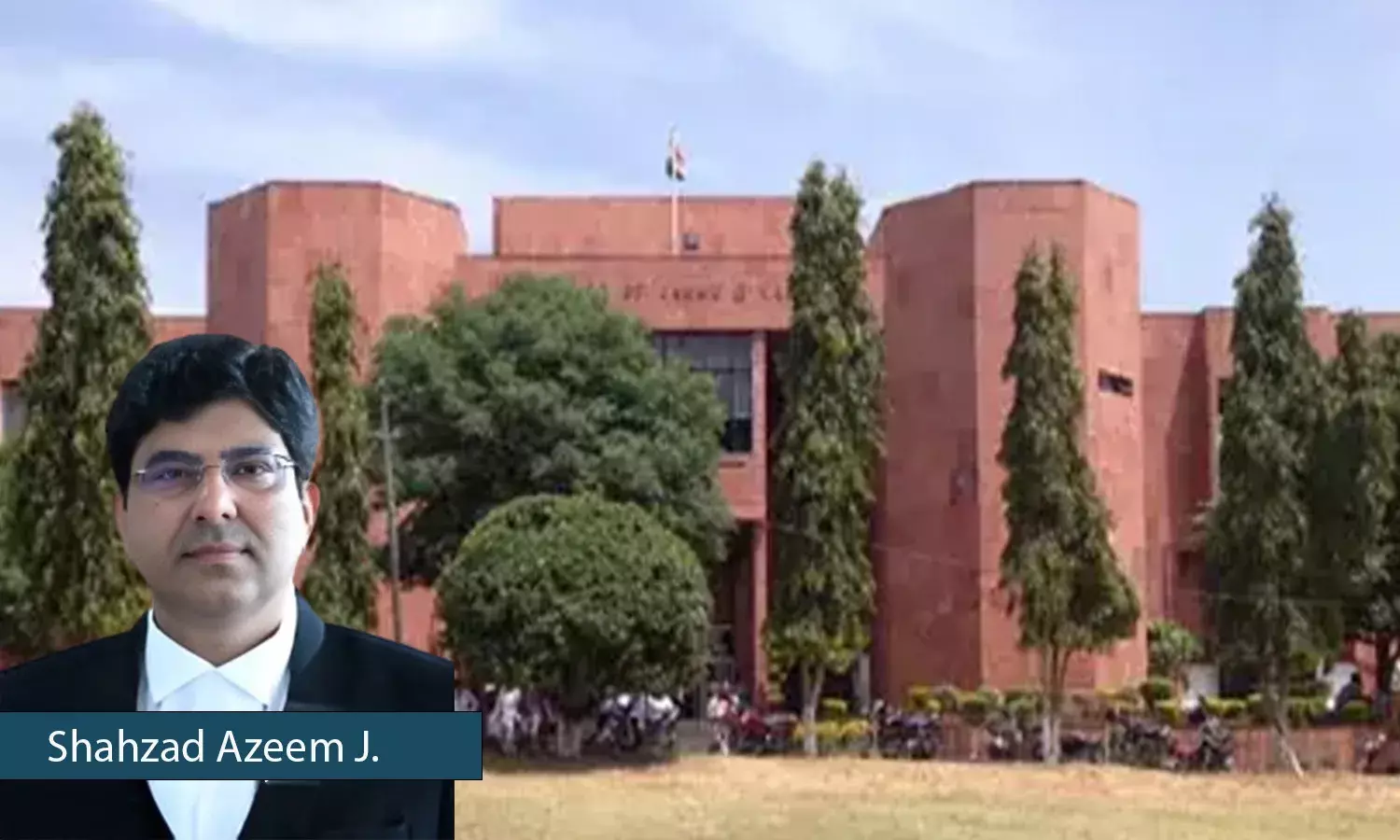
Justice Shahzad Azeem, Jammu & Kashmir and Ladakh HC
The Jammu & Kashmir and Ladakh High Court has upheld an order framing a murder charge in a case where the accused raised an argument of a pre-existing condition of the deceased. The Bench took note of the post-mortem report wherein it was explicitly opined that death was caused by bleeding, which occurs over a pre-existing condition, frequently triggered or aggravated by trauma and the same originated from the assault by the accused.
The petitioner invoked the jurisdiction of the High Court under Section 482 of the CrPC (corresponding to Section 528 of BNSS), seeking the quashing of the order passed by the Principal Sessions Judge, Reasi (Trial Court), whereby the formal charges under Sections 302, 341 of the IPC came to be drawn up against the petitioner.
The Single Bench of Justice Shahzad Azeem held, “The post-mortem report explicitly opines that death was caused by Recurrent acute on chronic SDH with complications which originated from the assault by the accused. This medical opinion rather prima-facie constitutes evidence of causation as the condition is a recognized medical condition in which bleeding occurs over a pre-existing condition, frequently triggered or aggravated by trauma such as beating. The Doctor’s opinion in the case on hand that the alleged occurrence is the root cause is decisive at the prima-facie stage and thus, no fault can be found, particularly, while framing the charges on the basis of material available on record.”
Senior Advocate Rakesh Chargotra represented the Petitioner, while Government Advocate Sumeet Bhatia represented the Respondent.
Factual Background
The petitioner was sent up for trial, allegedly for the commission of offences under Sections 302,341 IPC, accusing him of committing murder of the deceased Deepak Kumar by inflicting a fatal blow with a wooden stick on his head, causing grievous head injury. The deceased was working in a private school and was also supplying milk to the accused petitioner. When the deceased, after purchasing the household items from Reasi Bazar, was returning home en-route alleged to have been wrongfully restrained by the petitioner and thereafter, he inflicted blows with a wooden stick on his head and other parts of the body, causing grievous injuries. The deceased, in an injured condition, was shifted to the hospital by his wife and brother, but he succumbed to his injuries.
An FIR under Section 341,323 of the IPC initially came to be registered on the basis of a written complaint lodged by the brother of the deceased; however, as the investigation progressed, the health condition of the deceased deteriorated. Accordingly, at one stage, the offences under Sections 325 & 307 were also added, but finally, on completion of investigation and on the basis of material collected, the Investigating Officer concluded the commission of offences under Sections 302, 341 IPC and the Trial Court formally drew up the charges against the petitioner under Sections 302, 341 of the IPC.
Reasoning
The Bench explained that under the Code of Criminal Procedure or Bhartiya Suraksha Sanhita, the Investigating Officer (IO) has wide powers during investigation to collect evidence and include or alter the applicable Sections of law in the final chargesheet (under Section 173 Cr.PC). “The charging Sections mentioned in the initial FIR are neither frozen nor final, rather they are only based on the complainant’s version at the time of registration of case. The I/O is duty bound to apply the correct Sections based on the evidence that emerges, including the statement of witnesses, medical report, post-mortem report etc”, it added.
The Bench held, “It has been time and again held that the FIR is merely the first information that sets the criminal law in motion. The contents of the FIR do not carry probative value with regard to the truth of the allegations, except for the limited purpose of corroborating the testimony of the informant or contradicting/impeaching the credibility of its maker, therefore, nothing wrong can be found with the satisfaction of the I/O drawn on the basis of material collected over the period of time during investigation.”
One of the arguments raised by the accused was that the cause of death of the deceased was given as “Recurrent acute on chronic SDH with complications” (Subdural Hematoma), the cause of which may be due to long term use of heavy alcohol, long term use of Aspirin etc. and thus, there was no definite opinion by the Doctors that the death was due to injury caused by the petitioner, Dealing with the facts of the case, the Bench stated that the post-mortem report explicitly opined that the death was caused by the recurrent acute on chronic SDH with complications, which originated from the assault by the accused.
The Bench was of the view that the contention of the petitioner that the alleged weapon of offence was not sufficient to cause death or there was absence of intention to cause death was concerned, same were also devoid of merit and was a self-defeating argument because intention or knowledge that the alleged act was likely to cause death was an inference drawn from the totality of the circumstances, nature of assault, part of body targeted (head in the case on hand), force used, weapon etc. As per the Bench, it was not a pure question of law that could be decided on the face of the record in a proceeding under Section 482 Cr.PC.
The Bench stated, “From the above discussion, what is deducible is that all the pleas raised by the petitioner falls within the realm of triable issues and thus, the trial must take its course, whereas, the jurisdiction of the High Court at this stage, cannot be converted into appellate or revisional jurisdiction to re-appreciate, weigh or scrutinize the evidence on merits. Nor can this Court, at this stage, conduct a mini trial or adjudicate upon disputed or factual issues so much so, it is also not permissible to go beyond the prima-facie material available at the charge framing stage.”
Finding no fault to have been made by the Trial Court while passing the order whereby charges had been framed for commission of offences under Sections 302,341 of the IPC against the petitioner, the Bench dismissed the Petition.
Cause Title: Manga Ram v. Union Territory of J&K (Case No.: CRM(M) No. 225/2024)
Appearance
Petitioner: Senior Advocate Rakesh Chargotra, Advocate Abhishek Verma
Respondent: Government Advocate Sumeet Bhatia