

Bail In Heinous Crimes Against Women At Threshold Of Trial Has Chilling Effect On Their Safety: J&K High Court Cancels Bail Of Rape Accused
The Court observed that the learned trial court committed a patent illegality by conducting a meticulous, mini-trial-like analysis of the prosecutrix's evidence on flimsy and irrelevant grounds.

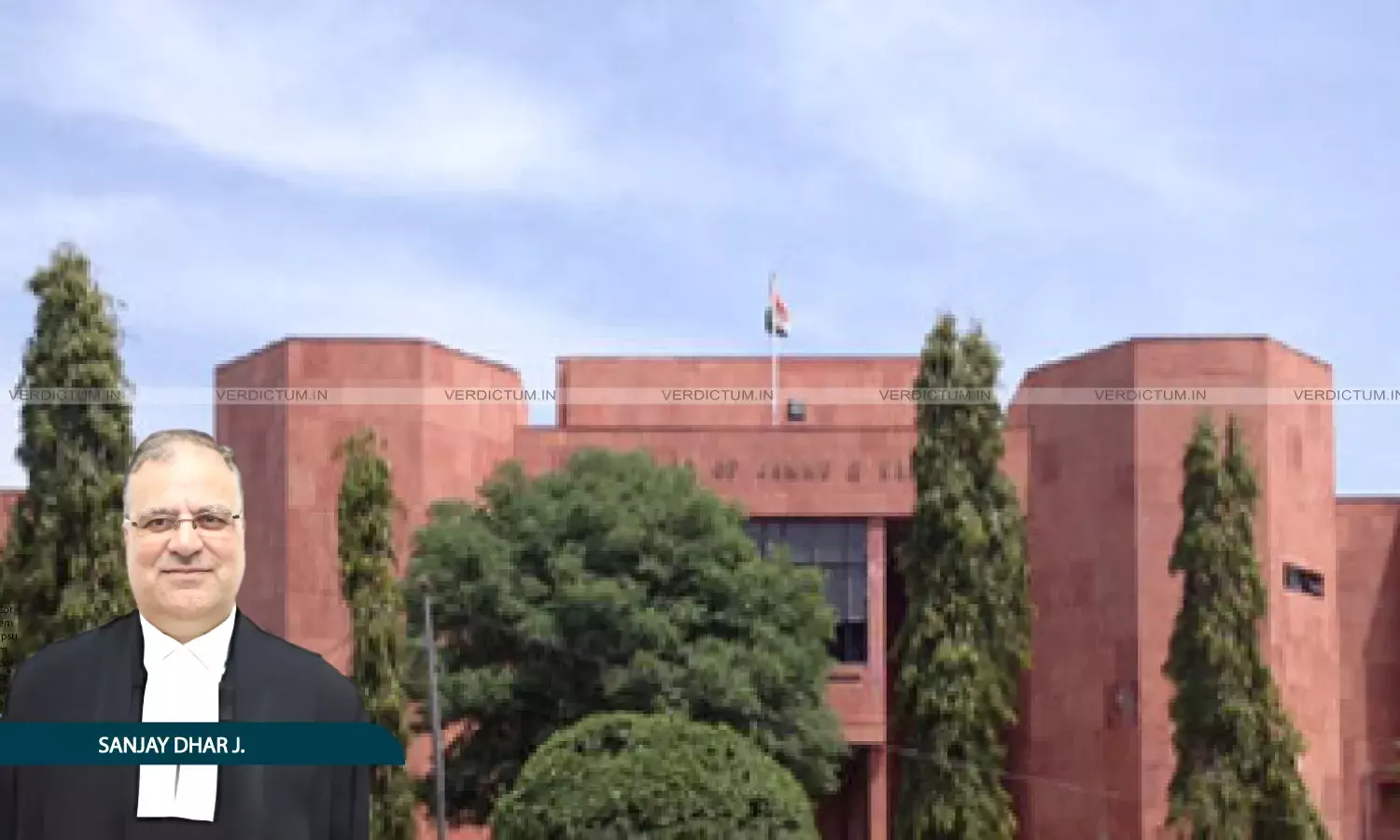
The Jammu & Kashmir and Ladakh High Court observed that rape is a heinous crime carrying a maximum punishment of life imprisonment, and extending the concession of bail at the very inception of a trial—while ignoring the societal impact—undermines the safety of women.
Granting the petition preferred by the State, the Court held that the trial court fell into grave error by conducting a detailed evaluation of the victim's deposition on irrelevant grounds, such as the non-seizure of a lighter and a muffler, and directed the respondent-accused, to surrender within a period of one month.
The Bench of Justice Sanjay Dhar observed, "In addition to the above, the learned trial court has not taken into consideration the fact that the offence alleged to have been committed by the respondent is serious in nature carrying maximum punishment of life imprisonment. The severity of the offence becomes all the more grave because offence for which the accused is facing trial is an offence against women and granting bail in such cases at the very inception of the trial has a chilling effect on safety of women. The learned trial court, while granting bail to the respondent, has not considered the societal impact at all."
Government Advocate Jahangir Dar appeared for the Petitioner, while Advocate Bhat Khursheed appeared for the Respondent/Accused.
Brief Facts of the Case
It was alleged by the prosecutrix that she was carrying cow dung to her farmland, the respondent-accused followed her, intercepted her way, and tore her clothes to outrage her modesty. It was further alleged that the respondent-accused forcibly committed sexual intercourse upon the prosecutrix against her will, and she was eventually rescued from his clutches by some ladies working in the adjacent fields.
Following the registration of the First Information Report (FIR), the investigating agency conducted the investigation, subjected the victim to medical examination, and sent her seized garments for forensic analysis. Upon the conclusion of the investigation, the police filed a charge sheet against the respondent-accused for the commission of offences punishable under Sections 341, 376, and 506 of the Indian Penal Code (IPC) before the Additional Sessions Judge, Bandipora.
The trial court subsequently framed charges against the accused, and during the subsistence of the trial, the prosecution examined two witnesses, including the prosecutrix and her father. However, the trial court enlarged the respondent-accused on bail, which aggrieved the petitioner and led to the filing of the present petition for cancellation of bail.
Contentions of the Parties
The petitioner contended that the impugned bail order was passed mechanically without application of mind, relying merely on conjectures and surmises. It was submitted that rape is a heinous offence against society and women, and the learned trial court ought not to have extended the concession of bail at the very inception of the trial when only two out of twelve prosecution witnesses were examined.
It was strongly argued that the trial court fell into grave error by conducting a meticulous and critical analysis of the prosecution evidence at the stage of considering a bail application, which is legally impermissible. The petitioner further argued that the testimony of the prosecutrix was doubted by the inferior court on absolutely flimsy and irrelevant grounds, such as the non-seizure of a lighter and a muffler, and the absence of spermatozoa on the seized attire.
The Respondent-accused resisted the petition and submitted that the concession of liberty once granted by a competent court cannot be cancelled mechanically. It was contended that a petition for cancellation of bail cannot be treated as an appeal against the bail order unless overwhelming or supervening circumstances demonstrate that the accused misused his liberty or tampered with the course of justice. The respondent argued that no grounds for the cancellation of bail were made out, as there was no allegation that the accused attempted to flee from justice or influence the remaining witnesses.
Observations of the Court
The Court observed that while superior courts are generally loath to interfere with an order granting bail, a bail order can be legally revoked if the lower court ignores material evidence, overlooks the gravity of the offence, or fails to consider its societal impact, rendering the order perverse and legally untenable.
The Court observed that the learned trial court committed a patent illegality by conducting a detailed, mini-trial-like analysis of the prosecutrix’s deposition, noting that minor contradictions regarding the site plan or the absence of spermatozoa do not discredit an otherwise reliable statement of a victim.
It was noted that the non-seizure of weapon-like objects used to threaten the victim (the lighter) or gag her mouth (the muffler) were wholly irrelevant factors for the purpose of granting bail when the statement of the prosecutrix was of sterling quality. The Court observed that the respondent’s prolonged incarceration was not a strong enough ground for bail because the trial was progressing at a reasonable pace, and a minor delay of a few months does not amount to an infringement of the right to a speedy trial in heinous crimes.
"The ground that the respondent-accused has been in incarceration for about 18 months, does not seem to be strong enough to enlarge him on bail because the charge against the accused came to be framed only on 11.04.2023 and within one year, thereafter, the prosecution has examined two material witnesses, the prosecutrix and her father. Thus, it cannot be stated that there has been any undue delay on the part of the prosecution to produce its witnesses before the trial court. A mere delay of few months in trial of a heinous crime like rape would not in every such case lead to infringement of right of speedy trial of an accused so as to give him right to be enlarged on bail on this sole ground", the Court said.
The Court highlighted that granting bail in grave offences against women at the threshold of a trial sends a wrong signal to society and has a chilling effect on the safety of women, a factor completely ignored by the trial court.
Consequently, the High Court held the impugned order to be illegal and perverse, set it aside, cancelled the bail of the respondent-accused, and directed him to surrender before the learned trial court.
Cause Title: Union Territory of J&K Police Station, Sumbal v. Parvaiz Ahmed Ganie [Bail App No. 76/2024]
Appearances:
Petitioner: Government Advocate Jahangir Dar
Respondent: Advocate Bhat Khursheed