

High Court Alone Has Control Over Posting Of Judicial Officers & Ministerial Staff Of Labour Courts & Industrial Tribunals: Gauhati High Court
The Court ruled that the independent exercise of power by the state's Labour Welfare Department to transfer the Registrar of an Industrial Tribunal or Labour Court was entirely without jurisdiction.

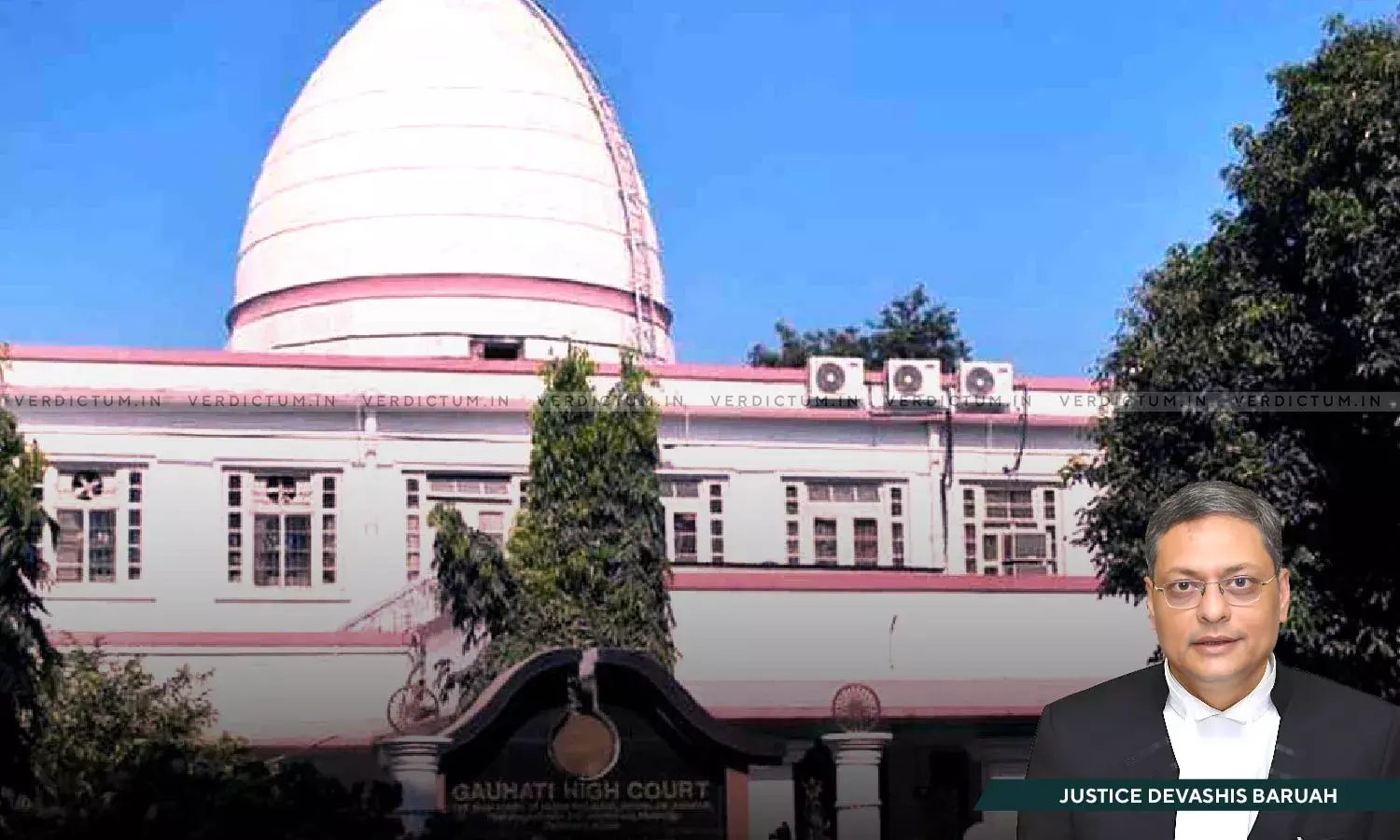
The Gauhati High Court has held that absolute administrative control over the officers, Registrars, and ministerial staff of Labour Courts and Industrial Tribunals vests exclusively in the High Court on its administrative side under Article 235 of the Constitution of India.
It was observed that because these fora are judicially recognized as Subordinate Courts, the state's Labour Department lacks the jurisdictional competence to independently issue transfer notifications.
Consequently, the Court set aside an impugned notification issued by the Principal Secretary to the Government of Assam, Labour Welfare Department, which had sought to shuffle the postings of two Registrars, terming the executive action an arbitrary transgression of prior judicial directions and a clear violation of constitutional mandates.
The Bench of Justice Devashis Baruah held, "As the Industrial Tribunals and the Labour Courts are construed by settled principles of law to be Subordinate Courts and this aspect is duly recognized aspect, it is difficult to comprehend how the Labour Department could have at all exercised the jurisdiction to issue the transfer Notification without taking into consideration Article 235 of the Constitution. It is only the Gauhati High Court in exercise of powers under Article 235 of the Constitution who would have the control in respect to posting of the persons belonging to the judicial service which include the Officers and Ministerial Staff of the Labour Court/Industrial Tribunal. The impugned Notification on the face of it was without jurisdiction."
Senior Advocate M. K. Choudhury appeared for the Petitioner, while Senior Advocate S. Dutta appeared for the Respondents.
Brief Facts
The Petitioner originally holding the post of Registrar, Labour Court, Guwahati, filed a writ petition challenging a transfer notification. Through the impugned notification issued by the Labour Welfare Department, Government of Assam, the Petitioner was transferred to the post of Registrar, Industrial Tribunal, Dibrugarh, while the private Respondent, Shri Bidyut Kumar Das, was transferred in her place to Guwahati.
The controversy originated from an earlier transfer order, which had been passed by the department solely to accommodate a personal hardship representation submitted by the private Respondent. The Petitioner had successfully challenged that initial transfer order before a Coordinate Bench of the High Court, which set it aside upon finding that the transfer lacked public interest or administrative exigency, directing the authorities to pass consequential orders.
Although the private Respondent preferred a Writ Appeal against the said quashing order, the Division Bench did not stay the operation of the judgment and instead directed the department to pass fresh orders accommodating both officers. In purported compliance with these judicial directions, the state authorities issued the fresh impugned notification, which effectively reiterated the previously quashed arrangement.
Contentions of Parties
The Petitioner contended that the impugned notification was a colorable exercise of power and a direct transgression of the explicit directions passed by both the Coordinate Bench and the Division Bench. It was further urged that the state government completely lacked the jurisdiction to independently issue transfer orders concerning the non-judicial and ministerial staff of the Labour Courts and Industrial Tribunals.
The Respondent Authorities maintained that the notification was issued in compliance with the orders of the High Court and in the interest of public service. They sought to justify the administrative rearrangement on the grounds of addressing the personal hardships of the official while maintaining the efficacy of public service.
Observations and Findings of the Court
The Court observed that a perusal of the impugned notification revealed a shocking failure on the part of the Principal Secretary to the Government of Assam, Labour Welfare Department, to appreciate the judicial directions. Instead of passing fresh consequential orders as mandated, the department merely reiterated the earlier quashed transfer arrangement.
The Court held that the notification was entirely contrary to, and in violation of, the explicit directions passed by the Coordinate Bench and the Division Bench, rendering it unsustainable in law.
The Court took serious note of the jurisdictional competence of the Labour Department in issuing such transfers. It was observed that Labour Courts and Industrial Tribunals are judicially recognized as Subordinate Courts within the ambit of Chapter VI of Part VI of the Constitution of India.
Consequently, by virtue of Article 235 of the Constitution, the absolute administrative control over these fora—including their officers, Registrars, and ministerial staff—vests exclusively in the High Court on its administrative side.
Relying on established precedents, the Court reaffirmed that the post of Registrar of a Labour Court or Industrial Tribunal falls squarely under the category of staff of Subordinate Courts.
"In this regard, this Court finds it relevant to take note of the judgment of this Court in the case of Dilip Kumar Devasarma vs. State of Assam & Ors., reported in 2026: GAU-AS:7158 wherein this Court held that the post of the Registrar, Industrial Tribunals/Labour Courts would come within the ambit of officers and staff of the Subordinate Courts and therefore under the control of the Gauhati High Court in terms with Article 235 of the Constitution", the Court said.
The Court ruled that the High Court alone is the competent authority to decide upon the posting, transfer, parity, and employment status of such staff. Therefore, the independent exercise of power by the Labour Department was held to be entirely without jurisdiction, ultra vires Article 235 of the Constitution, and contaminated by arbitrariness.
The High Court allowed the writ petition, set aside and quashed the impugned notification, and declared that the Petitioner would be deemed to be posted as the Registrar, Labour Court, Guwahati, while the private Respondent would be deemed to be posted as the Registrar, Industrial Tribunal, Dibrugarh.
Cause Title: Smt Polly Koch v. State of Assam and Ors. [WP(C)/1507/2026]
Appearances:
Petitioner: Senior Advocate M. K. Choudhury, Advocate M. Sarmah.
Respondents: Senior Advocate S. Dutta, Government Advocate M. Chetia, Standing Counsel H. K. Das, Advocate P. Sengupta, Advocate N. K. Sarmah.