

PAN Card & Voter ID Not Proof Of Citizenship; NRC Legacy Data Without Certificate U/S 65B Evidence Act Has No Evidentiary Value: Gauhati High Court
The Court upheld the Foreigners Tribunal order and held citizenship claims require clear documentary linkage with pre-cut-off ancestors; mere discrepancies in names cannot be ignored.

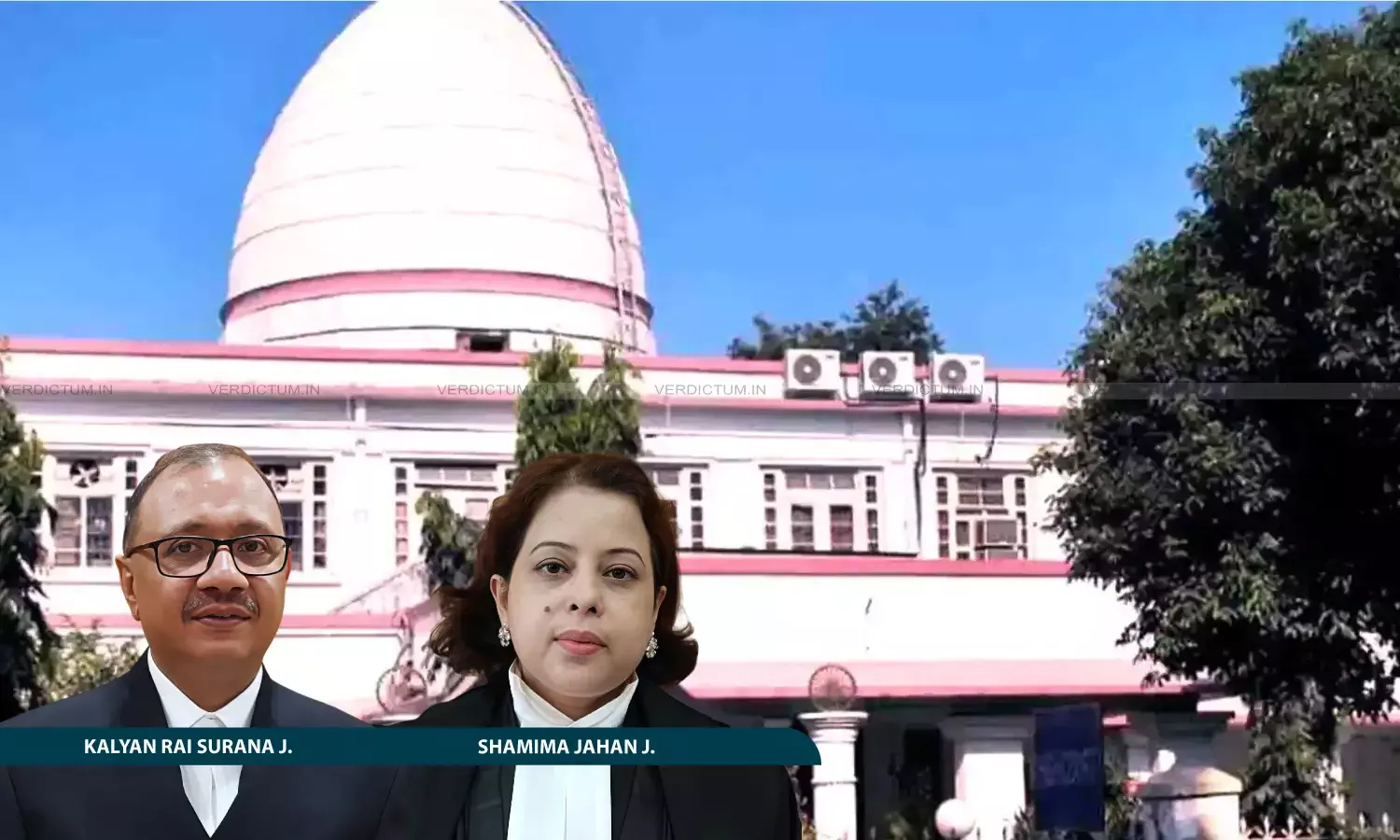
The Gauhati High Court has dismissed a writ petition challenging a Foreigners Tribunal opinion declaring an Assam resident to be a foreigner, holding that computer-generated NRC legacy data cannot be relied without a certificate as required under Section 65B of the Evidence Act, 1872 for proving electronic records, and that documents such as PAN Card and Electoral Photo Identity Card (EPIC) cannot independently establish Indian citizenship.
The Bench observed that while minor variations in names of ancestors may not by themselves defeat a citizenship claim, the person concerned must establish a continuous and credible linkage between himself and ancestors whose presence in India before the relevant cut-off date is established through admissible evidence.
A Division Bench comprising Justice Kalyan Rai Surana and Justice Shamima Jahan observed, “…it is well settled that PAN Card and EPIC are not proof of citizenship. The petitioner has not adduced any evidence to show that he is an Income Tax assessee and therefore, as PAN Card was issued on the basis of self declaration by the petitioner, the petitioner ought to have called for the relevant records from the office of the concerned Income Tax Officer to prove from the records regarding the entries contained in PAN Card”.
“The said two image id are computer generated documents. Thus, without a certificate as required under Section 65B of the Evidence Act, 1872 corresponding to Section 63(4) of the Bharatiya Sakshya Adhiniyam, 2023, would have no evidentiary value. If one needs any authority on the point, the decision of the case of Anowar P.V. v. P.K. Basheer, (2014) 10 SCC 473 may be referred to”, the Bench observed.
Advocate M.U. Mahmud appeared for the petitioner and B. Deka, CGC appeared for the respondent.
The Court was hearing a petition filed by Aminul Hoque challenging the opinion dated February 28, 2019 passed by the Foreigners Tribunal, Guwahati, which had declared him to be a foreigner.
Before the Foreigners Tribunal and the High Court, the petitioner claimed that his family had been residing in Assam for generations and relied upon several documents, including: 1951 NRC extracts, voter lists from 1966 onwards, a 1973 land sale deed, PAN Card, EPIC, school certificate, and family records.
The petitioner contended that discrepancies in the names of his father and grandfather were only spelling variations and should not defeat his citizenship claim.
He argued that his father and other ancestors appeared in old electoral records and that the Supreme Court’s decision in Sirajul Hoque v. State of Assam & Ors., (2019) 5 SCC 534 recognised that citizenship cannot be rejected merely due to minor discrepancies in names.
Rejecting the reliance placed on NRC records, the Court held that the documents relied upon by the petitioner were computer-generated records and could not automatically be accepted as evidence. The Court observed that electronic records must satisfy the statutory requirements relating to proof of electronic evidence.
The Court noted that the petitioner relied on voter lists showing names of persons across different villages, including Dhobakura, Ghugudoba and Hashdoba, but failed to establish that these records related to the same family lineage. It further noted that the issue was not merely about differences in spelling of names but whether the petitioner could prove that the persons appearing in various documents were actually connected through a continuous family chain.
The Court observed that the petitioner had failed to establish that Aminul Hoque, whose name appeared in later electoral records, was related to Pashan Ali and Mohiruddin Sheikh whose names appeared in earlier records.
Finding no such error in the Foreigners Tribunal’s reasoning, the Court refused to interfere with the opinion dated February 28, 2019. Accordingly, the writ petition was dismissed and the consequences of the Foreigners Tribunal’s opinion were directed to follow.
Cause Title: Aminul Hoque v. Union of India & Others (Neutral Citation: 2026:GAU-AS:9434)
Appearances:
Petitioner: M.U. Mahmud, Advocate.
Respondent: B. Deka, CGC, A.I. Ali, Standing Counsel, J. Payeng, Standing Counsel, R.B. Bora, Govt. Advocate.