

Executive Magistrate Cannot Initiate Section 145 CrPC Proceedings Against Person Having Possession Of Disputed Property For More Than Two Months: Gauhati HC
The Court said that there was no occasion for the Magistrate to exercise jurisdiction under Section 145/146 Cr.PC and attaching the land in question, wherein stands the dwelling house of the petitioner.

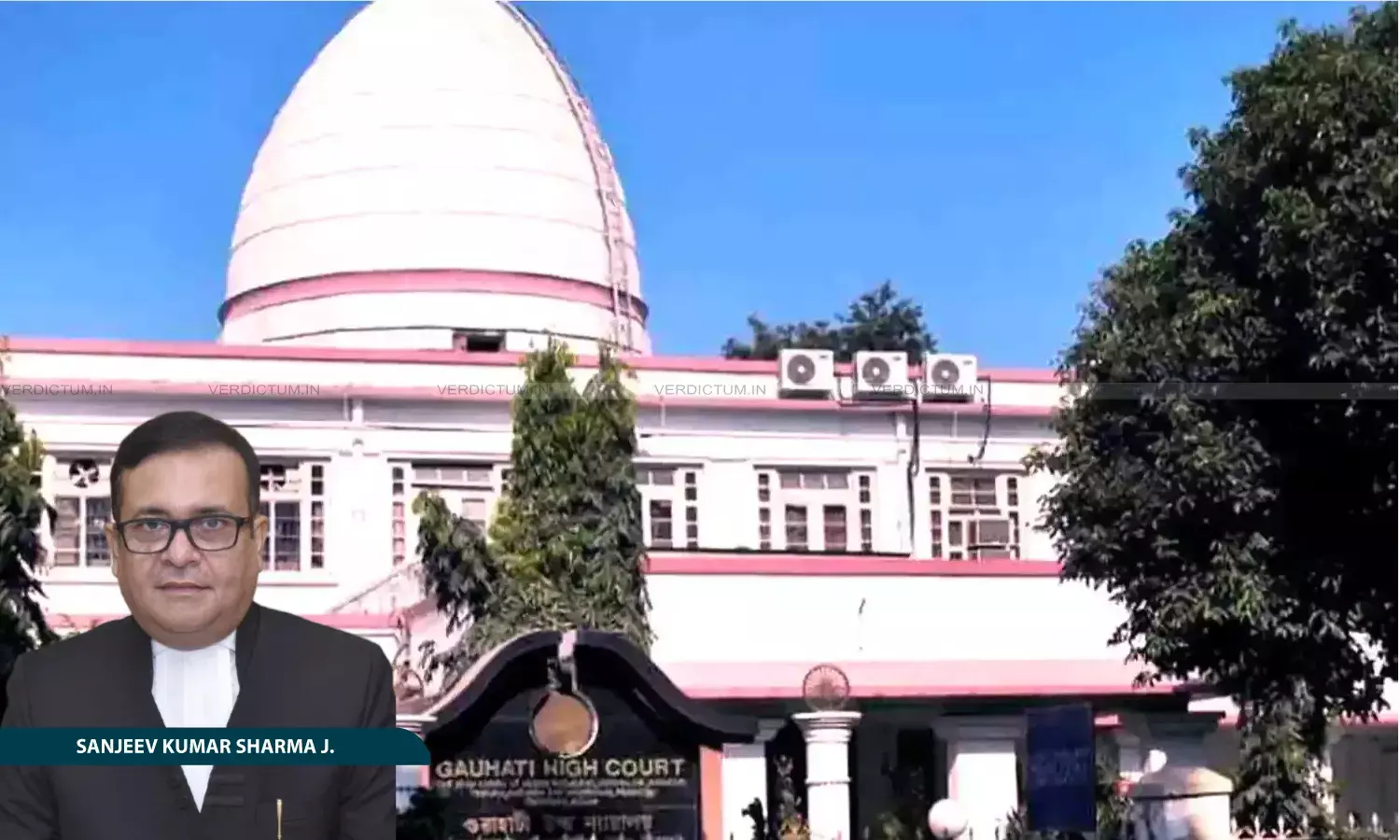
Justice Sanjeev Kumar Sharma, Gauhati High Court
The Gauhati High Court has held that an Executive Magistrate lacks the jurisdiction to initiate or continue proceedings under Section 145 of the Code of Criminal Procedure (CrPC) when there is no bona fide dispute regarding the actual physical possession of the property.
The Court emphasized that the primary statutory purpose of Section 145 is to determine which party was in possession on the date of the preliminary order.
Consequently, where the initiator's own pleadings admit that the opposite party is an occupying tenant, there remains no live issue of possession to be adjudicated, rendering any attachment or eviction proceedings under this section a gross abuse of the judicial process.
The Bench of Justice Sanjeev Kumar Sharma held, "In short, thus, a Magistrate, upon drawing of the proceeding under Section 145 Cr.PC, has to determine, if possible, in exercise of his power under Section 145(4) Cr.PC, as to who was in possession of the disputed land on the date of drawing of the proceeding. Conversely, the Magistrate cannot draw a proceeding under Section 145 Cr.PC, if the materials on record clearly indicate that the person, who is sought to be evicted by invoking the Magistrate's jurisdiction under Section 145 Cr.PC, had been in possession of the disputed land for a period longer than two months before the date, when either the police report was made or the information, which could enable the Magistrate to draw the proceeding, was given."
Advocate MJ Quadir appeared for the Petitioner, while Advocate B Devi appeared for Respondent No. 2.
Brief Facts
The respondent filed a complaint before the Additional District Magistrate alleging that he was the lawful owner and possessor of the suit land by right of inheritance. He asserted that the petitioner had orally entered into a tenancy agreement to run a business from the premises but subsequently defaulted on the monthly rent.
Upon receiving the complaint, the Magistrate called for a police report. The concerned police officer conducted a local inquiry and reported that a desperate land dispute existed between both parties which could disturb public peace.
Acting on this report and a subsequent application filed by the respondent, the Magistrate passed an ex-parte order attaching the suit land.
Aggrieved by this, the petitioner preferred a criminal revision before the learned Sessions Judge, who set aside the attachment order and remanded the matter. The respondent challenged the revisional order before the High Court, which stayed the operation of the Sessions Judge's order.
Concurrently, the petitioner moved the High Court by way of an application under Section 482 of the Code of Criminal Procedure seeking the quashing of the entire initial proceeding.
Contentions of the Parties
It was contended by the Petitioner that the proceedings under Sections 145 and 146 of the Code of Criminal Procedure were wholly without jurisdiction as the respondent failed to make out a case of possession. It was submitted that by the respondent’s own showing in the original plaint, the petitioner was in physical possession of the property as a tenant.
It was argued that since the factum of the petitioner's actual possession was an admitted position, no bona fide dispute regarding possession arose to warrant the invocation of the Executive Magistrate’s jurisdiction.
The respondent strongly supported the impugned orders and contended that the actions of the petitioner had created an imminent threat to law and order. It was submitted that considering the volatile nature of the dispute and the danger to local peace, the Magistrate was fully justified in invoking his emergency powers to attach the property to prevent a large-scale breach of public tranquility.
Observations of the Court
The High Court observed that the primary purpose of a proceeding under Section 145 of the Code of Criminal Procedure was to enable an Executive Magistrate to determine the fact of actual physical possession of the disputed property at the relevant time.
It was held that since the respondent’s own pleadings clearly stated that the petitioner was occupying the premises, the factum of the petitioner’s possession stood admitted, leaving no live issue or dispute regarding actual possession for the learned Magistrate to decide.
The Court further observed that a Magistrate cannot initiate proceedings under Section 145 if the materials on record demonstrate that the person sought to be evicted had been in peaceful possession of the land for a period longer than two months prior to the police report or information.
"It is submitted that since the purpose of Section 145 Cr.PC is to enable the Executive Magistrate to determine the fact of actual possession of the subject of dispute and since the possession by the present petitioner was an admitted fact, as discernible from the petition filed by the respondent as first party before the learned Additional District Magistrate, there was no occasion for the said Magistrate to exercise jurisdiction under Section 145/146 Cr.PC and even going to the extent of attaching the land in question wherein stands the dwelling house of the petitioner", the Court observed.
Consequently, the High Court concluded that the essential condition precedent for assuming jurisdiction was entirely lacking, and allowing the continuation of such a proceeding would amount to a gross abuse of the process of law. The Court therefore allowed the petition and quashed the impugned proceedings.
Cause Title: Zahirul Haque Laskar v. The State Of Assam And Anr. [Neutral Citation: 2026:GAU-AS:9381]
Appearances:
Petitioner: Advocate MJ Quadir
Respondents: Advocate B Devi
Click here to read/download the Judgment