Passing NISM Examination Does Not Confer Status Of SEBI-Registered Research Analyst: Gujarat High Court
The Court vacated the interim protection that had restrained the investigation into allegations of false regulatory representation, while clarifying that it had not determined the petitioners’ guilt and that its observations were only prima facie.
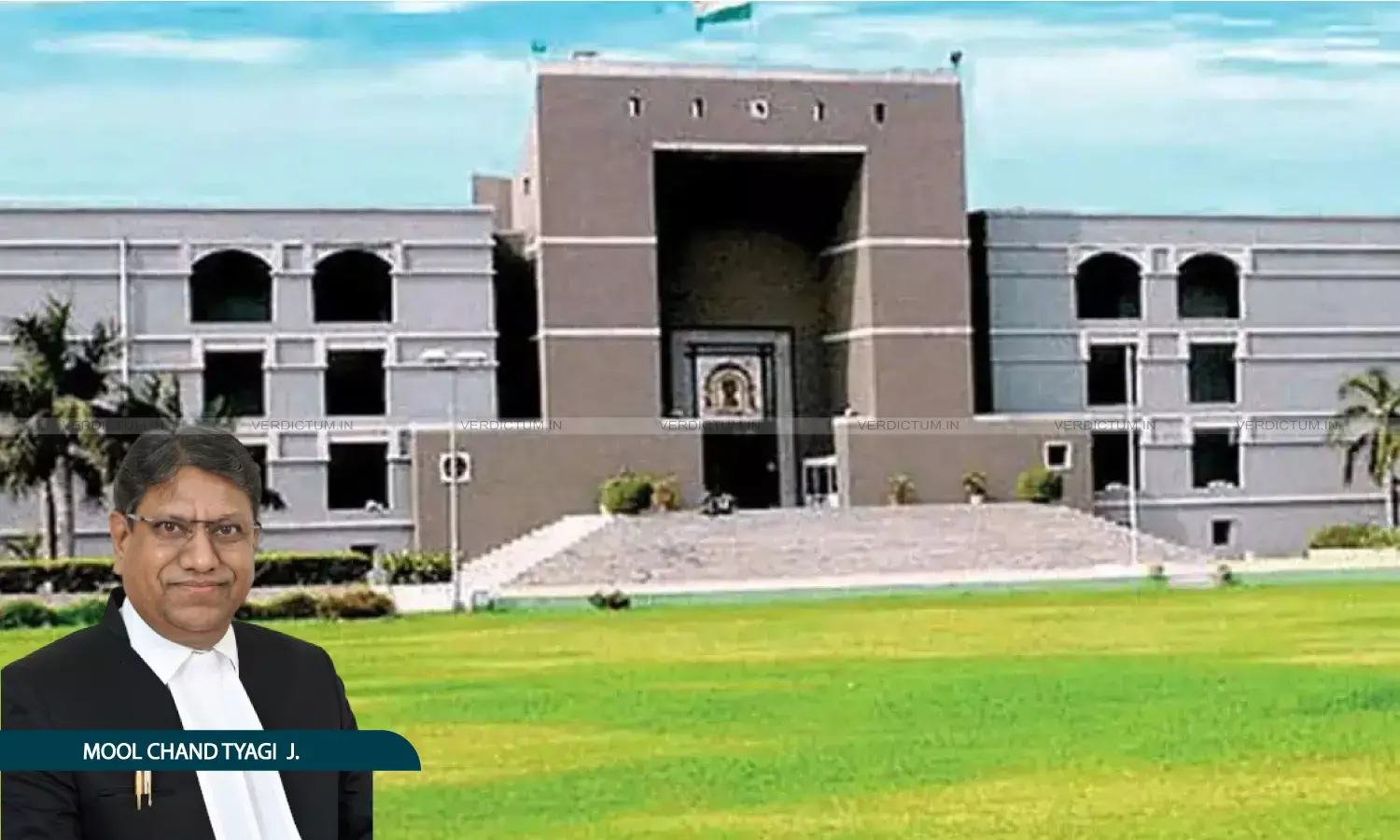
The Gujarat High Court has held that passing an examination conducted by the National Institute of Securities Markets does not confer the status of a research analyst registered with the Securities and Exchange Board of India.
The Court consequently vacated the interim protection granted to persons accused of projecting themselves as SEBI-recognised research analysts and permitted the investigating agency to proceed in accordance with law.
The Court was hearing an application by the original complainant seeking the vacation of interim protection granted in pending proceedings for quashing the criminal case. The complainant sought permission for the investigation into alleged false representations concerning the private respondents’ regulatory credentials to continue.
A Bench of Justice Mool Chand Tyagi observed: “At this stage, it is required to be noted that obtaining a certification from the National Institute of Securities Markets (NISM) and obtaining registration as a Research Analyst with SEBI are two distinct requirements. Mere possession of an NISM certificate, by itself, cannot be construed as registration with SEBI. Regulation 3(1) of the SEBI (Research Analysts) Regulations, 2014, provides for mandatory registration before a person acts or holds himself out as a Research Analyst, subject to the applicable provisions of the said Regulations.”
Advocate Jubin Bharda appeared for the complainant. Advocate Devesh K. Shah represented the original petitioners, while Additional Public Prosecutor Jirga Jhaveri appeared for the State.
Background
The complainant alleged that the private respondents had described themselves on social-media platforms as “SEBI NISM Certified Research Analysts,” creating the impression that they were registered with SEBI. According to the complainant, they issued investment recommendations and induced the payment of commissions linked to trading profits.
The complainant relied on communications from SEBI stating that the private respondents were not registered as research analysts. It was also alleged that their social-media descriptions were subsequently changed to state that they were not registered with SEBI. The complainant maintained that the alleged representations attracted provisions concerning cheating and violations of the regulatory framework.
The original petitioners opposed the application. They submitted that the NISM certificates were genuine and had been verified pursuant to the Court’s oral directions. They also relied on material containing the notation “Not SEBI Reg.” and denied the allegations of forged certification and false representation.
The State submitted that SEBI had confirmed that the petitioners had passed the NISM examination but were not registered with SEBI as research analysts or in any other capacity.
Court’s Observations
Passing Examination Did Not Confer Registered Status
The Court held that successful completion of the NISM examination established only the relevant certification. It did not fulfil the separate statutory requirement of registration with SEBI or authorise a person to claim recognition as a registered research analyst.
The Court observed: “Mere passing of the examination conducted by NISM, by itself, would not confer upon the petitioners the status of registered Research Analysts or authorize them to claim any such recognition in the absence of requisite registration with SEBI.”
Regulation 3(1) of the SEBI (Research Analysts) Regulations, 2014, required registration before a person could act or hold himself out as a research analyst, subject to the Regulations. Whether the petitioners had merely represented their qualifications or had projected themselves as SEBI-registered research analysts therefore required examination on the basis of the investigative material.
Genuine Certificate Did Not Establish SEBI Registration
The Court distinguished the authenticity of an NISM certificate from the regulatory status of its holder. Verification of the certificates did not answer the allegation that the petitioners had held themselves out as registered with SEBI.
The Court held: “Thus, the contention raised on behalf of the private respondents regarding the genuineness of the certificates would not, at this stage, completely answer the allegations levelled by the applicant.”
It added that the allegation of forgery should not be treated as established if the certificates had already been verified as genuine. The principal issue was the alleged representation of regulatory registration, not merely the authenticity of the examination certificates.
Representations And Inducement Required Investigation
The Court found that the descriptions used on social media, their alleged subsequent alteration and the alleged inducement to pay profit-linked commissions raised factual questions. These matters required examination of electronic material, documents and witness statements.
The Court said: “Whether such representations were made with dishonest intention, whether the applicant was induced to part with money on the basis thereof, and whether the ingredients of the alleged offences are attracted are matters, which cannot be conclusively determined at this interlocutory stage.”
The later SEBI communication confirming the absence of registration was relevant material that had not been available when interim protection was granted. The Court held that the investigation should not be impeded merely because the NISM certificates had been verified.
Court Did Not Determine Guilt
The Court clarified that the application concerned only the continuation of interim protection. It was neither deciding the private respondents’ guilt nor finally determining whether the alleged offences had been committed.
The Court expressly stated: “It is clarified that the observations made herein above are prima facie in nature and shall not be construed as an expression of opinion on the merits of the main matter.”
It further directed that its observations should not prejudice the parties’ rights and contentions in the pending proceedings or influence the investigating agency.
Conclusion
The High Court allowed the complainant’s application and vacated the interim protection granted to the original petitioners. The investigating agency was permitted to proceed independently and in accordance with law.
The Court based its decision on the distinction between genuine NISM certification and statutory registration with SEBI, together with the subsequent material concerning the absence of registration. It left the merits of the allegations open for investigation and adjudication in the pending proceedings.
Cause Title: Ruzan Arizbhai Khambhata v. State of Gujarat and Others