

Eviction Proceedings & Termination Of SEZ Lease Under Gujarat Public Premises Act Impermissible During IBC Moratorium: Gujarat High Court
The Court held that the leasehold rights of a Corporate Debtor are protected under Section 14(1)(d) of the IBC, and termination of the lease or eviction during moratorium would defeat the object of preserving the insolvency process.
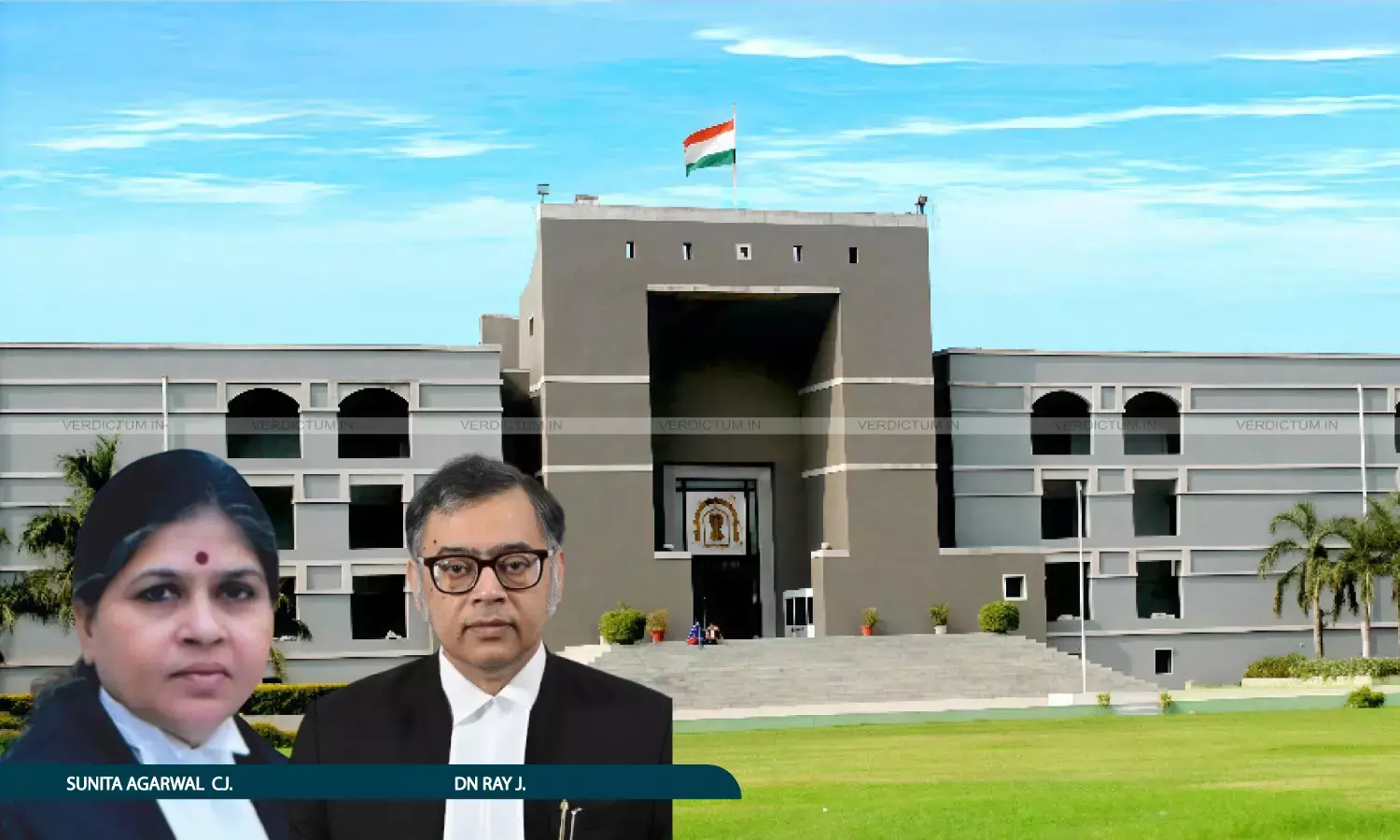
The Gujarat High Court has held that termination of a lease agreement in respect of SEZ land and initiation of eviction proceedings under the Gujarat Public Premises Act during the subsistence of a moratorium under Section 14 of the Insolvency and Bankruptcy Code, 2016, are impermissible.
The Court was hearing a Letters Patent Appeal filed by Gujarat Industrial Development Corporation, challenging the judgment of the learned Single Judge, which had quashed the termination of the lease and eviction proceedings initiated against Gujarat Hydrocarbons and Power SEZ Limited during the Corporate Insolvency Resolution Process.
A Division Bench of Chief Justice Sunita Agarwal and Justice D.N. Ray observed: “Given the object of Section 14(1) of the IBC’ 2016, in the facts of the present case, neither the termination of the lease agreement in terms of the clause 15 (Breach of covenant) nor the eviction “proceedings” under the Gujarat Public Premises Act, were permissible during the moratorium period”.
S.N. Soparkar, Senior Advocate, appeared for the appellant; Mihir Joshi, Senior Advocate, appeared for the respondent.
Background
The Corporate Debtor was engaged in the business of developing, operating, and maintaining Special Economic Zones (SEZs), and had obtained land on lease from GIDC for this purpose.
An application under Section 7 of the IBC was admitted against the Corporate Debtor, and a moratorium under Section 14 came into effect on 18.11.2020.
During the subsistence of the moratorium and CIRP, GIDC passed an order dated 13.12.2021 terminating the lease deed on the ground of breach of conditions and non-payment of dues, followed by an eviction order dated 10.03.2022 under the Gujarat Public Premises (Eviction of Unauthorised Occupants) Act, 1972.
The Corporate Debtor challenged both actions before the writ court, contending that such measures were barred under Section 14(1)(d) of the IBC.
The learned Single Judge allowed the writ petition, holding that the actions of GIDC were contrary to the scheme of the IBC, and set aside both the termination and eviction orders.
Court’s Observation
The Court examined the scheme and object of Section 14 of the IBC, particularly the scope of the moratorium, and held that its primary purpose is to preserve the assets of the Corporate Debtor and maintain it as a going concern during the resolution process.
It noted that leasehold rights over SEZ land constitute “property” within the meaning of Section 3(27) of the IBC, and therefore fall within the protective ambit of Section 14.
The Court observed that “the legislative intent… is unmistakable to safeguard the property and business interests of the Corporate debtor… and to ensure that the continuity of its operations is not jeopardised during the corporate insolvency resolution process,” thereby emphasising the central objective of the Code.
Dealing with the argument that termination was on account of breach of lease conditions and not insolvency, the Court rejected the same, holding that the Explanation to Section 14 cannot be construed in a manner that defeats the substantive prohibition under Section 14(1).
It observed, “a plain reading of clauses (a) to (d) of Section 14(1) clearly manifests the legislative intent that… there shall be a prohibition against recovery of any property by the owner or lessor,” and that the Explanation cannot render these provisions nugatory.
The Court further held that proceedings under the Public Premises Act are also covered within the expression “proceedings” under Section 14, observing that “the expression ‘proceedings’… must be given its widest meaning to include all bodies created by statute… carrying out quasi-judicial functions,” thereby rejecting the contention that such proceedings fall outside the moratorium.
The Bench also noted that GIDC had participated in the CIRP as an operational creditor and had lodged its claim before the Resolution Professional. It held that once the resolution plan is approved, the same is binding on all stakeholders, including operational creditors.
In this context, the Court observed that allowing the lessor to simultaneously terminate the lease and pursue eviction would “render the entire insolvency process otiose and would amount to granting an impermissible preferential position,” contrary to the statutory scheme of the IBC.
The Court also rejected the contention that the moratorium would not apply where the Corporate Debtor is not an ongoing concern, holding that “the moratorium… applies… irrespective of its operational status,” and is aimed at maintaining the status quo of assets.
It further noted that Section 238 of the IBC gives overriding effect to the Code over other laws, and therefore any action under the Public Premises Act inconsistent with the moratorium would be unsustainable.
Conclusion
The Court held that the termination of the lease deed and the eviction proceedings initiated by GIDC during the subsistence of the moratorium were contrary to Section 14 of the IBC and therefore unsustainable in law.
Accordingly, the Letters Patent Appeal was dismissed, and the judgment of the learned Single Judge quashing the termination of the lease and eviction order was affirmed.
Cause Title: Gujarat Industrial Development Corporation v. Gujarat Hydrocarbons and Power SEZ Limited & Ors.
Appearances
Appellant: S.N. Soparkar, Senior Advocate; Advocates R.D. Dave, Arjun Sheth, Rishabh Shah
Respondents: Mihir Joshi, Senior Advocate; Advocates Keyur Gandhi, Raheel Patel, Isa Hakim, Yash Dadhich; Shalin Mehta, Senior Advocate; Advocate Tirth Nayak
