Judicial Orders Don't Lose Efficacy Because Judicial Officer Who Passed Them Was Relieved From Service: Gujarat High Court
The Court also found the Vadodara Collector’s attempt to disregard a Gujarat Revenue Tribunal order by referring to strictures passed against its author prima facie contemptuous and refused to accept his “mechanical apology”.
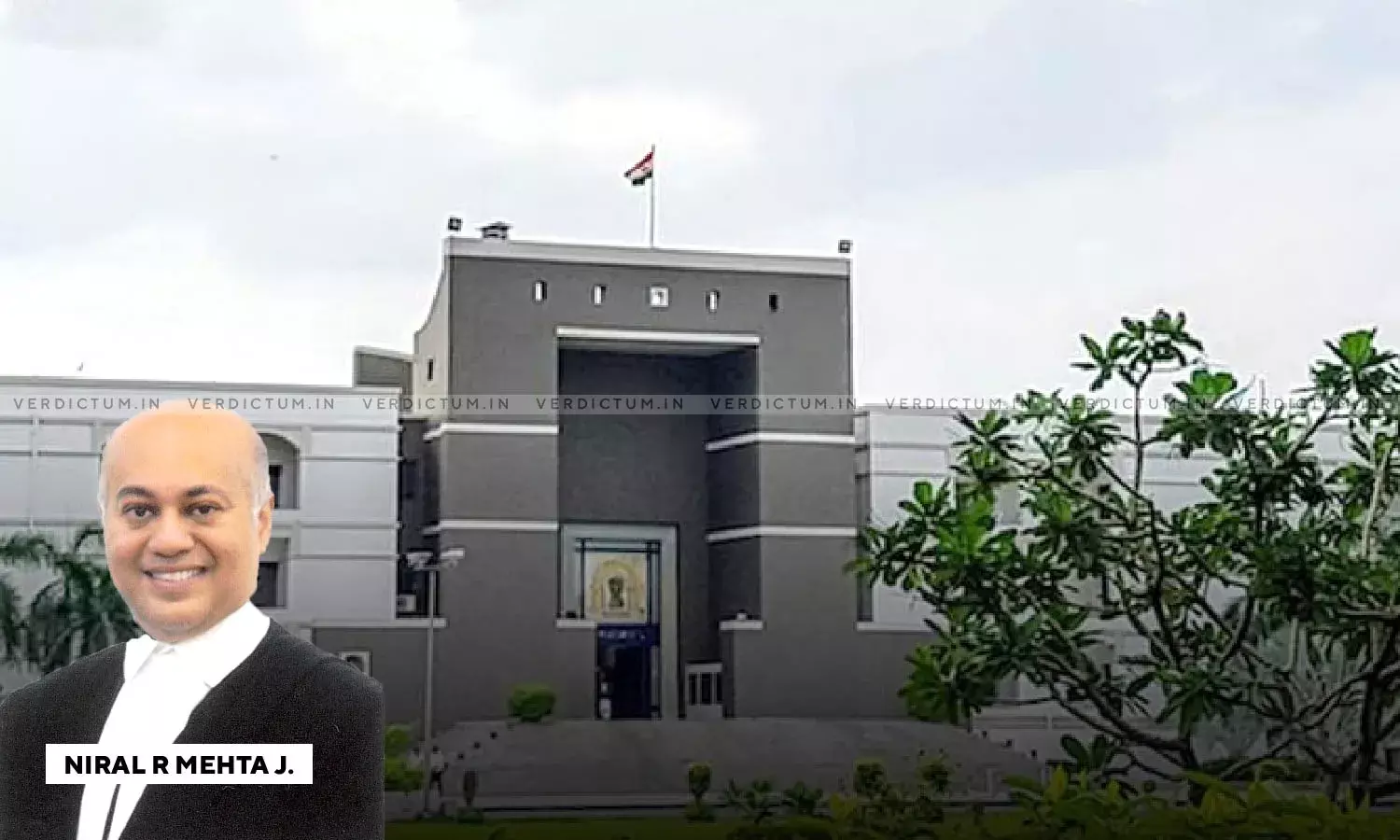
Justice Niral R. Mehta, Gujarat High Court
The Gujarat High Court has held that judicial orders do not lose their efficacy merely because the judicial officer who passed them was subsequently relieved from service pursuant to adverse observations or strictures.
The Court was hearing a challenge to the Collector’s August 17, 2026 order consigning an application filed under Section 65 of the Gujarat Land Revenue Code, 1879, on the stated ground that three revision applications were pending before the Tribunal.
A Bench of Justice Niral R. Mehta observed: “Merely because a Judicial Officer was relieved from service pursuant to the observations and strictures passed by this Court, all orders passed by that Judicial Officer would not, per se, lose their efficacy unless they are set aside in accordance with law. Under no circumstances can a judicial order be ignored merely by citing the name of the Judicial Officer who passed it.”
Advocate Prateek S. Bhatia appeared for the petitioners, while Assistant Government Pleader Nirali Sarda represented the State authorities.
Background
The petitioners contended that the three revision applications mentioned in the Collector’s order were no longer pending and that consigning their non-agricultural use application was contrary to settled law.
The High Court directed the Collector to file an affidavit explaining his decision and clarifying the status of the revision applications. In response, the Collector acknowledged that the Tribunal had disposed of the proceedings by an order dated May 1, 2024.
The Collector’s affidavit referred to adverse observations made by the High Court against the Tribunal’s then In-charge Chairman in an unrelated matter. It stated that the officer had subsequently been relieved and also claimed that the disposal of the revision applications had not been reflected on the official online portal, preventing the authorities from learning about the order and challenging it within limitation.
Court’s Observations
Judicial Orders Retain Their Sanctity
The Court observed that a party aggrieved by a judicial order could challenge it through the available statutory mechanism but could not simply disregard it because adverse observations had been made against the officer who authored it in another case.
The Court stated: “Once a judicial order is passed, an aggrieved party may challenge the same through the available statutory mechanism and cannot be permitted to disregard the said order merely because it was passed by an officer against whom, in some other matter, adverse observations were made. Judicial orders carry sanctity, and disregard for a judicial order reflects the learned Collector’s insensitivity towards judicial decorum.”
The Court found that the revision applications had been disposed of by a judicial order. It observed that unless the order was set aside in accordance with law, the Collector could not treat the proceedings as pending or deny legal effect to the Tribunal’s decision by referring to its author.
Affidavit Cast Aspersions On Judicial Officer
The Court held that the Collector’s narration concerning the former Tribunal member was irrelevant to the proceedings and appeared to cast aspersions upon a judicial officer.
The Court observed: “According to this Court, the narration of facts in paragraph 17 with regard to the then In-charge Chairman of the Gujarat Revenue Tribunal was completely unwarranted. Instead, the Collector, Vadodara, could have briefly stated that the disposal of the aforesaid Revision Applications was not reflected on the online portal. However, he chose to narrate the history, which, prima facie, in the opinion of this Court, amounts to nothing but casting aspersions on a judicial officer. The narration of such facts on oath, being completely irrelevant, is not only disturbing but also scandalous in nature.”
The Court stated that the Collector could have confined his affidavit to explaining that the Tribunal’s disposal order had not been updated on the portal. Naming the officer and referring to strictures passed against him in separate proceedings was entirely unnecessary.
Collector’s Apology Rejected As Mechanical
The Court directed the Collector to appear through virtual proceedings and explain his position before considering whether the matter should be referred to the Contempt Bench.
The Collector tendered an apology, but the Court refused to accept it. The Court described the apology as mechanical because it neither conveyed genuine remorse nor assured the Court that the conduct would not be repeated.
The Court also noted that contempt proceedings were already pending against the same Collector in another matter, where a Division Bench had framed charges on April 29, 2026. It further observed that several of his decisions on applications for non-agricultural use permission had failed to follow propositions of law laid down by the High Court.
Conclusion
The Court issued notice returnable on November 27, 2026, and granted permission to implead the Additional Chief Secretary of the General Administration Department as an additional respondent.
It directed the Assistant Government Pleader to place the present order, the complete record of the writ petition and the record of the pending contempt proceedings before the Additional Chief Secretary.
The Court directed the Additional Chief Secretary to inform it on the next hearing date about the findings or conclusions reached and any further action proposed against the Collector. It ordered that the petition be treated as part-heard.
Cause Title: Bharvad Harishbhai Becharbhai and Others v. State of Gujarat and Another