Brothers Of Deceased Can Maintain Motor Accident Compensation Claim As Legal Representatives U/S 166 MV Act: Gujarat High Court
The Court held that the expression "legal representative" under the Act deserves a liberal interpretation consistent with its beneficial object.
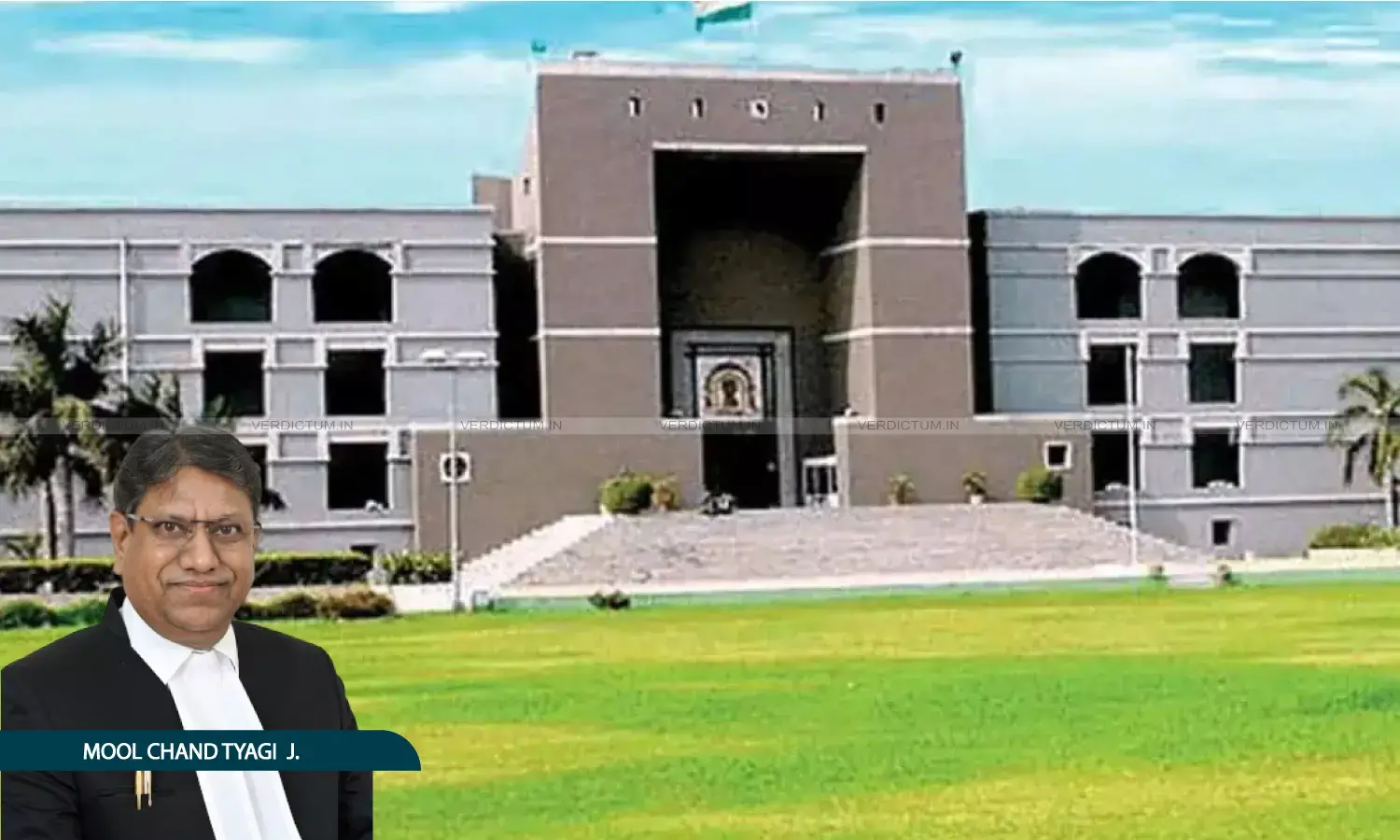
The Gujarat High Court has held that the brothers of a deceased person can maintain a claim petition under Section 166 of the Motor Vehicles Act, 1988, as legal representatives, even if they were not financially dependent on the deceased.
The Court observed that Section 166 permits all or any of the legal representatives of a deceased victim to seek compensation and that dependency is not a condition precedent for maintaining a claim petition.
The Court was hearing a first appeal filed by the owner and driver of an offending truck challenging the Motor Accident Claims Tribunal's award, contending, inter alia, that the claim petition filed by the deceased's brothers was not maintainable as they were living separately and were not dependent on the deceased.
A Bench of Justice Mool Chand Tyagi observed: "Thus, in view of the catena of judgments of the Hon’ble Apex Court as well as various High Courts, I am of the considered view that the brothers can claim the compensation on account of death of their brother and the claim petition is maintainable under Section 166 of the Motor Vehicles Act."
Advocate Bhaumik Dholariya represented the appellants, while Advocate Mohsin M. Hakim represented the respondents.
Background
The appeal arose from an award passed by the Motor Accident Claims Tribunal allowing a claim petition filed by the brothers of a deceased bachelor who died in a road accident involving a truck.
Before the High Court, the appellants challenged the Tribunal's findings on negligence as well as the maintainability of the claim petition. It was argued that since the claimants were brothers of the deceased, lived separately and were admittedly not dependent upon him, they were not entitled to compensation under Section 166 of the Motor Vehicles Act.
The claimants, on the other hand, contended that they were legal representatives of the deceased and were therefore entitled to maintain the petition.
Court's Observations
The Court first examined the challenge to the finding on negligence and found no infirmity in the Tribunal's conclusion that the offending truck was being driven rashly and negligently. Referring to the oral and documentary evidence on record, including the panchnama, affidavits and admissions made by the driver during cross-examination, the Court upheld the Tribunal's finding that the accident occurred due to the negligence of the truck driver.
Turning to the principal issue, the Court noted that although one of the claimants had admitted in cross-examination that the deceased was unmarried, that the brothers were living separately and were not dependent upon him, the question nevertheless remained whether they could maintain a claim petition as legal representatives under Section 166 of the Motor Vehicles Act.
Examining Section 166, the Bench observed that the provision expressly permits "all or any of the legal representatives of the deceased" to institute a claim petition where death results from a motor accident.
The Court observed: "Clause (1)(c) of Section 166 is amply clear that the legal representatives of the deceased can claim the compensation on account of death. It is not in dispute that the deceased happens to be the brother of the claimants. Being legal representatives, they can maintain the claim petition."
The Court distinguished the authorities relied upon by the appellants, including Sadhana Tomar, Anju Mukhi and New India Assurance Co. Ltd. v. Anand Pal, observing that those decisions dealt with entitlement or dependency on the facts of those cases and did not lay down that brothers are barred from maintaining a claim petition under Section 166.
The Bench then relied extensively on the Supreme Court's decision in Gujarat State Road Transport Corporation v. Ramanbhai Prabhatbhai, wherein it was held that every legal representative suffering on account of the death of a person in a motor accident should have a remedy under the Motor Vehicles Act.
Quoting the Supreme Court, the Court observed: "Every legal representative who suffers on account of the death of a person due to a motor vehicle accident should have a remedy for realisation of compensation... We should remember that in an Indian family brothers, sisters and brothers' children and sometimes foster children live together and they are dependent upon the bread-winner of the family... We... hold that the brother of a person who dies in a motor vehicle accident is entitled to maintain a petition under section 110-A of the Act if he is a legal representative of the deceased."
The Court further relied on Jitender Kumar v. Sanjay Prasad and National Insurance Co. Ltd. v. Birender, reiterating that legal representatives have a right to seek compensation irrespective of whether they were wholly dependent upon the deceased.
The Bench quoted: "It is thus settled by now that the legal representatives of the deceased have a right to apply for compensation... it would be the bounden duty of the Tribunal to consider the application irrespective of the fact whether the concerned legal representative was fully dependant on the deceased and not to limit the claim towards conventional heads only."
The Court also referred to subsequent judicial precedents recognising the right of married daughters, sisters, mothers-in-law, trustees and other legal representatives to maintain claims under Section 166, observing that the expression "legal representative" must receive a liberal and purposive interpretation consistent with the beneficial object of the legislation.
Conclusion
Holding that the brothers of the deceased were entitled to maintain the claim petition as legal representatives under Section 166 of the Motor Vehicles Act and finding no error in the Tribunal's findings on negligence or quantum of compensation, the Gujarat High Court dismissed the appeal. The Court directed the appellants to satisfy the award within six weeks together with interest and ordered transmission of the deposited amount, if any, to the Tribunal.
Cause Title: Ahmedbhai Sharafatali Sai & Anr. v. Keshubhai Mohanbhai Parmar & Ors.
Appearances
Appellants: Advocate Bhaumik Dholariya.
Respondents: Advocates Mohsin M. Hakim, Palak H. Thakkar