

Child Witness Testimony Cannot Be Rejected Merely On Possibility Of Tutoring: Delhi High Court Upholds POCSO Conviction Of School Cab Driver
The Bench noted that non-identification by a traumatised four-year-old girl after 18 months cannot be fatal when accused's identity stands independently established; Silence on concurrent sentences violates Section 31 CrPC.

The Delhi High Court has affirmed the conviction of a school cab driver for aggravated penetrative sexual assault upon a four-year-old girl under the Protection of Children from Sexual Offences Act, 2012, holding that the failure of a child witness to identify the accused in court after a prolonged passage of time does not by itself demolish the prosecution case, provided identity is independently and conclusively established through other evidence on record.
The Court further held that the Trial Court's omission to specify whether sentences awarded for multiple offences arising from a single transaction shall run concurrently or consecutively is an impermissible abdication of judicial discretion that cannot be left to the sole determination of jail authorities, and that aggregate consecutive sentences of fifteen years in the present case would violate the proviso to Section 31 CrPC.
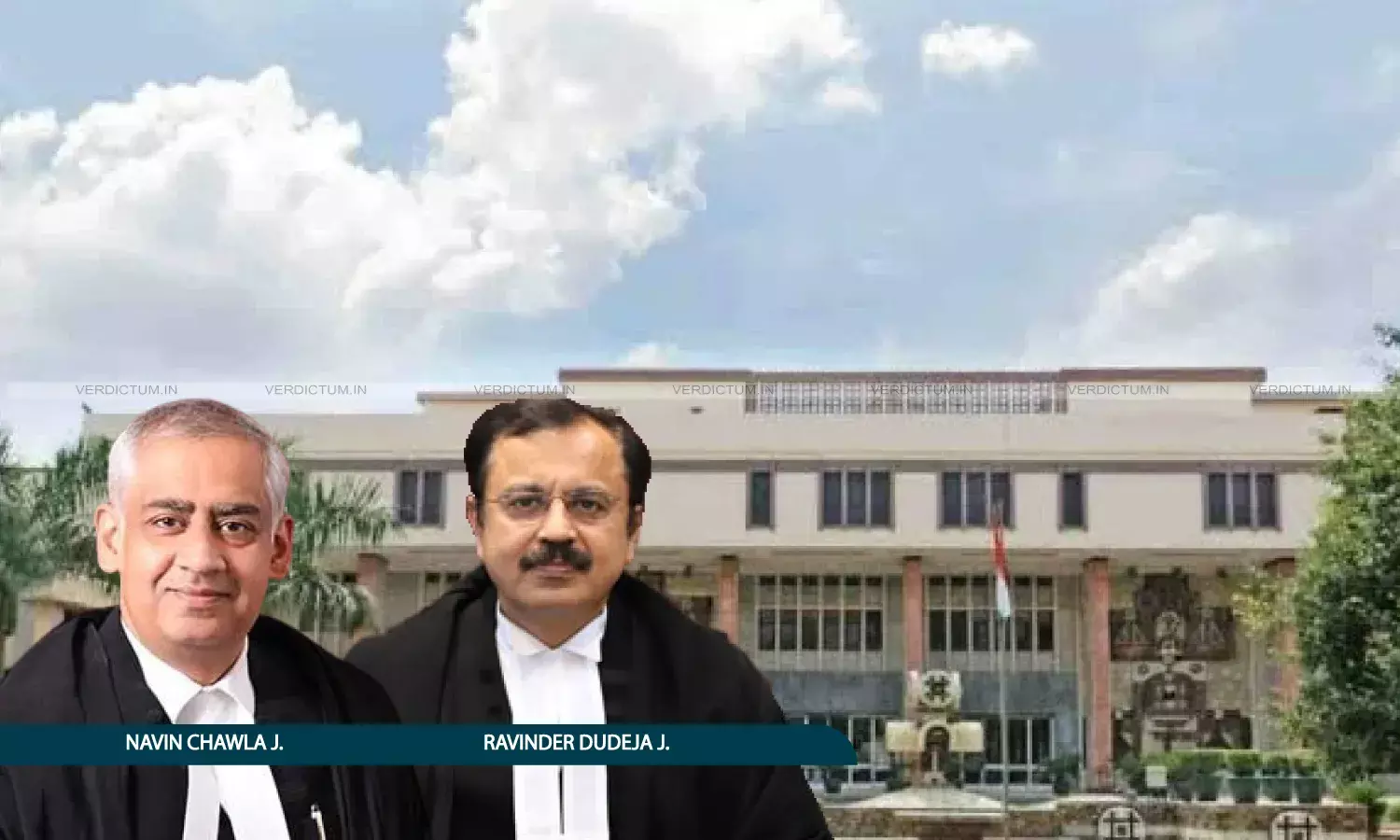
A Division Bench comprising Justice Navin Chawla and Justice Ravinder Dudeja observed, “The core allegation regarding sexual assault by the van driver Yogesh has remained consistent throughout. The contention regarding tutoring of the prosecutrix also does not persuade this Court to discard her testimony in toto. The evidence of a child witness is not to be rejected merely because there exists a possibility of tutoring. The Court is required to ascertain whether the testimony inspires confidence and whether the substratum of the prosecution case remains intact…”.
“…The testimony of a child witness cannot be appreciated in the same manner as that of an adult witness. A child of a tender age is susceptible to fear, confusion and lapse of memory owing to passage of time. The prosecutrix was examined before the Court after a considerable delay of almost one and a half years from the date of the incident. Merely because the prosecutrix failed to identify the accused in Court after a long lapse of time, cannot by itself, render the prosecution case doubtful, particularly when the identity of the accused otherwise stands established from independent evidence on record”, the Bench further observed.
Advocate Shivek Trehan appeared for the appellant and Aman Usman, APP appeared for the respondent.
In the sentencing order, the Bench directed the sentences of ten years under Section 6 read with Section 5/3 of the POCSO Act and five years under Section 10 read with Section 9/7 of the POCSO Act shall run concurrently.
On the night of August 11, 2014, the mother of a four-year-old girl reported to police near Sai Temple, Malviya Nagar, New Delhi, that her daughter had been sexually assaulted by Yogesh Tanwar, the driver of the school cab used to transport the child.
On the child's return from school, the mother had noticed reddish marks and scratches on her chest and thighs. The child disclosed that the van driver had touched her chest and thighs and inserted his finger into her vagina during the return journey.
The accused was arrested the following day. Medical examination at AIIMS recorded bruise marks on the child's chest and congestion around a ruptured hymen, with the examining doctor confirming that the child herself had narrated the history of assault. The vehicle, a red Santro car, was seized from its owner Navneet Masih, who confirmed the accused was employed as driver for picking and dropping six children including the victim.
An FIR was registered under Section 376(2) IPC and Section 4 of the POCSO Act at Police Station Malviya Nagar. After trial before the Additional Sessions Judge-01, Special Court (POCSO), the accused was convicted on November 28 2019 for offences under Sections 376(2) and 354 IPC and Sections 6 read with 5/3 and 10 read with 9/7 of the POCSO Act.
Thereafter, by order dated November 29, 2019, he was sentenced to rigorous imprisonment of ten years under Section 6 and five years under Section 10 POCSO Act, with fines directed to be paid as compensation to the victim. The accused challenged his conviction in an appeal while the State filed a cross appeal seeking enhancement of sentence to the maximum prescribed by law.
The Court rejected the primary challenge to the conviction premised on the prosecutrix's failure to identify the accused through a video link in the Vulnerable Witness Room after approximately eighteen months.
The Court noted that under Section 3 of the POCSO Act, penetration to any extent suffices to constitute penetrative sexual assault, and that the medical findings of hymen rupture and congestion corroborated the allegation of digital penetration even where the child could not articulate the distinction between touching and insertion.
The defence of false implication arising from a cab-charge dispute was rejected as a bald assertion, the vehicle owner having made no statement supporting it.
“…We must appreciate that the victim was only a four years old girl at the time of incident and would not know as to what was to be done in the Court, and obviously, the parents would have guided her as to what she was to do in the Court, and may be in that context, such a statement was made by PW-1…Moreover, her version finds substantial corroboration from the testimony of her mother, who she promptly reported immediately after the occurrence”, the Bench further said.
On sentence, the Court declined enhancement, finding that the Trial Court had duly considered mitigating factors including the accused's age, socio-economic background, and absence of prior criminal antecedents.
“Section 31 Cr.PC. empowers the trial court with discretionary powers to direct whether sentences shall run consecutively or concurrently, depending upon the nature and gravity of offences and presence of any aggravating or mitigating factors, if any…”, the Bench observed.
“…the mandate under Section 31 Cr.P.C. was not duly followed, inasmuch as, the learned Trial Court did not even mention in the order the manner in which the substantive sentences would be served by the appellant. Even, there is no classification as to which sentence shall be served first and which after completion of first, thus, leaving the same to the sole discretion of the jail authorities, which may not be appropriate. No such discretion can be given to the jail authorities, this being the sole prerogative of the Court. The said omission on the part of the learned Trial Court has resulted into the appellant suffering total aggregate imprisonment of 15 years, in case the sentence awarded to the appellant were to run consecutively, which is in violation of Proviso to Section 31 Cr.PC., and therefore, cannot be sustained”, the Bench said.
Cause Title: Yogesh Tanwar v. State (Neutral Citation: 2026:DHC:5131-DB)
Appearances:
Appellant: Shivek Trehan (DHCLSC), Manika Pandey, Akash Chandna, Advocates.
Respondent: Aman Usman, APP, Manvendra Yadav, Advocates, Ardhendumanli Prasad, Siddharth Kumar, Anusha Rathore, Advocates for the victim.