

Direct Perception Of Images Is Direct Evidence U/S 60 Evidence Act: Delhi HC Upholds POCSO Conviction Of 60-Yr-Old
The Court held that an Investigating Officer directly viewing seized media constitutes direct evidence, making it unnecessary to force a minor victim to view explicit photos in court.

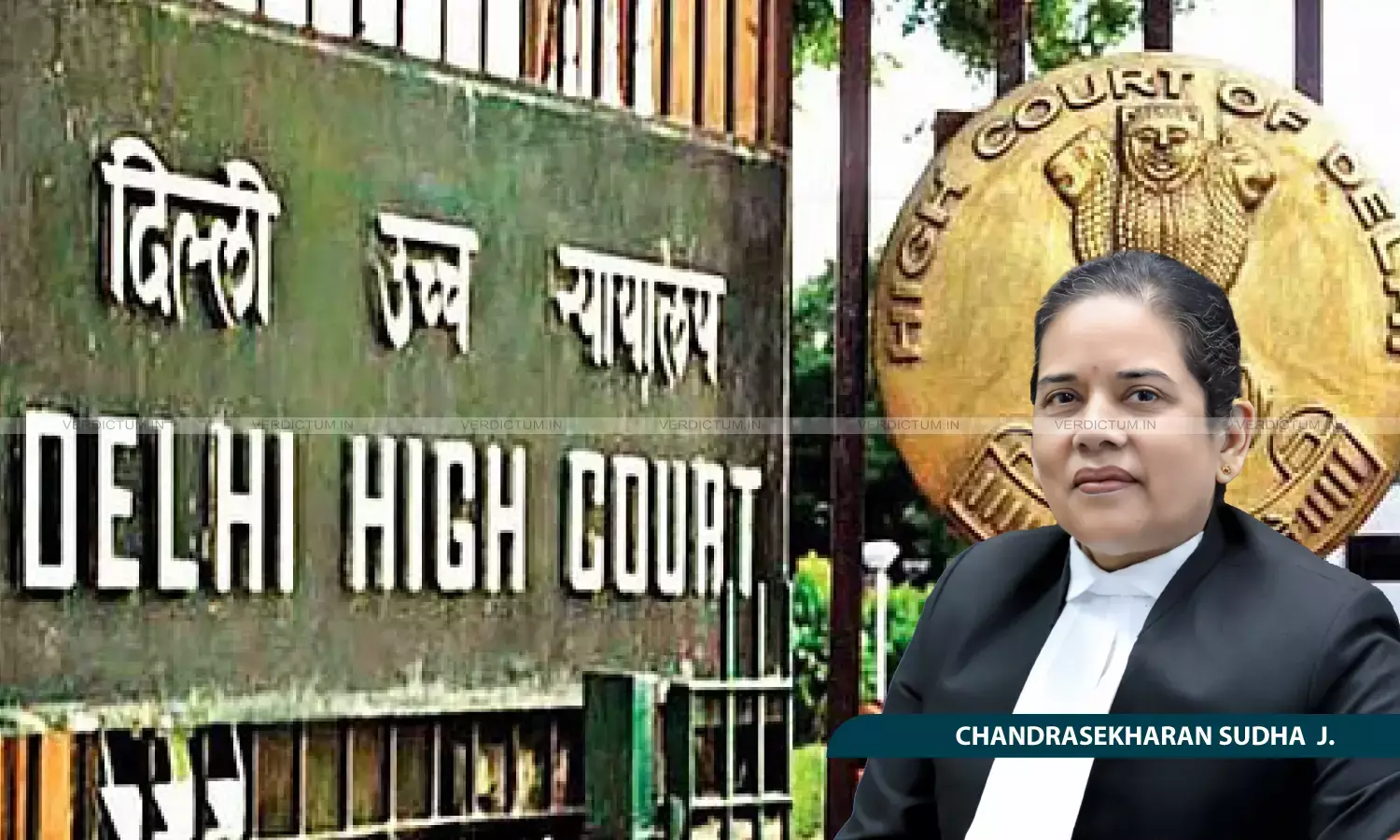
The Delhi High Court has upheld the conviction and 12-year rigorous imprisonment of a 60-year-old man for repeatedly committing aggravated penetrative sexual assault on a 14-year-old girl and blackmailing her with nude photographs. Refusing to grant any sentence reduction to the appellant, who had jumped interim bail and absconded for over four years, the Bench affirmed the trial court’s judgment under Section 5(l) read with Section 6 of the Protection of Children from Sexual Offences (POCSO) Act, 2012.
Crucially, the Court held that an Investigating Officer (IO) directly viewing explicit images on a seized device constitutes direct oral evidence under Section 60 of the Indian Evidence Act, 1872, as a fact perceived through the officer's own senses. Rejecting the defence's argument that the failure to show the explicit photos to the victim or her mother during the trial created a gap in prosecution evidence, the Court clarified that forcing a minor victim to view explicit media in court is legally unnecessary and morally improper when the identity is independently established by the IO's direct perception and corroborated by forensic examination.
A Bench of Justice Chandrasekharan Sudha observed, “…the identity of the person appearing in the photographs is not based merely upon the oral testimony of PW12 but also stands independently established by scientific examination. In these circumstances, her testimony to the effect that the image seen in the phone is infact that of the prosecutrix is direct evidence of a fact perceived through her own senses and hence admissible under Section 60 of the Evidence Act, which requires oral evidence to be direct… because the photographs were not shown to PW1 or PW2 during the course of their examination does not affect the evidentiary value of the photographs or the FSL report, especially when the accused never had a case that the images are of two different girls”.
“…it can be seen that for four years he absconded and evaded the process of law for a considerable period… in view of the gravity and nature of the offence, coupled with the appellant’s conduct, this Court does not find any exceptional circumstance warranting interference with the sentence imposed by the trial court”, the Bench further noted.
Advocate Kanhaiya Singhal appeared for the appellant and Utkarsh, APP appeared for the respondent.
The prosecution alleged that over a period of 7 to 8 months in 2015, the accused lured his daughter-in-law's 14-year-old classmate to his residence in Trilok Puri under the pretext of meeting her friend. He locked the premises, sexually assaulted her, and took nude photographs on his mobile phone. Khan subsequently blackmailed the minor, threatening to publish the images on the internet and harm her siblings if she disclosed the abuse.
The matter came to light on the day of Bhai Dooj in October 2015, when the accused entered the victim's home armed with a knife to intimidate her family, prompting the victim to reveal the ongoing ordeal to her mother.
Pursuant to an investigation, the Mayur Vihar Police Station registered an FIR, seized the mobile phone containing the victim's photographs, and arrested the accused. In May 2019, a Special POCSO Court convicted Khan and sentenced him to 12 years of rigorous imprisonment along with a fine.
Counsel for the appellant argued that the prosecution failed to establish the minor’s exact age using an authentic municipal birth certificate, relying instead on school admission records. The defence also challenged the recovery and chain of custody of the mobile phone, arguing that failure to show the explicit photographs to the victim or her mother during trial for identification created a gap in evidence. Additionally, the appellant sought a reduction of his 12-year sentence to the pre-2019 statutory minimum of 10 years, citing his advanced age and health ailments.
On the non-identification of photographs by the victim in court, the Bench observed that the Investigating Officer's direct perception of the images on the seized device constituted admissible oral evidence under Section 60 of the Indian Evidence Act. The Court further highlighted that the FSL report independently confirmed that the image extracted from the phone matched the prosecutrix’s photograph without any digital manipulation.
Refusing to modify or reduce the 12-year sentence, the Court highlighted the grave nature of the offence and the appellant's conduct. The Bench noted that after being granted interim bail in 2021, the appellant jumped bail, absconded for over four years, and was re-arrested only in December 2025 pursuant to non-bailable warrants.
Cause Title: Wahid Khan v. State (Neutral Citation: 2026:DHC:6387)
Appearances:
Appellant: Kanhaiya Singhal, Prasanna, Ajay Kumar, Avantika Shankar, and Shatakshi Singh, Advocates.
Respondent: Utkarsh (APP), SI Ekta Chauhan, Tara Narula, and Harshvardhan Jain, Advocates.