

Once Strong & Eminent Need Is Established, Child’s Right To Know Parentage Through DNA Test Cannot Be Denied: Delhi High Court
The Bench upheld a Family Court order directing a man to undergo a DNA test in a suit by a mother and her child seeking to establish paternity.

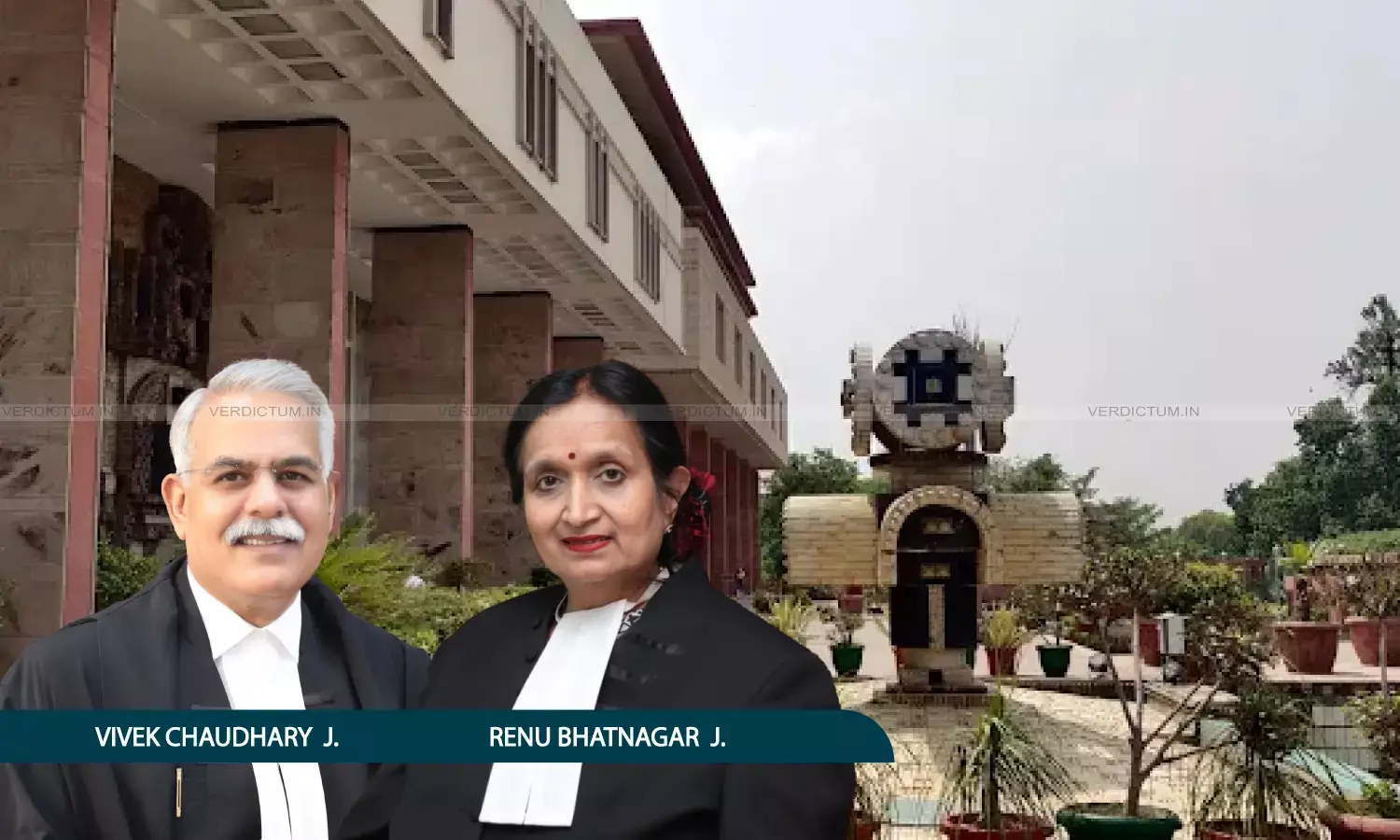
Justice Vivek Chaudhary, Justice Renu Bhatnagar, Delhi High Court
The Delhi High Court has held that, once a strong and eminent need is established, a child’s right to know her parentage through the best available evidence cannot be denied by replacing scientific facts with a comparatively weak legal assumption. The Court said an adverse inference from non-compliance cannot be a substitute for the enforceability of a direction for DNA testing.
Dismissing the man’s appeal against the Family Court’s order of August 31, 2024, the Bench held that the test was rightly directed after the parties had led evidence. It held that his right to privacy, though a fundamental right, is not absolute and, on the facts, was outweighed by the child’s right to know her origin. The Court directed that samples be collected in confidentiality and the DNA report forwarded in a sealed cover.
A Division Bench of Justice Vivek Chaudhary and Justice Renu Bhatnagar observed, “…adverse inference from non-compliance cannot be a substitute to the enforceability of a direction for DNA testing. Relying solely on an adverse inference instead of finding the scientific truth does not meet the ends of justice. Once a strong and eminent need is established, a child's right to know her parentage through the best available evidence cannot be denied by replacing scientific facts with a comparatively weak legal assumption”.
Archana Gaur, DHCLSC appeared for the appellant and Kamlakshi Singh, DHCLSC appeared for the respondent.
The woman claimed to have married the appellant in 1997 and to have lived with him in Delhi from November 2009 to July 2010, when the child was conceived. The appellant denied the marriage, any relationship and the paternity.
Her 2010 petitions under the Hindu Marriage Act and Section 125 of the CrPC were dismissed in 2012 for failure to prove marriage, and a Division Bench, dismissing her appeals, said his refusal to undergo a DNA test would, at best, lead to an adverse inference. The woman and the child then sued for a DNA test and a declaration of paternity, and the Family Court directed the test.
The appellant argued that the earlier finding had attained finality, that no prima facie material existed, and that a compelled test infringed his privacy, relying on Aparna Ajinkya Firodia v. Ajinkya Arun Firodia (2024).
The Court held that the earlier proceedings concerned the woman’s own claim as wife, that the child was not a party, and that they decided marriage and not paternity. Following Chaturbhuj Pradhan v. Amar Pradhan & Anr. (2026), it asked whether the test result is directly in issue and whether other evidence can substitute for it. It distinguished Aparna Ajinkya Firodia, where the test was sought only to prove adultery, and noted that the woman’s testimony on cohabitation at the time of conception was unchallenged and the appellant did not enter the witness box.
It said an adverse inference cannot be a substitute to the enforceability of a direction for DNA testing, and that privacy, though a fundamental right, is not absolute and was balanced against the child’s right to know her origin, which tilted in her favour.
The Court directed the Family Court to fix an early date for the appellant and the child to appear before the MS/HOD, Forensic Medicine, BSA Hospital, with samples collected in confidentiality and the report sent in a sealed cover. If he fails to appear, the Family Court may take steps in accordance with law to secure compliance. It expressed no opinion on the declaration sought.
Cause Title: V v. SS & Anr. (Neutral Citation: 2026:DHC:10283-DB)
Appearances:
Appellant: Archana Gaur, DHCLSC, with Ridhima Gaur and Deepu Kumar, Advocates
Respondents: Kamlakshi Singh, DHCLSC.