

Pensioner Cannot Seek Alteration Of Restoration Period While Retaining Benefits Of Commutation Scheme: Delhi High Court Upholds 15-Year Rule
The Court said that the fifteen-year restoration period reflects actuarial equilibrium, and not a mathematical recovery.

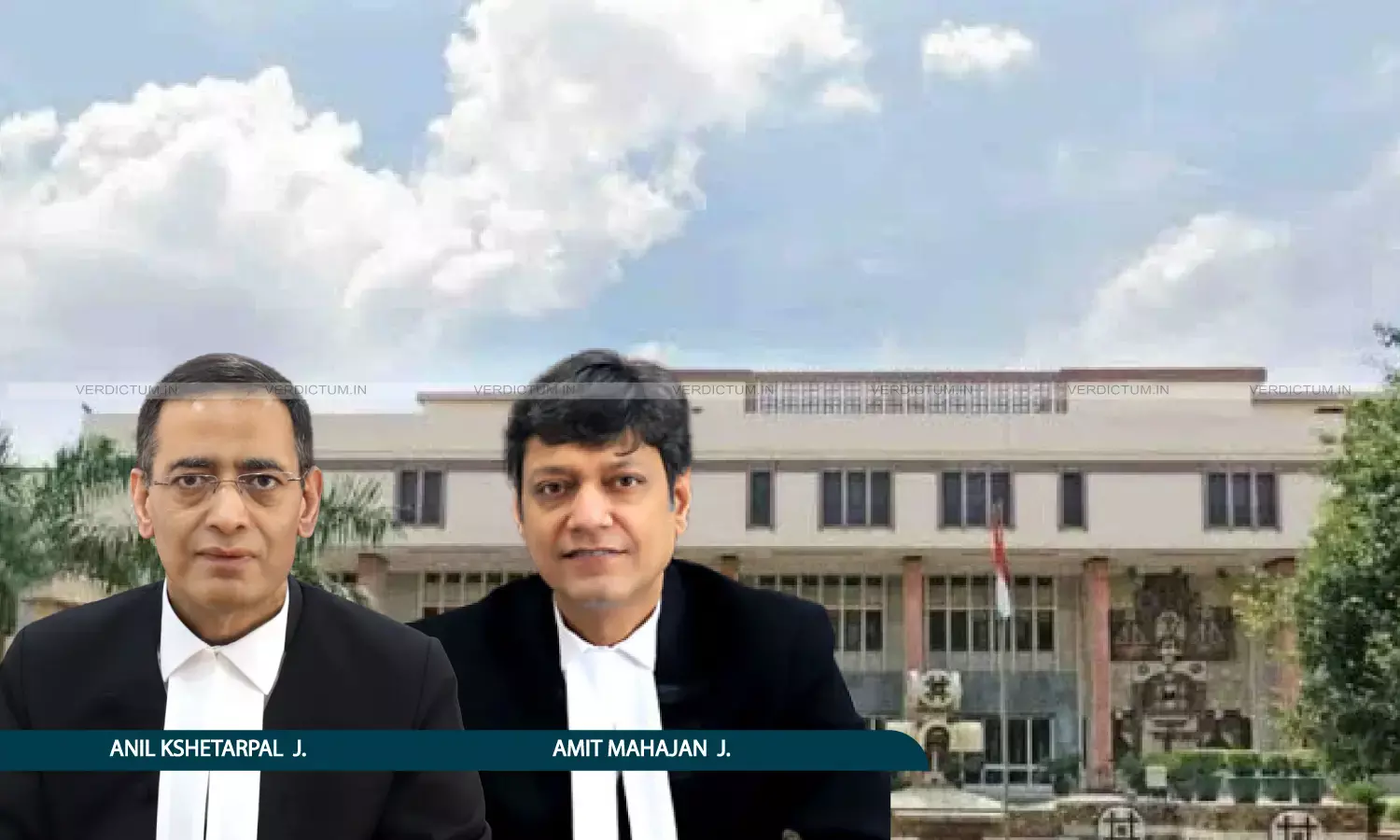
The Delhi High Court has held that pension commutation does not operate as a commercial loan repayable in instalments. The uniform fifteen-year restoration period under Rule 10-A of the Central Civil Services (Commutation of Pension) Rules, 1981, the Court held, represents an actuarial equilibrium designed for the pension system as a whole, not a mathematical recovery period relatable to each individual retiree.
The Court held that judicial review of pension commutation policy is confined to examination of manifest arbitrariness or constitutional infirmity. Courts cannot substitute actuarial wisdom with simplified financial calculations advanced by individual pensioners. A pensioner who voluntarily commutes pension and receives a substantial tax-free lump sum under clearly prescribed statutory conditions cannot subsequently seek alteration of the restoration period while retaining the benefit of the scheme.
While dismissing a batch of writ petitions filed by retired employees of Central Government departments, paramilitary forces, railways, banks and autonomous research bodies, the Court upheld the constitutional validity of the fifteen-year restoration period.
Justice Anil Kshetarpal and Justice Amit Mahajan observed, “…the challenge to Rule 10-A of the CCS Commutation Rules and analogous provisions governing other pension regimes is devoid of merit. The prescription of a uniform fifteen-year period for restoration of the commuted portion of pension represents a conscious policy determination founded upon actuarial evaluation, expert recommendations and long-standing statutory practice, and does not suffer from any constitutional infirmity warranting interference in exercise of writ jurisdiction”.
“When a retiree consciously elects to commute pension and receive a substantial tax-free lump sum under clearly prescribed statutory conditions, the legal consequences attached to that choice remain operative so long as the underlying scheme is constitutionally valid. The Pensioner-Petitioners cannot seek retention of the advantage while selectively repudiating the accompanying statutory terms”, it further observed.
Avshreya Pratap Singh Rudy, CGSC appeared for the petitioner and US Maurya, CGSC appeared for the respondent.
For the facts, retired personnel across Central Government establishments challenged the continued recovery of commuted pension for a uniform fifteen-year period under Rule 10-A of the CCS Commutation Rules.
It was contended that successive revisions to actuarial commutation factors following Pay Commission recommendations had altered the financial assumptions underlying the original restoration framework, resulting in recovery exceeding the commuted value actually paid.
They sought reduction of the restoration period to twelve or thirteen years, relying upon recommendations of the Department of Pension and Pensioners' Welfare, the Second National Judicial Pay Commission's Supplemental Report of March 2021, and pension regimes of States including Kerala and Gujarat.
Thereafter, several petitioners had approached the Central Administrative Tribunal, which declined relief holding that alteration of the recovery period falls within the policy domain of the rule-making authority.
The Armed Forces Tribunal had granted interim directions restraining further recovery, which the Union of India challenged before the High Court, and the connected writ petitions were filed directly before the High Court and heard together as a common batch.
The Court held that the commuted value of pension is not computed as recovery of principal advanced to an individual but is determined through actuarial tables incorporating life expectancy, mortality distribution, discount rates and systemic risk of premature death. Relying on Common Cause v. Union of India (1987), the Court affirmed that the fifteen-year period was evolved on a "years-of-purchase" basis with an equitable two-year buffer beyond arithmetical recovery.
Both the 6th and 7th Pay Commissions had consciously retained the fifteen-year period after examining the question, demonstrating sustained informed policy rather than arbitrary fixation. On Article 14, applying the manifest arbitrariness standard from Shayara Bano v. Union of India (2017) 9 SCC 1, the Court held the rule possesses a clear determining principle and rational nexus with its objective. Departmental recommendations and advisory body reports remaining unaccepted by the rule-making authority were held not to alter the binding statutory framework.
“The fifteen-year restoration period must therefore be understood as an actuarial equilibrium designed for the pension system as a whole rather than a mathematical recovery period relatable to each individual retiree. The contention that ‘recovery stands completed within twelve years’ proceeds on a simplified financial comparison ignoring actuarial assumptions embedded in the statutory design and already recognised in binding precedent”, the Bench said.
Accordingly, the writ petitions filed by the Union of India was allowed and the AFT's interim order dated July 24, 2024 was set aside. All writ petitions filed by pensioner-petitioners were dismissed and the fifteen-year restoration period upheld, while all interim protections were vacated.
The Court directed in exercise of equitable jurisdiction that recovery deferred during interim protection shall not be recovered in a lump sum but shall continue beyond the fifteen-year period for the exact duration during which interim protection remained operative.
Cause Title: Union of India and Ors. v. Sub Trilok Chand Retd. and Anr. (Neutral Citation: 2026:DHC-4843-DB)
Appearances:
Petitioners: Avshreya Pratap Singh Rudy, CGSC, Usha Jamnal, Nyasa Sharma, Ankit Khatri, Advocates.
Respondents: US Maurya, SS Maurya, Advocates.