Candidates With Multiple Sclerosis Eligible For Reservation Under RPWD Act If Benchmark Disability Threshold Met: Delhi High Court
The Court held that the second part of Section 34(1) of the RPWD Act cannot be read to narrow the statutory obligation to reserve vacancies for persons with benchmark disabilities.
The Delhi High Court has held that multiple sclerosis is a specified disability under the Rights of Persons with Disabilities Act, 2016, and persons suffering from it are entitled to reservation if they satisfy the benchmark disability requirement.
The Court was hearing a writ petition filed by the Union of India against a Central Administrative Tribunal order, which had set aside the cancellation of a candidate’s candidature for appointment against a vacancy reserved for Persons with Disabilities.
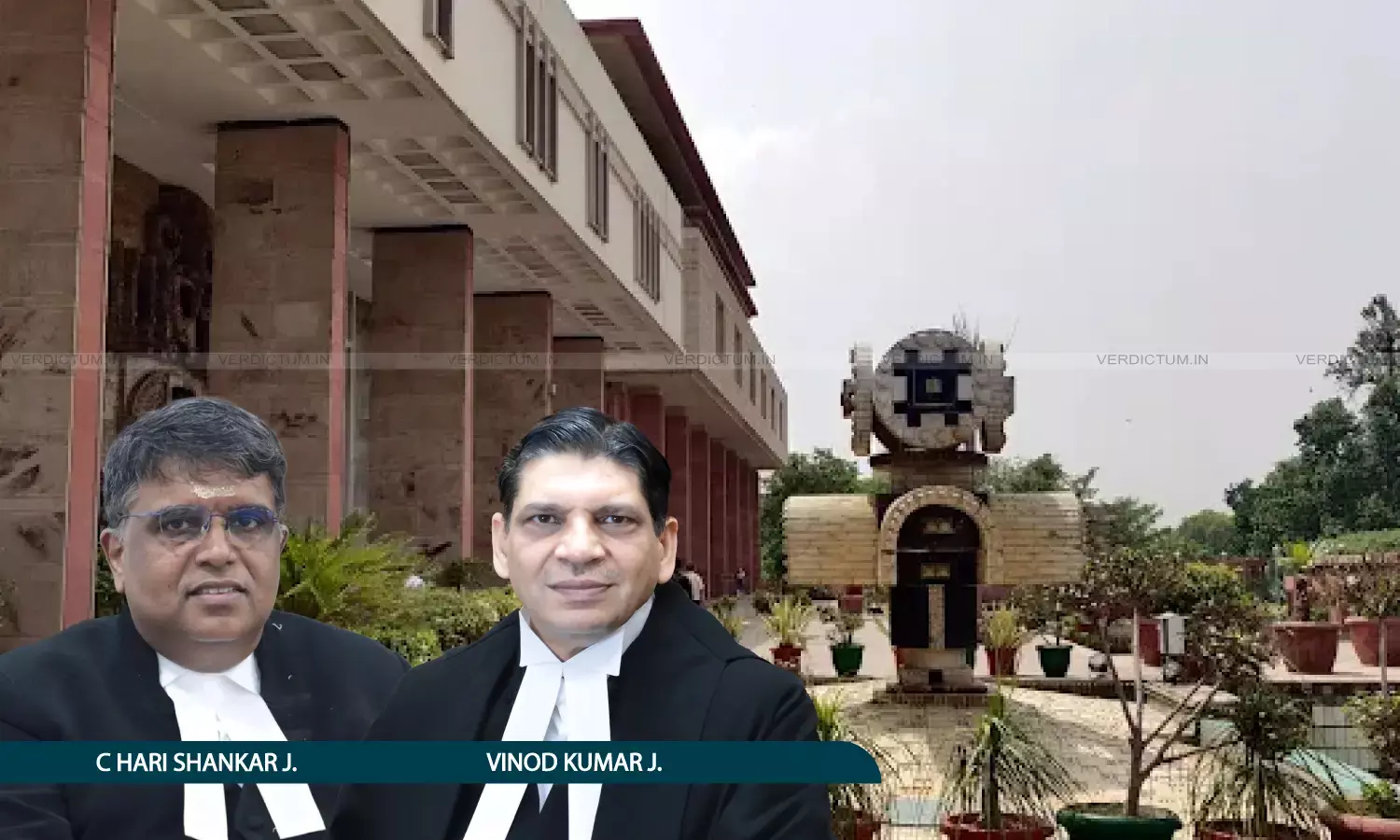
A Bench of Justice C. Hari Shankar and Justice Vinod Kumar observed: “Inasmuch as (i) multiple sclerosis is a disability which is specifically envisaged in the Schedule to the RPWD Act, (ii) multiple sclerosis is, therefore, a “specified disability” within the meaning of Section 2(z)(c) and (iii) a person suffering from multiple sclerosis is, therefore, a “person with benchmark disability” within the meaning of Section 2(r), it cannot be disputed that the respondent is a person with benchmark disability by a combined reading of clause 4(a)(i) and 5 of the RPWD Act.”
Senior Panel Counsel Ankit Raj appeared for the Union of India, while Advocate R.K. Handoo appeared for the candidate.
Background
The Staff Selection Commission had invited applications for the Combined Graduate Level Examination 2021 for recruitment to posts reserved for Persons with Disabilities. The candidate suffered from multiple sclerosis of the brain with low vision in both eyes and held a disability certificate issued by the Department of Empowerment of Persons with Disabilities.
The certificate recorded 15% disability on account of low vision and 30% disability on account of multiple sclerosis, with the overall disability assessed at 40%. The Court noted that the cumulative disability was above the 40% threshold for reservation in government service.
The candidate cleared all stages of the selection process and was called for document verification, but her candidature was rejected on the grounds that “Multiple Sclerosis Disease” was not admissible for reservation. She approached the Tribunal, which allowed her application and directed consequential relief. The Union of India challenged that order before the High Court.
Court’s Observations
The High Court noted that the limited issue was whether the candidate was entitled to the benefit of reservation as a Person with Disability. The Union contended that multiple sclerosis was not one of the ailments covered by clauses (a) to (d) of Section 34(1) of the RPWD Act and that, if multiple sclerosis was excluded, the candidate would not meet the 40% benchmark disability requirement.
The Court rejected the contention that multiple sclerosis had to be expressly mentioned in clauses (a) to (d) of Section 34(1). It held that those clauses specify categories of disabilities and not individual ailments.
The Bench explained that Section 34(1) has two parts. The first part imposes a statutory obligation on establishments to reserve not less than 4% of vacancies in the cadre strength for persons with benchmark disabilities. The second part explains how that 4% reservation is to be divided among categories of disabilities.
The Court held that the second part of Section 34(1) cannot limit the width of the first part. It was observed that establishments remain under a solemn statutory obligation to reserve 4% vacancies for persons with benchmark disabilities.
Referring to Sections 2(r) and 2(z)(c) of the RPWD Act, the Court noted that a “person with benchmark disability” means a person with not less than 40% of a specified disability, and “specified disability” means disabilities specified in the Schedule to the Act. It then noted that multiple sclerosis is expressly mentioned in clause 4(a)(i) of the Schedule as a disability caused by chronic neurological conditions.
The Bench observed: “Clearly, therefore, by operation of the first part of Section 34(1) of the RPWD Act, persons with multiple sclerosis, who either have 40% disability owing to multiple sclerosis or 40% disability owing to multiple sclerosis along with any other specified disability, be entitled to reservation.”
The Court further held that Section 34(1) cannot be interpreted restrictively so as to exclude a person suffering from a benchmark disability. It relied on Vikash Kumar v. UPSC (2021), Ravinder Kumar Dhariwal v. Union of India (2023) and In Re: Recruitment of Visually Impaired in Judicial Services (2025), where the Supreme Court had held that the RPWD Act must be interpreted in light of its philosophy and with a view to include as many persons with disabilities within its scope as possible.
The Bench held that a restrictive interpretation of the RPWD Act would be against the grain of the statute. It therefore found the Tribunal’s interpretation to be in sync with the philosophy of the Act and unexceptionable.
The Court also accepted the Tribunal’s view that multiple sclerosis could be treated as falling within mental illness for the purposes of Section 34(1), when interpreted in light of the philosophy of the RPWD Act and the material relied upon by the Tribunal on neurodevelopmental disorders.
The Bench further considered the advertisement issued by the SSC. It noted that Annexure XIV to the advertisement, which prescribed the form of disability certificate in cases of multiple disabilities, specifically listed multiple sclerosis at serial number 17. The Court held that the advertisement itself envisaged multiple sclerosis as one of the disabilities entitling a candidate to the benefit of the RPWD Act.
The Court also held that the SSC could not go behind the disability certificate issued by the competent authority under the RPWD Act. Since the candidate possessed a valid certificate certifying cumulative disability of 45%, including 30% attributable to multiple sclerosis, the certificate read with the advertisement entitled her to the benefit of Section 34 of the RPWD Act.
Conclusion
The Delhi High Court concurred with the Tribunal that cancellation of the candidate’s candidature was not in accordance with law.
The Court held that the Tribunal had rightly set aside the cancellation and directed consequential reliefs.
Finding no ground to interfere under Article 226 of the Constitution, the Court dismissed the writ petition in limine.
Cause Title: Union of India v. Preeti Vaid And Anr. (Neutral Citation: 2026:DHC:5491-DB)