

“Rigid Conflict Rules Cause Scarcity Of Arbitrators”: Delhi High Court Holds Deciding Similar Arbitration Clauses Does Not Disqualify Maritime Arbitrators
The Court upheld SAIL's arbitral award loss to British Marine, holding "issue conflict" in specialised maritime arbitration is not per se bias, and belated challenge to arbitrators amounts to waiver.

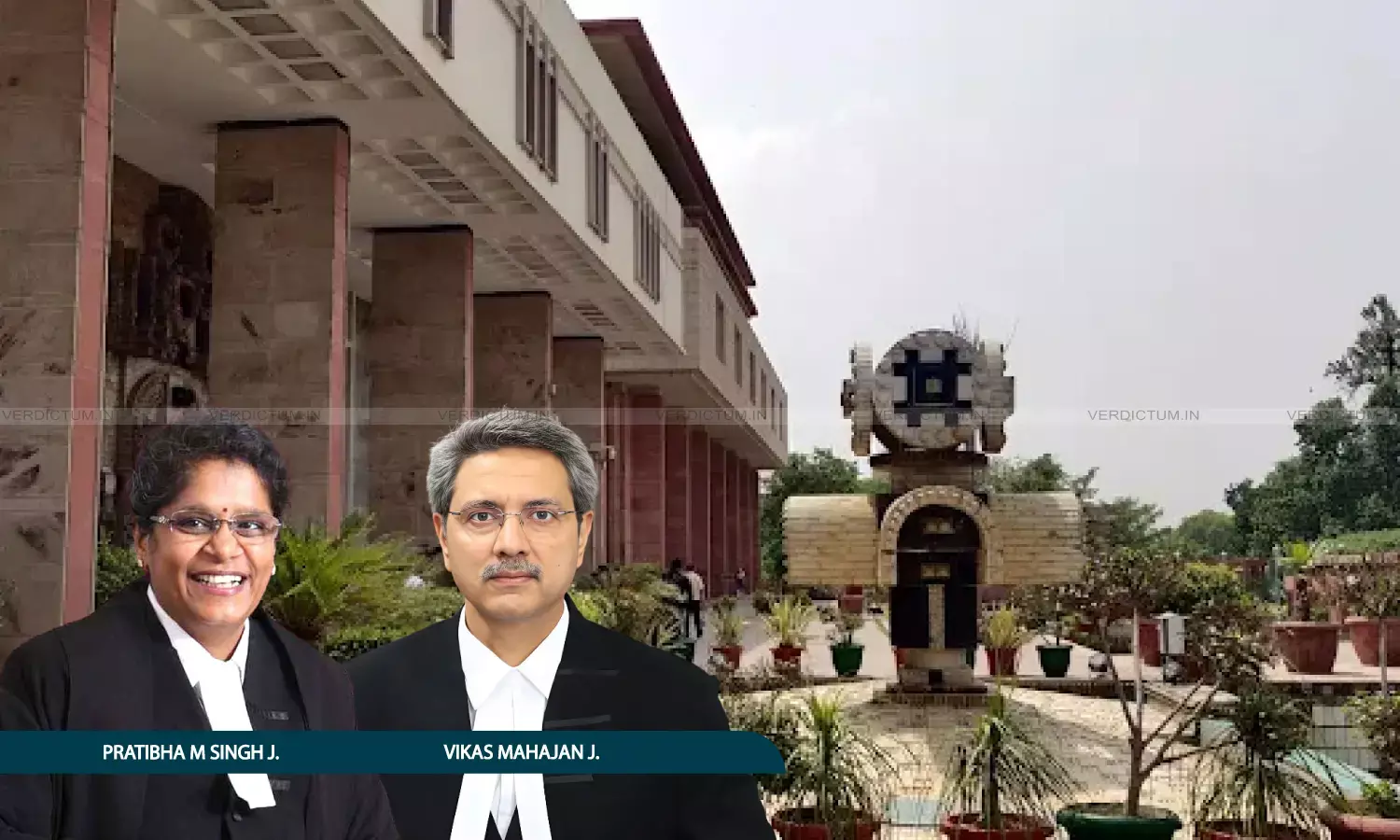
Rejecting Steel Authority of India Limited’s (SAIL) plea of arbitrator bias, the Delhi High Court has held that an arbitrator’s prior interpretation of identical contractual clauses in a separate maritime dispute does not automatically give rise to justifiable doubts regarding their independence or impartiality under Section 12 of the Arbitration and Conciliation Act, 1996. The Bench observed that in highly specialized domains with a limited pool of experts, imposing overly rigid conflict standards would lead to a severe scarcity of qualified arbitrators, perpetually disqualify domain experts, and defeat the fundamental purpose of speedy dispute resolution.
Upholding the arbitral award in favor of British Marine PLC, the Court held that mere "issue conflict" cannot be equated with disqualifying bias unless a party demonstrates that the arbitrator has approached the fresh dispute with a closed mind. The Bench further noted that SAIL’s belated challenge, raised months after obtaining full knowledge of the arbitrators' appointments and well past the mandatory 15-day limitation period under arbitral rules, amounted to a waiver of its right to object.
A Division Bench of Justice Prathiba M. Singh and Justice Vikas Mahajan observed, “…A maritime contract by its very nature requires domain knowledge for quick adjudication. Merely because an Arbitrator has served in another maritime arbitration which involves interpretation of the same or a similar clause by itself cannot raise justifiable doubts as to the independence or impartiality of an Arbitrator. The manner in which such disputes are resolved through specialized Tribunals is well entrenched both in India and internationally. If it were to be held that experts who serve as Arbitrators on such arbitrations, ought to be bound by such stringent conflicts, it may lead to scarcity of such expert Arbitrators and also their perpetual disqualification. The interpretation canvassed by SAIL cannot, therefore, be accepted. In the opinion of this Court, the entire purpose of invoking arbitration in such cases for expeditious disposal would be defeated if such specialised Arbitrators are held to be conflicted or disqualified”.
Senior Advocate Rajshekhar Rao appeared for the appellant and Senior Advocate Ramesh Singh appeared for the respondent.
“A conjoint reading of the Maritime Arbitration Rules of the ICA and the Explanation 3 to Item no.24 of the Fifth Schedule of the Act, would show that one of the most relevant facts to be taken into account while resolving issues of conflicts is the required specialization of Arbitrators. Rule 5 of the Maritime Arbitration Rules of the ICA and Explanation 3 to the Fifth Schedule of the Act, lend sufficient credence to the fact that such arbitrations involving technical matters requiring specialization may have a smaller pool of Arbitrators from which the parties can choose…”, the Bench had also noted.
SAIL and British Marine PLC, a UK-based ocean freight company, entered into a Contract of Affreightment dated December 05, 2007 for shipment of coking coal over five years. Following the 2008 global economic downturn, SAIL stopped declaring shipment bookings and eventually invoked the contract's Default Clause (Clause 62) to terminate the agreement in 2012, alleging breach by British Marine.
Disputes were referred to a three-member Arbitral Tribunal, including Captain S.M. Berry and Mr. Niranjan Chakraborty, who had earlier, in a separate arbitration, interpreted the identical Clause 62 in a dispute between SAIL and another shipping company, M/s SeaSpray. The Tribunal ultimately rejected SAIL's interpretation of Clause 62, held SAIL liable for breach, and awarded damages computed on the difference between contractual and spot market rates, along with interest.
Thereafter, SAIL’s challenge to the arbitrators, filed before the Indian Council of Arbitration (ICA) in January 2015, was rejected as time-barred. After a writ petition reached the Supreme Court in 2022, SAIL was permitted to raise its bias grounds under Section 34. However, the Single Judge dismissed the Section 34 petition on October 13, 2025, prompting SAIL’s Section 37 appeal.
The Court affirmed that because the dispute arose from an international commercial arbitration, the ground of "patent illegality" was unavailable, restricting review strictly to narrow public policy grounds. Furthermore, the Court found that SAIL had waived its right to object under Section 13 and ICA Maritime Arbitration Rules by failing to challenge the arbitrators within the mandatory 15-day period despite knowing of their dual appointments since 2014.
On the merits, the Court rejected SAIL's interpretation of Clause 62, ruling that it applies only when upstream Australian suppliers fail to deliver coal, not to excuse SAIL’s own failure to declare shipment bookings. Upholding the assessment of damages based on the differential between contractual and spot market rates, the Bench dismissed the appeal and affirmed the award in full.
Cause Title: Steel Authority of India Limited v. British Marine (Neutral Citation: 2026:DHC:7953-DB)
Appearances:
Appellant: Rajshekhar Rao, Senior Advocate, Ajay Sabharwal, Sidhartha Sharma, Priyanka Tibrewal, Rishav Dutt, Aman Katrina, Anirudh Pandit and Neelakshi Singhal, Advocates.
Respondent: Ramesh Singh, Senior Advocate, Sumit K. Batra, Anupam Dighe, Manish Khurana and Chandini Tanna, Advocates.