

Cross-Examination Privilege Is Not A Licence To Humiliate Witness Or Attack Her Dignity: Delhi High Court
The Bench overturned a 2014 acquittal and condemned defense counsel for citing victim’s attire & local customs in sexual harassment case with “janab, har mohalle mein ek reeti riwaz hota hain”.

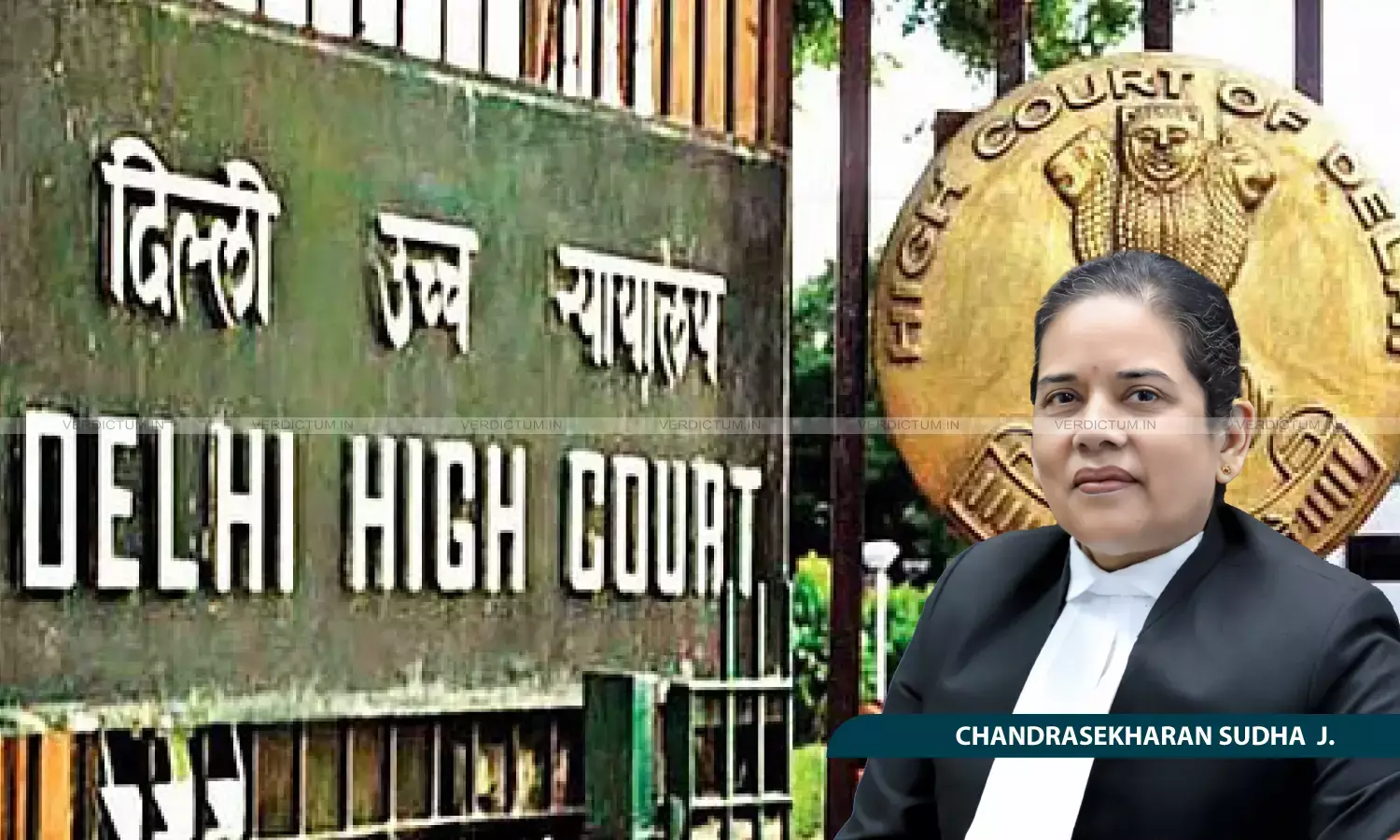
In a scathing rebuke of trial tactics that indulge in victim-blaming, the Delhi High Court has held that an advocate’s privilege during cross-examination cannot be weaponized into a "licence to humiliate a witness or attack her dignity".
Overturning a 2014 acquittal order, a Bench headed by Justice Chandrasekharan Sudha convicted Sajid Ali under Section 354A(1)(i) IPC for sexually harassing a 17-year-old girl in 2013. In a detailed judgment, the Court strongly condemned defense counsel Advocate Mohd. Iqbal for attempting to justify the harassment by bringing the victim's choice of attire and neighborhood religious norms onto the court record.
“…The questions put to PW4 were plainly not intended to test her truthfulness or impeach her credit under Section 155 of the Evidence Act. They were intended to insult, shame and annoy her (See Sections 151 and 152 Evidence Act). Such conduct is particularly serious when it comes from an advocate, who is an officer of the Court and whose duty is to assist the Court in arriving at the truth. An advocate cannot use the privilege of cross-examination as a licence to humiliate a witness or attack her dignity”, the Bench categorically said.
“Coming to the case on hand, there was no reason whatsoever to introduce religion into the present case. Advocate Mohd. Iqbal, who represented the accused before the Trial Court, appears for the appellant in this appeal also. When asked why questions concerning the religion of the people in the locality and the clothes worn by PW4 had been put to her, the learned counsel replied: - ‘Janab, har mohalle mein ek reeti riwaz hota hain jinko sabko manna padega’”, the Bench categorically observed, while strongly condemning the language.
Utkarsh, APP for State appeared for the appellant Advocates Mohd. Iqbal and Kanwar Faisal appeared for the respondent.
In the matter, during cross-examination, defense counsel subjected the victim (PW4) to intrusive questioning regarding her choice to wear "western tight clothes" and jeans in an orthodox locality.
When asked by the High Court Bench why questions regarding religion and clothing were put to the victim, counsel replied, ‘Janab, har mohalle mein ek reeti riwaz hota hain jinko sabko manna padega’.
Rejecting the argument entirely, the High Court held that such questions had zero relevance to testing the witness's credibility under Section 155 of the Evidence Act. Instead, the Court observed that they were calculated solely to insult, shame, and annoy her, actions strictly barred under Sections 151 and 152 of the Evidence Act.
“Even a woman of easy virtue is entitled to privacy and no one can invade her privacy as and when he likes. So also, it is not open to any and every person to violate her person as and when he wishes. She is entitled to protect her person if there is an attempt to violate it against her wish. She is equally entitled to the protection of law. At the most, the court called upon to evaluate her evidence would be required to administer caution unto itself before accepting her evidence”, the Bench further said.
“When the learned counsel for the appellant/accused was asked whether he had any arguments to advance on the point, submitted that he has nothing to submit except that the trial court was perfectly justified in acquitting the accused and that there is no reason(s) for interference. I am afraid; I disagree with the argument advanced by the learned counsel for the appellant/accused”, the Bench further said.
The Court emphasized that advocates are officers of the court whose primary duty is to aid in discovering the truth. Cross-examination cannot be treated as a license for character assassination.
Further noted that a woman's choice of clothing or local neighborhood traditions can never serve as a legal defense for sexual harassment or diminish her fundamental right to dignity.
Accordingly, the Court issued strict directions to the District Judiciary, reminding trial judges that they have an active legal duty under Sections 151 and 152 of the Evidence Act to intervene and protect witnesses from hostile, humiliating questioning.
Cause Title: State (NCT Of Delhi) v. Sajid Ali (Neutral Citation: 2026:DHC:6421)
Appearances:
Appellant: Utkarsh, APP for State.
Respondent: Mohd. Iqbal and Kanwar Faisal, Advocates.