

Nomenclature Assigned By Employer Not Conclusive Of True Nature Of Employment Relationship: Delhi High Court
Bank's own conveyance vouchers, bearing Branch Manager's signature and authorisation, the Court held are sufficient to establish implied contract of service despite payments being recorded as bills for water supply.

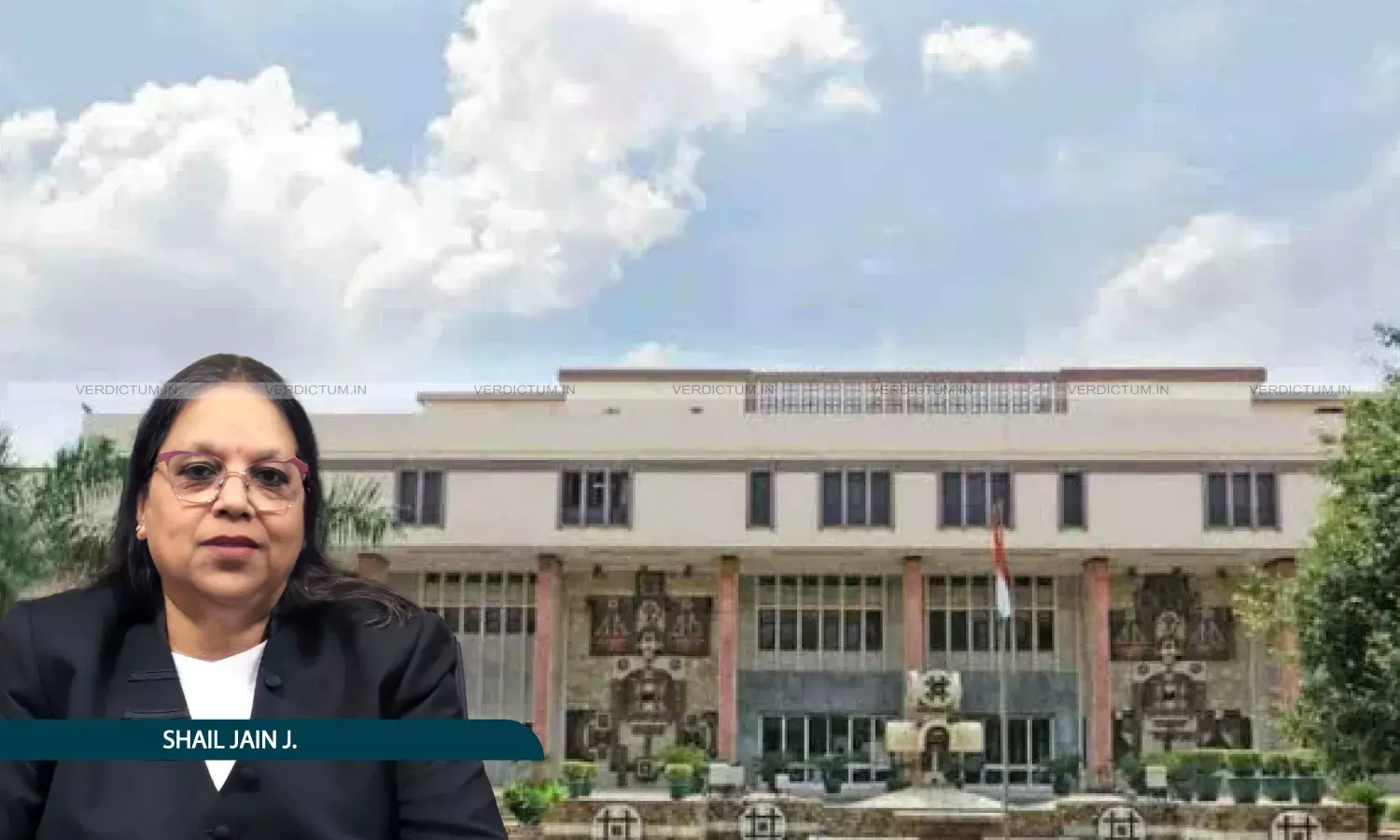
The Delhi High Court has held that the true nature of an employment relationship must be gathered from the substance of duties actually performed and not from the nomenclature or payment structure assigned to it by the employer, upholding a Labour Tribunal's finding that a person shown on record as an independent "water supplier" was, in fact, functioning as a bank messenger under an implied contract of service, based on internal conveyance vouchers bearing the Branch Manager's own signature and authorisation.
The Court further ruled that even where termination of a workman's services is found to violate the mandatory safeguards under Section 25-F of the Industrial Disputes Act, a Tribunal cannot direct regularisation or permanent absorption into service as a consequential relief, since mere completion of 240 days or a finding of illegal retrenchment does not, by itself, confer any vested right to regularisation absent a sanctioned post and adherence to the constitutionally mandated recruitment process, as settled by the Constitution Bench in State of Karnataka & Ors. v. Umadevi & Ors. (2006) 4 SCC 1.
Justice Shail Jain observed, “…The case before the Tribunal was that the Respondent was merely engaged as an independent water vendor supplying water at the branch premises and that conveyance charges paid on certain occasions represented reimbursement of expenses incurred for delivery of documents. The true nature of the engagement, however, cannot be determined from the description assigned to it by the Petitioner Bank but must be gathered from the substance of the relationship as disclosed from the material on record. The nomenclature assigned by the employer, the mode of payment adopted or the absence of formal documentation are not conclusive of the true nature of the relationship where the material on record otherwise discloses a relationship of employment…”.
Rajiv Kapur, Standing Counsel appeared for the petitioner and Senior Advocate Romy Chacko appeared for the respondent.
In the matter, the respondent, Umed Singh, claimed he was engaged as a Messenger at the State Bank of India's Ajmal Khan Road Branch, Karol Bagh, from July 6, 1994 to May 31, 1995, discharging duties such as delivery of clearing cheques, service of urgent correspondence and outdoor assignments, though payments to him were recorded in the Bank's books as bills for water supply on a per-bucket basis, since the branch, located on the first and second floors, lacked adequate water arrangements.
His services were discontinued from June 1, 1995 without notice or retrenchment compensation. The Bank contended no employer-employee relationship ever existed, that the Branch Manager lacked authority to make appointments, and that payments were confined to water supply and occasional conveyance reimbursement.
Pursuant to a failure of conciliation proceedings, the Central Government referred the dispute to the Central Government Industrial Tribunal-cum-Labour Court-II, New Delhi. The Tribunal, by Award dated December 13, 2004, held the termination illegal and directed regularisation of the respondent's services without back wages. The Bank challenged this Award before the High Court under Articles 226 and 227.
The Court found that conveyance vouchers produced before the Tribunal, generated by the Bank itself and bearing the word "Admitted" alongside the Branch Manager's signature, recorded specific journeys for delivery of cheques to other banks, correspondence to government offices, visits to the RBI, and work in the Record Department during fixed hours, demonstrating supervision and control inconsistent with an independent vendor relationship.
“…Water supply to a functioning bank branch cannot be characterised as an intermittent, seasonal or contingent activity. It is a recurring operational requirement arising on every working day. An arrangement for supply of water to branch premises situated on the first and second floors over a period extending to nearly eleven months inherently indicates regular and recurring presence connected with the day-to-day functioning of the branch. Such a requirement itself renders the theory of isolated or sporadic engagement difficult to sustain”, the Bench noted.
Applying the test in Dharangadhra Chemical Works v. State of Saurashtra. Relying on Workmen of American Express International Banking Corporation (1985) 4 SCC 71, the Bench noted, “…the expression ‘actually worked under the employee’ is not confined merely to days of physical labour but extends to the period during which the workman remained in employment under the employer”.
However, applying Umadevi and distinguishing the precedents relied upon by the respondent as involving otherwise validly made appointments, the Court held the direction of regularisation exceeded the Tribunal's jurisdiction since no sanctioned post or recruitment process existed, and substituted it with monetary compensation following Jagbir Singh v. Haryana State Agriculture Marketing Board.
Accordingly, the writ petition was partly allowed and the direction of regularisation contained in the impugned Award was set aside and substituted with a direction to the Bank to pay the respondent lump sum compensation of Rs. 1,00,000 in full and final settlement, within eight weeks, failing which it would carry simple interest at 8% per annum from expiry of that period till realisation.
Cause Title: State Bank of India v. Umed Singh (Neutral Citation: 2026:DHC:5414)
Appearances:
Petitioner: Rajiv Kapur, Standing counsel, Riya Sood and Akshit Kapur, Advocates.
Respondent: Romy Chacko, Senior Advocate, Vikrant Yadav, Advocate.