

Opportunity Of Hearing Cannot Be Reduced To A Mere Ritual: Delhi High Court Quashes CACLB Decision Directing Inquiry Against Standard Chartered Bank
The Court held that the Central Advisory Contract Labour Board failed to adjudicate the bank’s jurisdictional objections, ignored written submissions, and passed a non-speaking decision directing continuation of proceedings relating to the alleged engagement of contract labour.
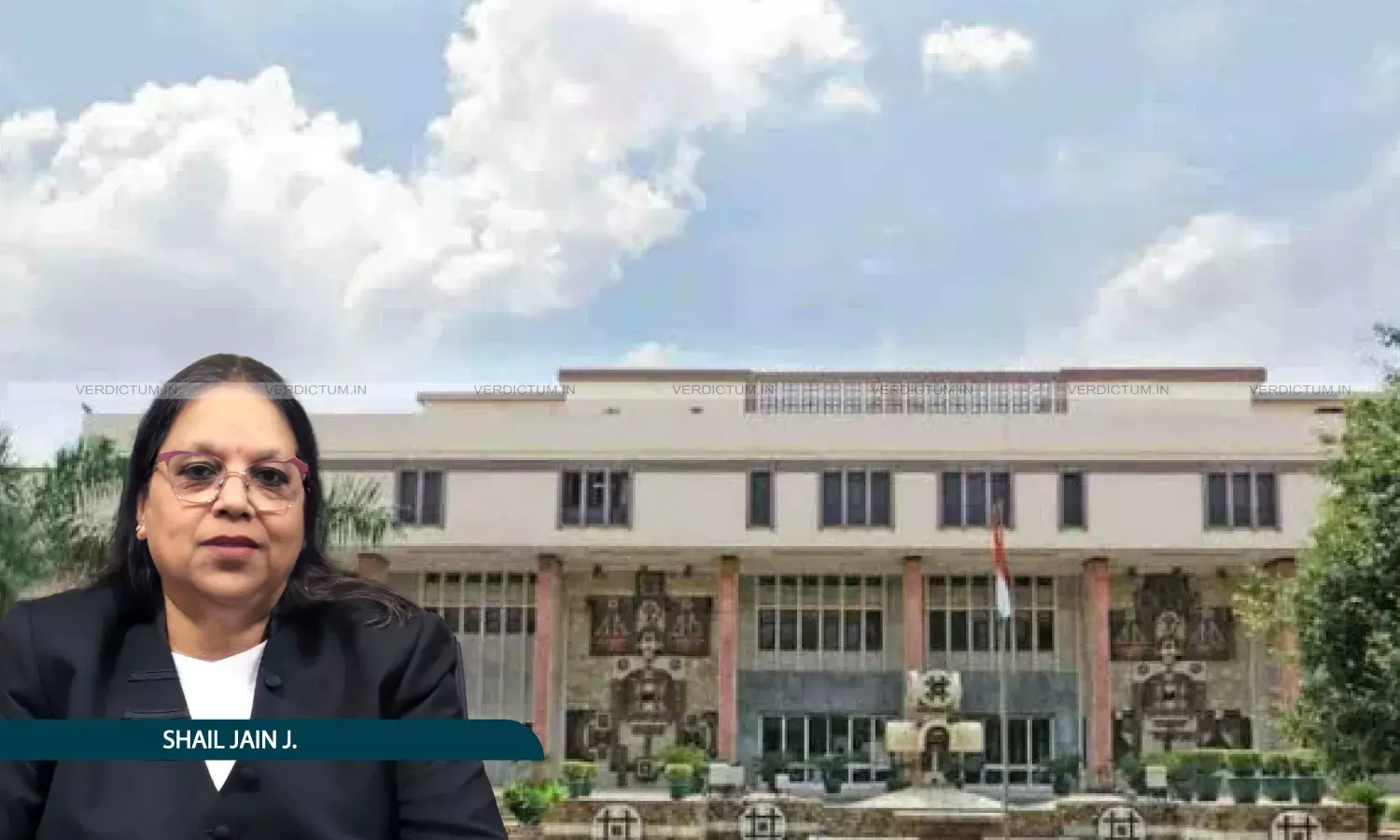
The Delhi High Court has quashed the decision of the Central Advisory Contract Labour Board directing a committee to proceed further with an inquiry into the alleged engagement of contract labour in establishments of Standard Chartered Bank.
The Court held that the decision suffered from non-consideration of material submissions, absence of reasons, and failure to decide foundational jurisdictional objections.
The Court was hearing a writ petition filed by Standard Chartered Bank challenging the decision taken by the Central Advisory Contract Labour Board in its 90th meeting, whereby the Board directed a previously constituted Committee to proceed further and submit its report regarding the engagement of contract labour in the bank’s Mumbai branches.
A Bench of Justice Shail Jain observed: "The objection regarding lack of jurisdiction has been recorded in the minutes, yet there is a complete absence of any finding thereon. There is no discussion, no analysis, and no indication of the reasons that weighed with the Board in proceeding further despite the objection. The decision proceeds as if the objection had no bearing on the matter. Such an approach, in the considered view of this Court, is fundamentally flawed and contrary to the settled requirement that a quasi-judicial authority must deal with the submissions advanced before it".
The Bench accordingly held that the decision of the Central Advisory Contract Labour Board directing the inquiry “suffers from non-consideration of material submissions, failure to adjudicate the jurisdictional objection raised by the petitioner, and absence of reasons, thereby violating the mandate of this Court’s order dated 09.05.2012 as well as the settled principles of fair decision-making.”
Senior Advocate Sudhir Nandrajog appeared for the petitioner bank. Advocate Kaoliangpou Kamei appeared for the respondents.
Background
The dispute arose from a complaint made by Grindlays Bank Employees’ Union, Mumbai, before the Ministry of Labour & Employment alleging that Standard Chartered Bank was engaging contract labour in violation of the Contract Labour (Regulation and Abolition) Act, 1970.
Pursuant thereto, the matter was referred to the Regional Labour Commissioner, Mumbai, for field inspection. The Regional Labour Commissioner submitted a report dated 11.03.2005 recording that the work in question was being carried out through the bank’s own subsidiaries and that there was no engagement of contract labour in violation of the Act.
The report was thereafter placed before the Central Advisory Contract Labour Board in its 72nd meeting held in May 2008. The majority of the Board accepted the findings of the Regional Labour Commissioner and decided that no action under the Act was warranted, directing closure of the case.
A dissenting note was, however, recorded by one Board member advocating the constitution of an investigative committee. Following a challenge by the minority union before the High Court, the Board later constituted a three-member Committee in April 2010 to examine the issue afresh.
The bank challenged the constitution of the Committee before the Delhi High Court, which disposed of the earlier writ petition by a consent order dated 09.05.2012, directing that all objections, including objections regarding the jurisdiction of the Board to review its earlier decision and the permissibility of continuation of inquiry by the Committee, would be decided by the Board after hearing all parties.
Subsequently, during the 90th meeting held on 04.11.2016, the petitioner bank raised detailed objections contending that the Board lacked statutory power of review and could not reopen the 2008 decision closing the matter. The bank was granted liberty to file written submissions, which were submitted on 18.11.2016.
However, the minutes later circulated by the Board revealed that it had already decided to direct the Committee to proceed further and submit its report expeditiously.
Court’s Observation
The High Court held that the principal issue before it was whether the Board acted in compliance with the mandate of the consent order dated 09.05.2012 and in accordance with settled principles of fair and reasoned decision-making.
The Court reproduced the operative portion of the impugned minutes and noted that while the petitioner’s objections regarding lack of jurisdiction and absence of power of review were recorded, no findings whatsoever were returned on those objections.
The Bench observed that the consent order of 09.05.2012 specifically required the Board to “deal with” the objections raised by the parties in accordance with law, which necessarily implied an obligation to apply its mind and render findings on such objections. The Court held: “Mere noting of submissions cannot be equated with adjudication.”
Referring to S.N. Mukherjee v. Union of India (1990), the Court reiterated that recording of reasons is an essential component of decision-making and absence of reasons renders a decision arbitrary. The Court further observed that the petitioner’s objection regarding the absence of statutory power of review went to the root of the Board’s jurisdiction and therefore required adjudication.
The Bench referred to Patel Narshi Thakershi v. Pradyumansinghji Arjunsinghji (1971) and Kalabharati Advertising v. Hemant Vimalnath Narichania (2010) to reiterate the settled proposition that the power of review is not inherent and must be expressly conferred by statute.
The Court held that although it was not deciding the merits of the jurisdictional objection itself, the Board was duty-bound to consider and adjudicate the objection once it had been specifically raised before it.
The Court further found that, despite granting the petitioner liberty to file written submissions, there was nothing on record indicating that such submissions were ever considered by the Board before taking the impugned decision.
The Bench observed: “An opportunity of hearing cannot be reduced to a mere ritual. The essence of a fair hearing lies not in the formality of granting an opportunity, but in the consideration of the submissions made pursuant thereto.”
The Court extensively relied upon Siemens Engineering & Manufacturing Co. of India Ltd. v. Union of India (1976), Union of India v. Mohan Lal Capoor (1973), and Kranti Associates Pvt. Ltd. v. Masood Ahmed Khan (2010) to reiterate that quasi-judicial authorities must record cogent and clear reasons demonstrating application of mind. Quoting Kranti Associates, the Court observed: “Reasons are not a mere formality, but the very foundation of a valid decision-making process.”
The Court rejected the respondents’ contention that the writ petition was merely an attempt to delay proceedings, observing that the present challenge arose from the subsequent decision dated 04.11.2016 and not from the earlier proceedings disposed of in 2012.
The Court also rejected the argument that the impugned direction was merely procedural, holding that judicial review under Article 226 extends to examining the legality of the decision-making process where such process is arbitrary, unfair or violative of principles of natural justice.
Conclusion
The High Court held that the impugned decision of the Central Advisory Contract Labour Board directing the Committee to proceed further could not be sustained in law as it violated the mandate of the consent order dated 09.05.2012 and suffered from the absence of reasons, non-consideration of submissions, and failure to adjudicate jurisdictional objections.
Accordingly, the Court quashed the impugned decision contained in Item No.12 of the minutes of the 90th meeting of the Board dated 04.11.2016.
The matter was remanded back to the Board with directions to first decide the petitioner’s objection regarding jurisdiction to review or reopen its earlier 2008 decision, after affording an opportunity of hearing to all parties and considering all written submissions. The Court further directed that the Committee shall not proceed further with the inquiry until the Board decides the objections in accordance with law.
The Court clarified that it had not expressed any opinion on the merits of the controversy relating to engagement or abolition of contract labour at the petitioner’s establishment.
Cause Title: Standard Chartered Bank v. Union of India and Others (Neutral Citation: 2026:DHC:3755)
Appearances
Petitioner: Senior Advocate Sudhir Nandrajog; Advocates Amol Sharma, Ateev Mathur, Jagruti Ahuja, Sanjay Gupta, Ankita Singh
Respondents: CGSC Dr Monika Arora; Advocates Subhrodeep Sahra, Prabhat Kumar, Anamika Thakur, Abhinav Verma, Kaoliangpou Kamei and Zain Haider
Click here to read/download Judgment