

Privatized Air India Amenable To Writ Jurisdiction For Prior Industrial Awards: Delhi High Court Enhances Lump Sum Compensation For Illegal Retrenchment
The Bench noted that statutory violation of Section 25-F ID Act cannot be cured by token compensation and tripled relief after 25 years of litigation.

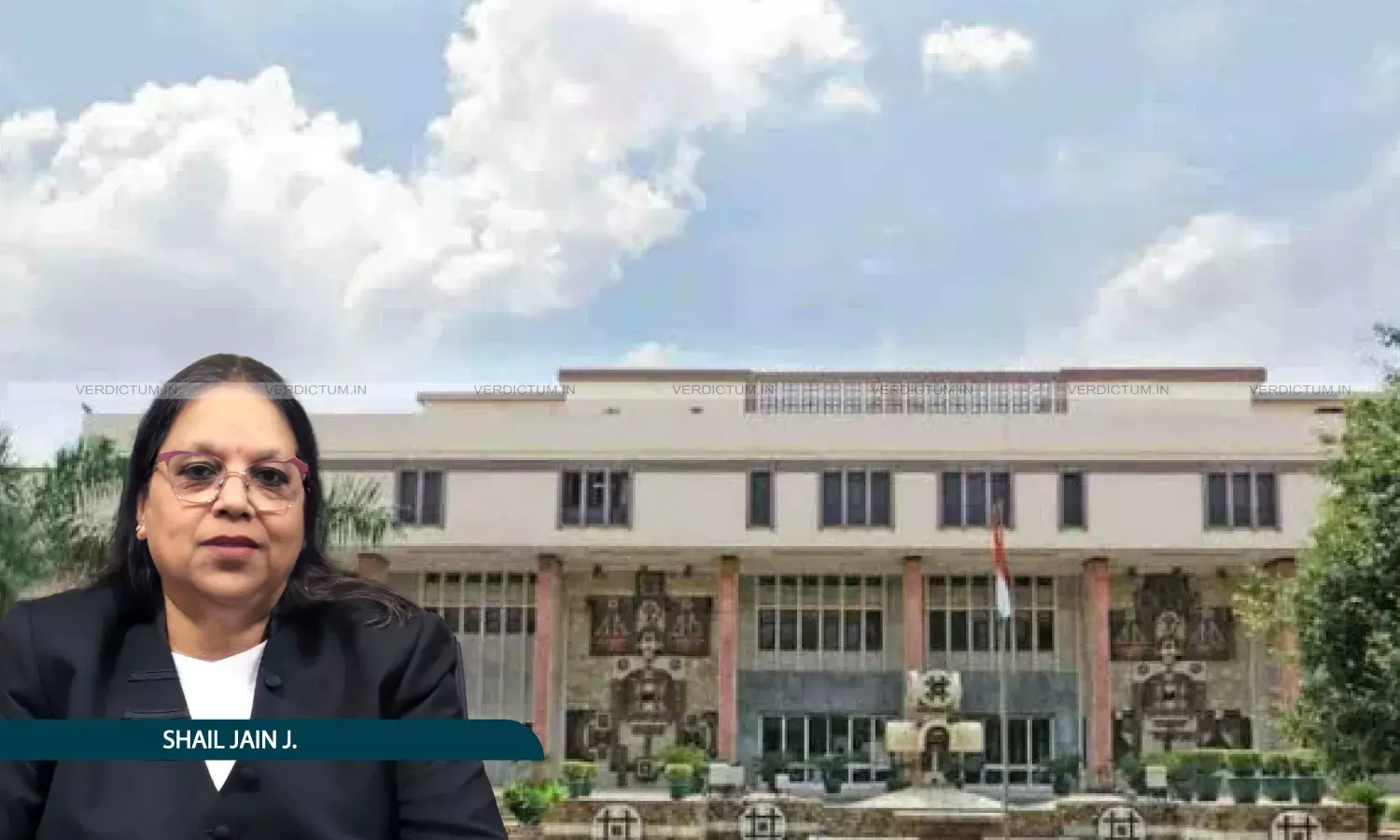
The Delhi High Court in a batch of writ petitions, has affirmed that the privatization of Air India does not shield it from the writ jurisdiction of the High Court under Article 226 of the Constitution of India, particularly where the challenge emanates from an Industrial Tribunal’s award regarding a dispute that predated the disinvestment.
Accordingly, the Bench modified a Central Government Industrial Tribunal (CGIT) award granting compensation varying from ₹25,000–₹55,000 to workmen terminated in 1998, which the High Court termed meagre for illegal retrenchment and prolonged litigation. While reaffirming reinstatement as the primary remedy for violation of Section 25-F of the Industrial Disputes Act, 1947, the Court held that the 25-year delay made reinstatement impractical, warranting enhanced monetary compensation instead.
Justice Shail Jain observed, “…it is established that even though a private entity like Air India may not ordinarily be amenable to writ jurisdiction under Article 226, the position differs where the dispute arises from an adjudication under labour laws. Once a Labour Court or Industrial Tribunal renders an award, such award is subject to judicial review by the High Court under Articles 226/227. In such cases, the writ is directed against the adjudicatory process and the award itself, not merely the private entity. Therefore, the High Court can entertain a writ petition even where the underlying dispute involves a private employer, provided it emanates from a tribunal’s award”.
Advocate Aayushi Jain appeared for the petitioner-workman and Senior Advocate Sanjoy Ghose appeared for the respondent.
In the matter, a batch of workmen were engaged by Indian Airlines (now Air India) as casual laborers in various capacities, such as drivers and helpers, between 1993 and 1998.
These workers were part of a 1995 Panel created pursuant to interim judicial orders, however, despite rendering continuous service for more than 240 days in a calendar year, their services were terminated in 1998 without notice, notice pay, or retrenchment compensation.
The Management argued the terminations were necessary to prioritize workers from an older 1990 Select List following a 1997 judgment, and further claimed that as a now-privatized entity, it was no longer amenable to writ jurisdiction.
The workmen raised an industrial dispute in 1999, which led to a reference in 2005 after multiple rounds of litigation over the wording of the reference. In 2012, the CGIT held the terminations to be in categorical violation of Section 25-F but denied reinstatement because the initial engagement was considered de hors the recruitment rules.
Thereafter, CGIT awarded lump sum compensation based on the years of service. Both the workmen (seeking reinstatement/higher pay) and the Management (challenging maintainability and the finding of illegality) filed writ petitions.
The Court rejected the Management’s preliminary objection on maintainability, clarifying that since the cause of action and the Tribunal's award existed while Air India was a public body, and the Court's supervisory jurisdiction is constitutional, the privatization did not extinguish the petitioners' remedies.
On merits, the Court upheld the finding of illegal retrenchment, noting that the 1997 judgment only accorded priority to older staff and did not authorize the summary dismissal of existing workers in violation of the Act.
However, the Court determined that the CGIT’s compensation was not meaningful given the duration of the litigation. It held that while reinstatement was barred by the passage of time, the financial relief must be enhanced to properly address the statutory breach.
“In the present case, none of the three conditions mandated by Section 25-F of the Act were complied with. The workman was terminated without any notice, without wages in lieu thereof, and without retrenchment compensation. The retrenchment is therefore ex facie illegal, and the Ld. CGIT's finding to that effect is unassailable”, the Bench noted.
Accordingly, the Court modified the CGIT Award and directed the Management to pay the following enhanced lump sum compensation:
Workmen with one year or more of service: ₹1,25,000/- each.
Workmen with two years or more of service: ₹2,50,000/- each.
Workmen with three years or more of service: ₹3,75,000/- each.
Cause Title: Sauraj Singh v. M/s Indian Airlines Ltd. & Anr. (Neutral Citation: 2026:DHC:4055)
Appearances:
Petitioner: Aayushi Jain, Advocate.
Respondents: Sanjoy Ghose, Senior Advocate, Rohan Mandal, Deeksha Arora, Rajesh Ranjan, A.S. Rastogi, Shiv Kant Arora, Advocates.