

Couples With Two Or More Children Ineligible To Adopt Normal Child Under 2022 Adoption Regulations: Delhi High Court
The Bench noted that erroneous referral of “baby k” creates no vested right or legitimate expectation; directed CARA to verify eligibility before referral and adhere to NOC timelines.

The Delhi High Court has held that prospective adoptive parents with two or more children are ineligible to be considered for adoption of a “normal” child under Regulation 5(7) of the Adoption Regulations, 2022, and can be considered only for special needs or hard-to-place children, unless they are relatives or step-children. On that basis, the Court dismissed a writ petition challenging the withdrawal of a referral of an infant girl, “Baby K”, made in favour of a Singapore-based couple who already had two biological sons.
The Court held that the referral, though made and accepted, was contrary to Regulation 5(7) and therefore conferred no vested right or legitimate expectation on the petitioner, and that no estoppel can operate against a statute or its regulations. It also held that the delay by the Central Adoption Resource Authority (CARA) in issuing the No Objection Certificate (NOC) cannot result in a deemed NOC. While declining relief, the Court issued directions to CARA to verify eligibility before generating any referral, audit profiles affected by the portal migration, process NOCs within the prescribed timeline, and ensure accurate portal statuses and grievance responses.
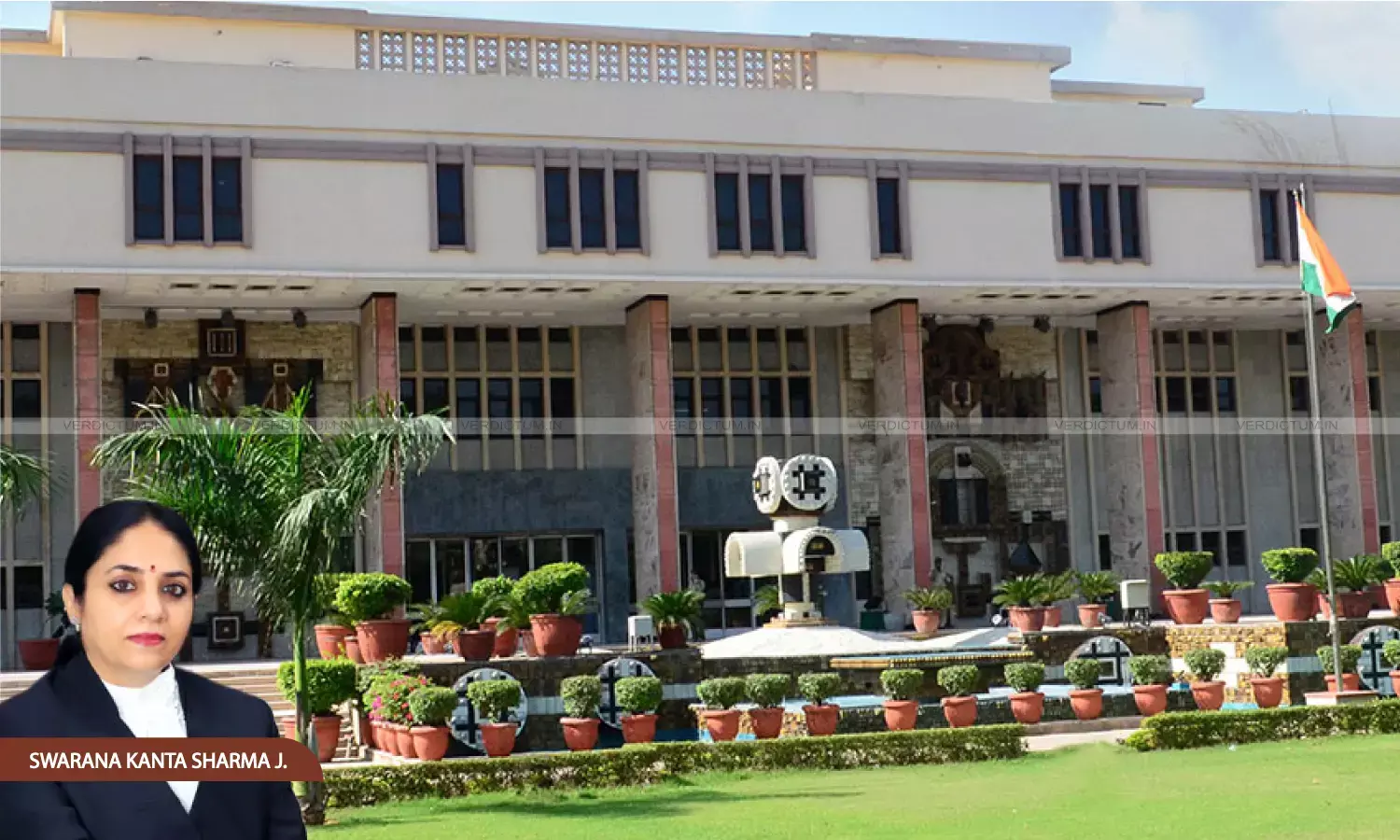
A Single Judge Bench of Dr. Justice Swarana Kanta Sharma observed,“…it is clear that in view of Regulation 5(7) of the 2022 Regulations, the petitioner could have been considered only for adoption of a special needs child or a hard to place child. The petitioner, however, has also raised a contention that Baby K was, in fact, not a normal child, or at least that her status was not fixed, and that she could also fall within the category of hard to place children…this Court is of the considered opinion that the petitioner, having two biological children, was not eligible to be considered for adoption of a child of the normal category under the 2022 Regulations, and that Baby K, on the material placed on record, can neither be treated as a special needs child, nor as a hard to place child. The referral of Baby K to the petitioner was, therefore, contrary to Regulation 5(7) of the 2022 Regulations”.
Advocate Tara Narula appeared for the petitioner and Rajesh Kumar, SPC appeared for the respondents.
“…the principle of the child‘s best interests cannot be invoked to circumvent the very safeguards designed to secure suitable and lawful adoptive placements. Accordingly, this Court is of the opinion that, notwithstanding the circumstances in which the referral was withdrawn by CARA and the emotions of the petitioner and his family, the best interests of Baby K do not call for grant of the reliefs sought in the present petition, as one of the paramount considerations remains the child‘s placement in a suitable family – through a process that conforms to the governing statutory framework, i.e. as per the 2022 Regulations”, the Bench further noted.
The petitioner and his spouse, Indian-origin residents of Singapore, registered for inter-country adoption in December 2020, when they had one biological child. A second child was born in March 2022. Their Home Study Report expired in December 2023 and was revalidated only in 2025. In January 2026, CARA referred an infant girl, Baby K, whom the petitioner accepted within hours.
CARA withdrew the referral on March 30, 2026, after the status was reflected as “Application Rejected – Withdrawn”, citing Regulation 5(7), under which couples with two or more children may be considered only for special needs or hard to place children. The petitioner approached the Court on April 12 2026. A status quo order was granted on April 13, 2026, and a fresh medical examination of the child was directed.
The Court held the petitioner ineligible for a normal child under Regulation 5(7), relying on Debarati Nandee v. Union of India 2024 SCC OnLine Del 1075 and Union of India v. Ankur Gupta (2019) 18 SCC 276. It found Baby K was neither a “special needs” nor a “hard to place” child, since the latter category covers children for whom no eligible family comes forward after referral. It held that the NOC is not a formality, that a mandamus cannot direct an authority to act contrary to its regulations, and that there can be no estoppel against a statute.
Allowing the interim order to lapse, the Court directed CARA to verify eligibility before generating any referral and to audit profiles affected by the portal migration. It also directed CARA to process NOCs within the prescribed time, to ensure accurate portal statuses with reasons, and to fix accountability. CARA was directed to place Baby K in adoption forthwith in accordance with law.
Cause Title: S v. Union of India & Anr. (Neutral Citation: 2026:DHC:9354)
Appearances:
Petitioner: Tara Narula, Harshvardhan Jain and Gauri Ramachandran, Advocates.
Respondent: Rajesh Kumar, SPC, Yash Narain, Pragya Nath, Sumit Bhargava and Nimit Kumar, Advocates.