

Ballot Tampering Does Not Vitiate Entire Electoral Process; Doubtful Ballots To Be Placed Before ASG For Final Decision: Delhi High Court While Refusing BCD Election Re-Poll
Counting to recommence from second-preference stage with high-resolution cameras, lockable ballot boxes and fresh counting staff; all rights reserved for election petition.

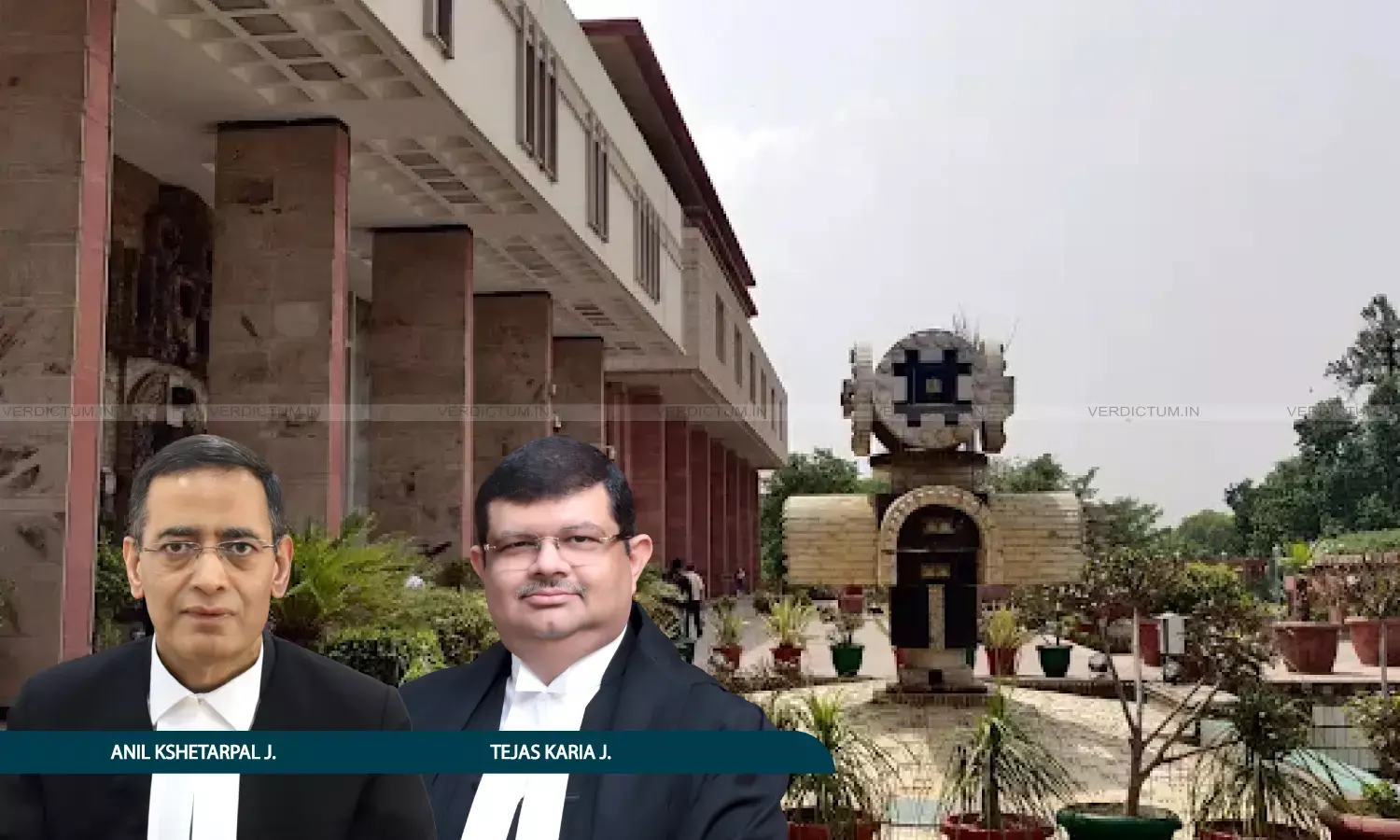
The Delhi High Court has held that the admitted manipulation of ballot papers by a member of the counting staff during the Bar Council of Delhi election does not vitiate the entire electoral process so as to warrant a fresh poll. Declining the prayer for re-polling made by 116 contesting candidates, the Court directed that any ballot paper bearing erasures, overwriting, corrections, additions or other suspicious variations shall be segregated as doubtful ballots and placed before the Additional Solicitor General, whose decision on counting shall be final.
The Court further held that there was no real possibility of tampering during the counting of first-preference votes and upheld the finding of the High-Powered Election Supervisory Committee that counting shall recommence from the second-preference stage. The Court issued a series of additional directions to strengthen transparency, including mandatory use of high-resolution cameras above counting tables, transfer of all ballot papers to lockable boxes before counting resumes, and prohibition on engagement of counting staff through the agency linked to the tampering incident.
A Division Bench comprising Justice Anil Kshetarpal and Justice Tejas Karia observed, “We, therefore, do not consider it appropriate to direct a re-poll for the BCD Election, as the incident of manipulation of ballot papers did not vitiate the electoral process in its entirety. We, accordingly, uphold the Impugned Order insofar as it declined the prayer for a re-poll or annulment of the BCD Election...We concur with the finding of the HPESC that the counting of first preference votes was valid and that no recount of first-preference votes is required as although manipulation of ballot papers was discovered, it did not affect the counting of first-preference votes. In view of our observations, we hold that no recount of first preference votes is warranted”.
Advocate Sangita Malhotra appeared for the petitioner and Advocate T. Singhdev appeared for the respondent.
“We have viewed the video recordings of the first-preference counting. They show that each sealed and locked ballot box was brought to the counting podium under continuous camera surveillance, and that the seals and locks were opened on the podium in the presence of members of the Election Committee and the Special Returning Officers, and in the virtual presence of the candidates and their authorised representatives seated on the 6th Floor, S-Block, High Court of Delhi. Each ballot paper, upon being taken out of the ballot box, was placed on the podium in a manner visible to the candidates and their representatives. The ballot papers were scrutinised by the Election Committee and the Special Returning Officers in accordance with the applicable procedure, and the votes recorded thereon were announced during the counting process”, the Bench further noted.
The Bar Council of Delhi election was held on February 21, 22 and 23, 2026 in the precincts of the Delhi High Court, with 221 candidates contesting for 23 posts under the preferential voting system. A total of 57,685 votes were recorded across the three days.
First-preference counting was undertaken between March 07 and April 09, 2026. Elimination-based counting of subsequent preferences commenced on April 13, 2026.
On April 15, 2026, during the 80th elimination, a member of the counting staff, Mr. Nikhil Kumar, was found to have altered voter preferences on certain ballot papers, changing the digit 2 to resemble 12 by prefixing 1, in favour of a particular candidate. Counting was immediately halted, an FIR was registered at PS Tilak Marg, and Nikhil Kumar was identified as the nephew of contesting candidate Vishnu Sharma.
The Election Committee recalled 18 affected ballots, transferred votes to reflect original voter preferences, and undertook a comprehensive reconciliation on April 16, 2026. When counting resumed pursuant to the HPESC's order, 9 more manipulated ballot papers were discovered, bringing the total to 27.
The former Returning Officer, Justice Talwant Singh (Retd.), resigned citing vilification campaigns. A second Returning Officer, Justice Dharmesh Sharma (Retd.), also resigned. Rakesh Munjal, Senior Advocate, was then appointed Returning Officer.
The HPESC, constituted by the Supreme Court in M. Varadhan v. Union of India, declined the prayer for re-polling and directed counting to recommence from the second-preference stage. Aggrieved, the petitioners approached the Supreme Court by way of SLPs, which were transferred to the Delhi High Court by order dated May 18, 2026. The Supreme Court directed that further counting remain in abeyance pending adjudication.
The BCD raised a preliminary objection that the Supreme Court's order in M. Varadhan had specifically provided that the HPESC's decisions would be final and no civil court or High Court would entertain a challenge thereto.
The Court rejected the jurisdictional challenge, holding that the Supreme Court’s transfer order modified its earlier direction in M. Varadhan and that the Article 142 direction therein was not a binding precedent under Article 141.
It further held that violations of the Model Code of Conduct do not automatically invalidate an election, especially when the suspensions of 79 candidates were revoked before polling and no prejudice was shown. The Court also found that the admitted manipulation of 27 ballot papers did not warrant a re-poll, as the governing rules already provide a mechanism to identify and reject tampered ballots. Additionally, it held that tampering during first-preference counting was highly improbable given the sealed ballot process, continuous surveillance, and the fact that candidates likely to be eliminated in later rounds were not yet known.
“The proper consequence of such manipulation is that any ballot paper bearing erasures, overwriting, corrections, additions, or other suspicious variations shall be segregated and kept in sealed bundles or packets marked as “doubtful ballots”. Such doubtful ballots shall be placed before the learned Additional Solicitor General, who shall determine the manner in which they are to be counted and record brief reasons in respect of each such ballot. Upon reasons being so recorded, the decision of the learned Additional Solicitor General shall be final, and preferences shall be allocated accordingly. The doubtful ballots and the reasons so recorded shall be preserved separately”, the Bench noted.
The Court upheld the HPESC's order declining re-poll and issued the following additional directions. Counting to recommence from the stage it stopped on May 18, 2026. All ballot papers in open baskets to be transferred to lockable boxes before counting resumes.
Consequentially, the Bench directed that a high-resolution camera to be placed above each counting table ensuring full visibility of each ballot paper. The entire counting process to be live-streamed without interruption on YouTube and the High Loop App.
No counting staff to be engaged through Prabodh Kumar, all staff to be engaged after verification, photo identity cards and undertakings of no conflict of interest. All 27 identified manipulated ballot papers along with any further doubtful ballots to be placed before the ASG for final decision with brief reasons. Digital recording of the entire process to be preserved until expiry of the election petition limitation period. All rights of the petitioners to pursue election petitions before the Election Tribunal after declaration of results were reserved.
Cause Title: Raman Gandhi v. Bar Council of Delhi and Ors. (Neutral Citation: 2026:DHC:5082-DB)
Appearances:
Petitioner: Sangita Malhotra, Advocate.
Respondents: T. Singhdev, Tanishq Srivastava, Yamini Singh, Anum Hussain, Abhijit Chakravarty, Bhanu Gulati, Sourabh Kumar, Advocates.