

Independent Public Witnesses Turning Hostile Would Do More Harm Than Good; Emphasis Should Be On Having Truthful Witnesses In Criminal Cases: Delhi High Court
The Delhi High Court was considering a bail application of an accused booked in a case under the IPC and Arms Act, 1959.

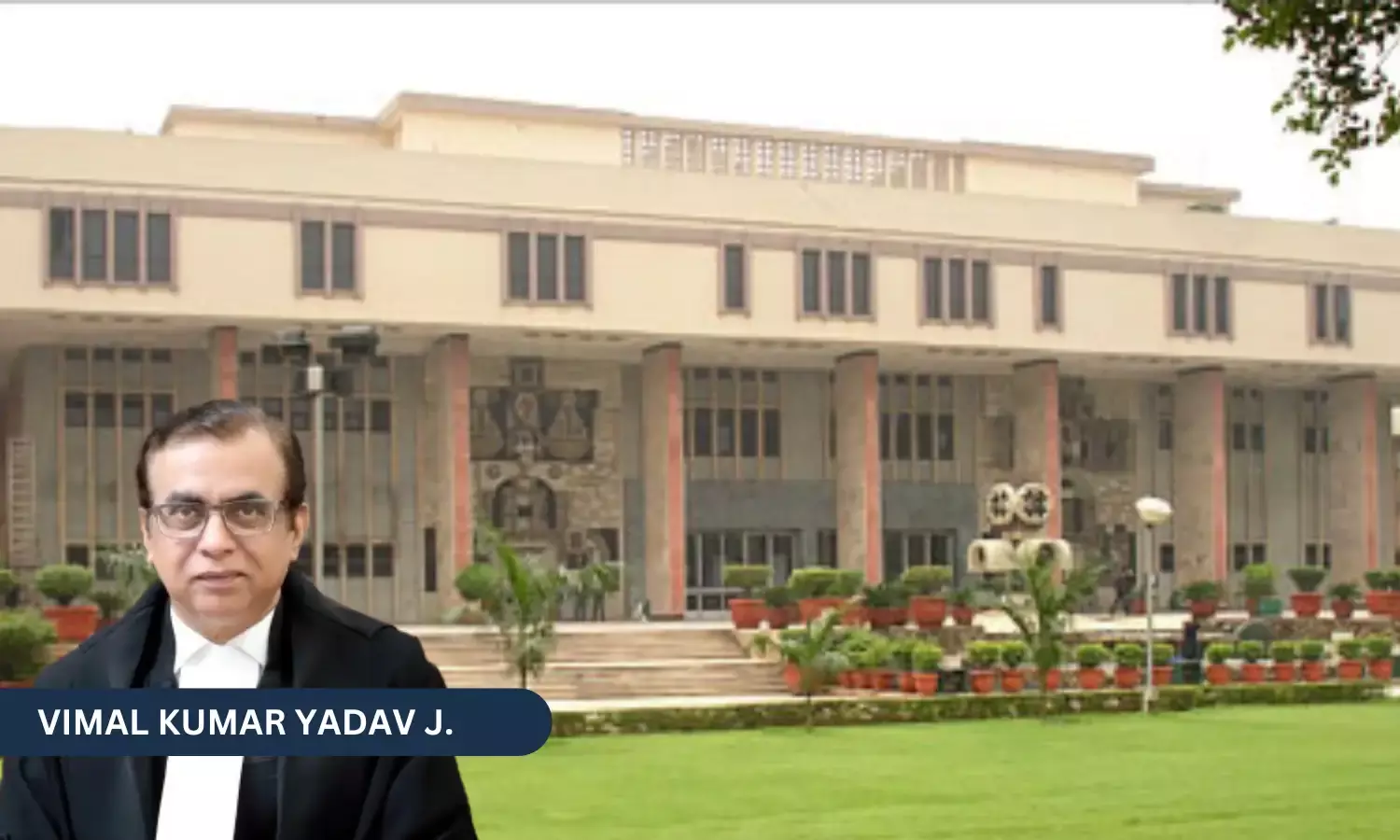
Justice Vimal Kumar Yadav, Delhi High Court
While dealing with a case of robbery and illegal possession of a knife, the Delhi High Court has held that having independent public witnesses and not having them has no impact. The High Court further held that the emphasis should be on having a truthful witness as an independent public witness, turning hostile would do more harm than good.
The High Court was considering a bail application of an accused booked in a case under Sections 394 and 397 of the IPC and Section 25 of the Arms Act, 1959.
The Single Bench of Justice Vimal Kumar Yadav held, “The sanctity and credibility which an Independent Public Witness brings and can bring is very important. Independent Public Witness essentially means/ refers to an individual who has no personal concern with the events, except as a responsible, law-abiding citizen who wants that law should not feel crippled due to the absence of independent and unbiased witness so as to uphold the social order and truth. Such a bonafide witness lends credibility that is why such a witness is sought for. However, the legal history, as is contemporary legal system, has seen numerous examples where the so called independent trustworthy, reliable “Public Witness” ruined the deposition and case beyond repair. So having them and not having, has no impact rather, having them and they turning hostile would do more harm than good. The emphasis, thus, should be on having a truthful witness.”
Advocate Vipin Kumar Gupta represented the Appellant while Additional Public Prosecutor Kiran Bairwa represented the Respondent.
Factual Background
A robbery was committed by a group of pick-pockets in a bus, and the complainant alleged that he was carrying a sum of Rs 1,10,000 in a bag, which he wanted to deposit in a bank. While he was about to get off the bus at Munirka, he realised that his bag was cut open. He immediately raised the alarm, and 5-6 boys got down from the bus. He suspected them to be the persons responsible and caught hold of one of them. He had to let go of that boy as those who threatened him. The matter was reported to the police telephonically, and an FIR was registered.
The police laid a trap after receiving secret information about the movement of the Appellant as one of those pickpockets/robbers, together with others, available in the area of Munirka. On the pointing out by the secret informer, three boys were apprehended, including the Appellant, who was found carrying a button-actuated knife, which was seized and formalities thereafter were completed. The trial resulted in a conviction under Sections 394, 397 IPC and 25 of the Arms Act. The Appellant / accused was sentenced to undergo RI for a period of 7 years under Section 394 and 397, and under Section 25 of the Arms Act, he was sentenced to RI for a period of 1 month.
Reasoning
Dealing with the contention that the joint trial of two or more separate incidents/offences vitiates the trial, the Bench explained that the FIRs were under robbery and the other one was for illegal possession of a knife of proscribed specifications, in violation of the Notification issued by the Government of Delhi under the Arms Act, 1959. “There is, apparently, no connecting material except that the Appellant happens to be involved in both the cases and that a knife was used while the robbery was being committed by the Appellant and his associates”, it added.
Considering that the knife recovered was not one that was easily available in the shops, the Bench stated that there was every possibility that it was the same knife which was used by the Appellant while committing the robbery. As per the Bench, this linked the two offences, and if a joint trial was taken up, then no illegality could be attributed primarily for the reason that no prejudice was caused to the Appellant. As per the Bench, the knife became common in both the FIRs together with the Appellant. Therefore, the trial of two separate cases together did not vitiate the trial.
The Bench further noted that there was no other witness except the victim Gaje Singh. On a perusal of his evidence, the Bench noticed that he was not in a position to pinpoint the identification since practically every person involved in the robbery was using a knife in one or another although he had clarified that the Appellant had put the knife to his neck.
Finding the appellant’s identification to be doubtful, the Bench stated, “The evidence and the documents do not clearly reflect that the identification of the Appellant in the police station was carried out prior to the proposed TIP, or after the TIP, which renders the TIP useless. As such, the identity of the Appellant and his complicity in the offence coupled with the recovery, all comes under a big question mark.”
The Bench thus concluded that the appellant Appellant couldnot be held responsible for the offence of robbery for the want of clear, cogent and convincing evidence. “As such, he is extended the benefit of doubt and acquitted of the charges except for the charge under Section 25 of the Arms Act, 1959”, it ordered.
Thus, partly allowing the appeal, the Bench maintained that the sentence of one month Rigorous Imprisonment (RI) under Section 25 of the Arms Act, 1959 awarded by the Trial Court.
Cause Title: Rajinder Kumar v. The State (Neutral Citation: 2026:DHC:4479)
Appearance
Appellant: Advocates Vipin Kumar Gupta, Rahul Kumar
Respondent: Additional Public Prosecutor Kiran Bairwa