

Ruptured Hymen Not Essential To Prove Sexual Assault: Delhi High Court Upholds POCSO Conviction
The Bench noted that statutory definition of penetration "to any extent" overrides absence of physical injury in crimes against children.

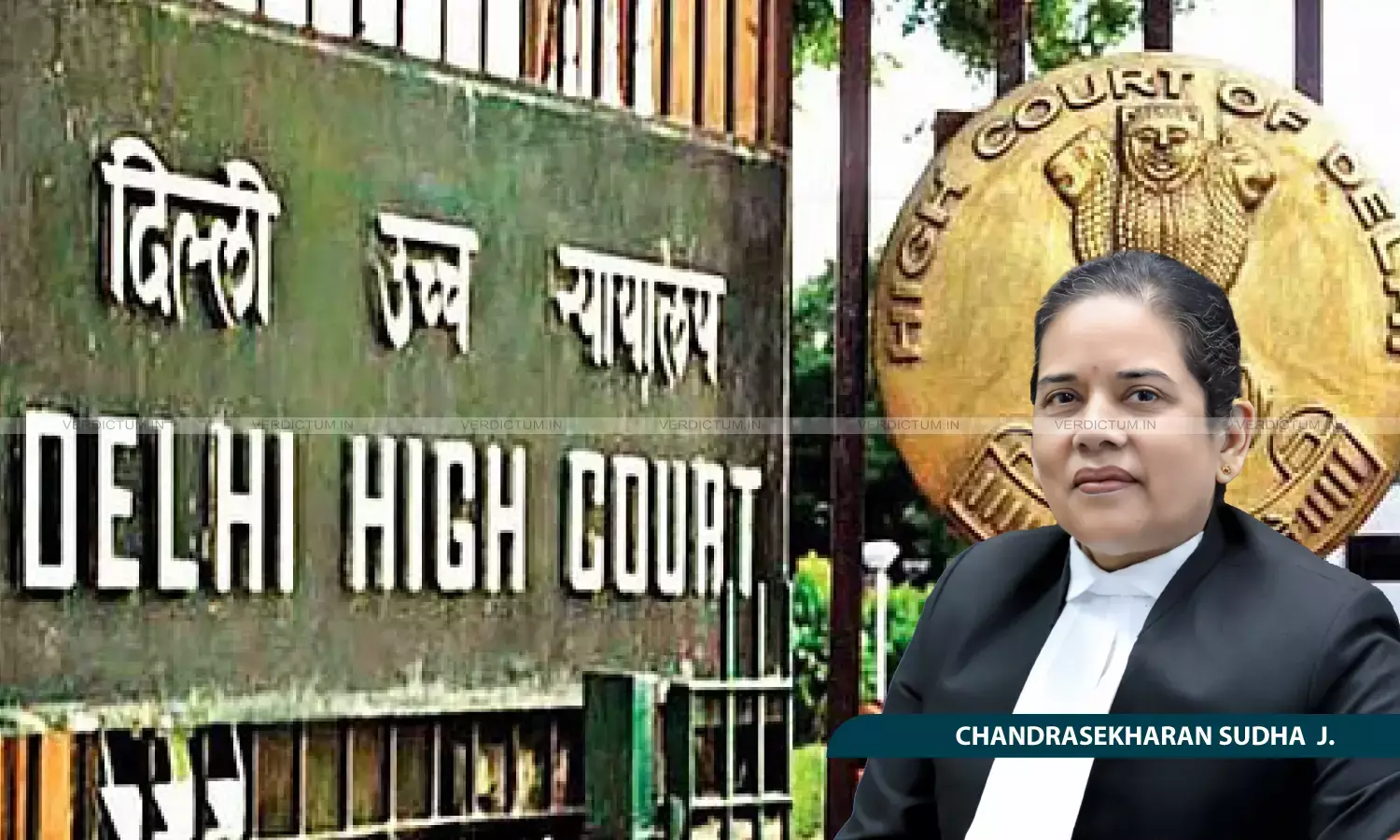
The Delhi High Court has reaffirmed that the legal threshold for penetrative sexual assault under the POCSO Act is satisfied by penetration "to any extent", rendering the presence of a ruptured hymen unnecessary for a conviction. The Court, however while upholding the conviction of the man, intervened on the aspect of sentencing, noting that the trial court’s imposition of a 20-year term exceeded the then-prevailing statutory ceiling for term-based imprisonment under Section 6 of the Act.
Reducing the substantive sentence to 14 years, the Court balanced the severity of the crime with the legal precedents governing sentencing powers for offenses committed prior to subsequent legislative amendments.
Justice Chandrasekharan Sudha observed, “…a person is said to commit penetrative assault if he penetrates his penis to any extent into the vagina, mouth, etc. of a child, the offence of penetrative sexual assault is made out. Therefore, it is not necessary that the hymen has to be ruptured to make out an offence under Section 3(a) of the Act”.
Advocate Dhruva Bhagat appeared for the appellant and Ajay Vikram Singh, APP appeared for the State while Advocate Mansi Rao appeared for the victim.
As per the prosecution story, on January 13, 2013, the accused, a tenant in the victim's house, allegedly took the six-year-old girl to a bathroom and committed penetrative sexual assault.
The victim immediately reported the incident and the resulting pain to her maternal grandmother (PW2), leading to the registration of an FIR the following day. The accused denied the allegations, claiming he was falsely implicated due to a rent dispute and the landlady's desire to evict him.
The trial court, through a judgment dated March 16, 2020, convicted the accused under Section 376(2)(f) IPC and Section 6 of the POCSO Act. On May 26, 2020, he was sentenced to 20 years of rigorous imprisonment and a fine. The appellant challenged both the conviction and the sentence before the High Court.
The Court held that the victim (PW1) remained consistent across her initial statement, her Section 164 CrPC deposition, and her testimony in court, providing a credible and believable account.
The Bench dismissed the defense's argument regarding the intact hymen, noting that under Section 3(a) of the POCSO Act, penetration to any extent constitutes the offense, regardless of physical rupture.
Although the Court found that the police had failed to properly prove the seizure of undergarments and forensic samples, rendering the FSL report unreliable, it ruled that the medical evidence showing an abrasion on the victim's pubis sufficiently corroborated her testimony.
The Court also rejected the rent dispute theory as improbable, finding no reason to believe a grandmother would tutor a child to make such grave allegations for a minor civil matter.
Noting that the incident took place on January 13, 2013, referring to Ravinder Singh v. The State Govt. of NCT of Delhi, (2024) 2 SCC 323, it observed, “…the trial court could have imposed either the maximum sentence of life or if it was for a term, for a period not exceeding 14 years. Here, the trial court imposed a sentence of 20 years which apparently could not have been done. Therefore, taking into account the facts and circumstances of this case, I find that substantive sentence of 14 years would serve the ends of justice”.
“…Coming to the defence evidence, it cannot be believed that because there was a dispute regarding the rent, PW2 had tutored her young grandchild to speak against the accused. The defence put up seems to be quite improbable. From the materials on record, I find no reason(s) to disbelieve the prosecution case. Therefore, I find no infirmity in the findings of the trial court regarding the guilt of the accused for the offences punishable under Section 376(2)(f) IPC and Section 6 POCSO Act”, the Bench observed.
Cause Title: Rajender Sharma v. The State (Govt. of NCT) Delhi (Neutral Citation: 2026:DHC:3775)
Appearances:
Appellant: Dhruva Bhagat, Advocate.
Respondent: Ajay Vikram Singh, APP, Aishwarya Rao, Advocate and Mansi Rao, Advocate for victim.