

Doctor’s Certificate And Thumb Impression Are Rules of Caution, Not Legal Requirements For A Valid Dying Declaration: Delhi High Court
The Bench upheld an ASI’s murder conviction in 1998 bride-burning case, acquitted the sister-in-law of cruelty and asked the Police Commissioner to arrest proclaimed offenders absconding for 28 years.

The Delhi High Court has held that a medical certificate of fitness and a thumb impression are not legal requirements for a valid dying declaration but rules of caution. Noting that the victim suffered 100% burns and degloving of both hands, which naturally resulted in an almost blank thumb impression without discernible ridges, the Court held that a declaration recorded by a Sub-Divisional Magistrate and supported by a medical endorsement satisfies that rule of caution. The Commissioner of Police was asked to arrest the proclaimed offenders, Sudesh and Hans Raj, and file monthly progress reports.
The Court upheld the murder conviction of a Delhi Police ASI and his mother on the strength of the dying declaration of his wife, who suffered 100% burns. It rejected the argument that such a patient cannot make a coherent statement or affix a thumb impression. It acquitted the mother of cruelty under Section 498A of the Indian Penal Code, 1860, and set aside the cruelty conviction of the husband’s married sister.
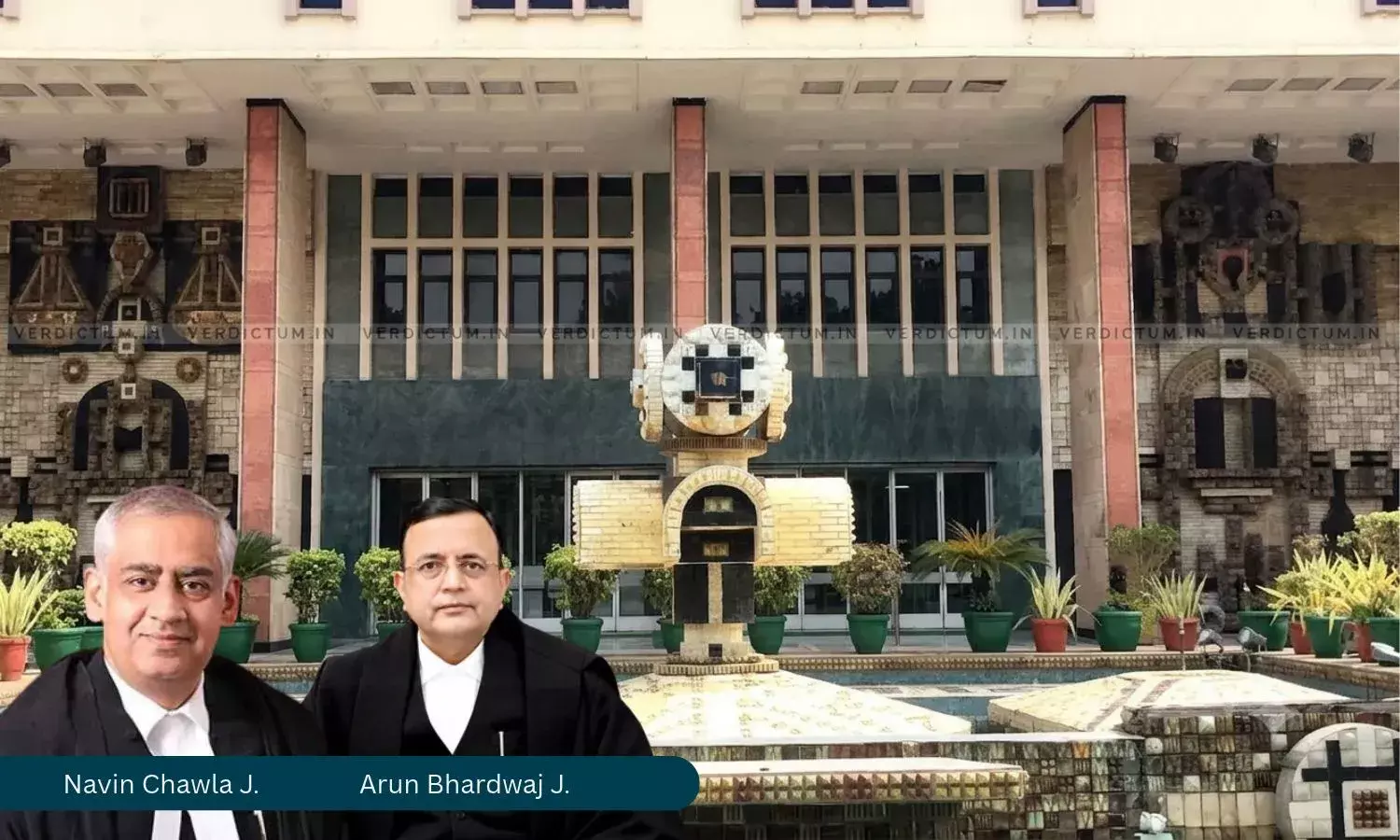
A Bench of Justice Navin Chawla and Justice Arun Bhardwaj noting relevant precedents, observed, “…neither a doctor’s certificate nor a thumb impression is a legal requirement for a valid dying declaration, but rather a rule of caution. In the present case, the dying declaration PW 4/A was recorded by the SDM duly supported by a medical endorsement, thereby satisfying the rule of caution”.
“An SDM recording a dying declaration cannot be expected to have the medical knowledge of a skin or burn specialist. There is no material on record to show that the SDM was made aware that due to degloving, the thumb impression of the victim will not be meaningful. It appears that the thumb impression of the deceased was obtained as a cautionary measure and without realizing the degloving of the skin. The physical record of the Trial Court makes it clear that, although the thumb impression of the deceased was taken but it resulted in no discernable curves or ridges and is almost blank, which shows that whatever impression could be gathered of the thumb impression, was taken on the endorsement and the impression is almost blank, which in turn explains and establishes that the thumb impression of the victim was taken but due to degloving, it turned out to be blank in the absence of clear curves or ridges”, it further noted.
Advocate D.B. Goswami appeared for the appellants and Aman Usman, APP appeared for the respondent.
The deceased victim married Tilak Raj on May 9, 1997, and was admitted to LNJP Hospital on October 21, 1998 with 100% burns, where she succumbed on October 23, 1998. In a question-answer statement recorded by the SDM on October 22, 1998, she said her husband demanded a Maruti car, that she had brought Rs. 50,000 twice, and that kerosene was poured on her and she was set ablaze in the presence of her in-laws.
An FIR was registered at P.S. Kalyan Puri. The Additional Sessions Judge, Karkardooma Courts, on July 11, 2002 convicted Tilak Raj, his father Prem Singh and mother Anokhi Devi under Sections 302, 201 and 498A read with Section 34, and sister Raj Kumari under Section 498A. Prem Singh died during the appeals, which abated qua him.
Referring to the court-examined burns specialist, the Bench held that initial disorientation from shock can be corrected by resuscitation, explaining why the patient was declared unfit on October 21 and fit on October 22. Citing State of M.P. v. Dal Singh & Ors., (2013) 14 SCC 159, Laxman v. State of Maharashtra (2002) 6 SCC 710 and Govindappa v. State of Karnataka (2010) 6 SCC 533, it held that burn percentage alone does not decide capacity. Having called the physical record, it found the thumb impression almost blank, consistent with degloving. It found timing discrepancies among witnesses understandable after two years, the alibi unbelievable, and the cleaned scene smelling of kerosene proof of Section 201. It treated the brother’s account as hearsay.
The Court noted the declaration spared Raj Kumari for her absence that day, which showed it was not tutored. It acquitted Anokhi Devi of cruelty for want of specific allegation and Raj Kumari because conviction cannot rest on guesswork.
Anokhi Devi’s sentence was reduced to the five years, seven months and one day already served, given her age of 77. Tilak Raj was directed to surrender within three working days.
Cause Title: Raj Kumari v. State NCT of Delhi (Neutral Citation: 2026:DHC:9629-DB)
Appearances:
Appellants: Advocates D.B. Goswami, S. Gaurav Sasan, S. Saurabh Sasan and Arunansh B. Goswami.
Respondent: APP Aman Usman with Advocate Manvendra Yadav.